

Form FDACS 13645 at a glance
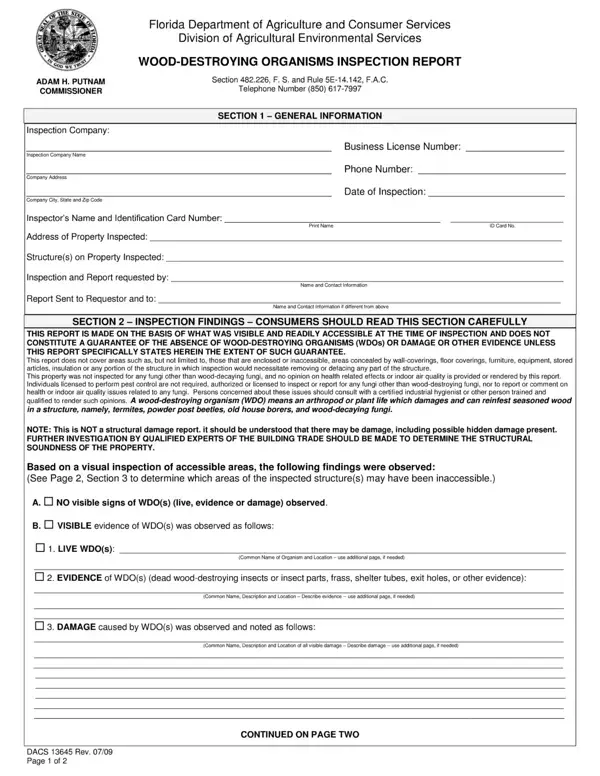
What it is: FDACS 13645, Rev 05/21 is the Florida Department of Agriculture and Consumer Services WOOD-DESTROYING ORGANISMS INSPECTION REPORT.
Who signs: Sign as Licensee or Agent and enter the Date.
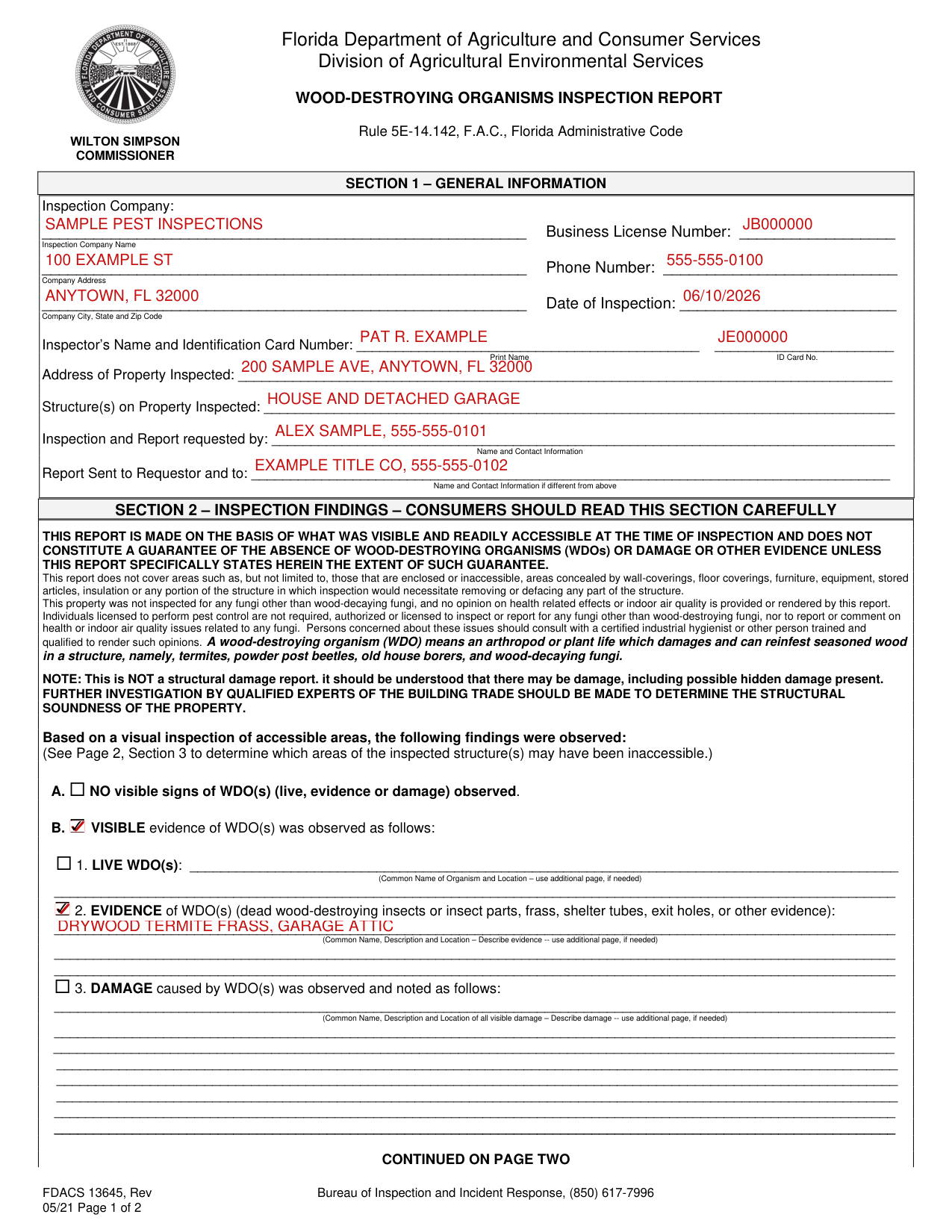
A filled-in Form FDACS 13645 example: a pest inspector reports termite frass
How to fill out Form FDACS 13645, box by box
Inspection company and inspector
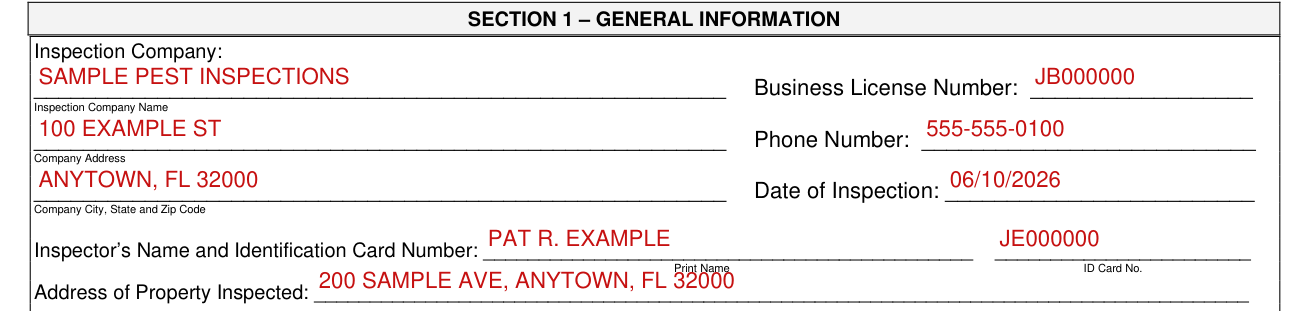
Under Inspection Company, enter the Inspection Company Name, Business License Number, Company Address, Phone Number, Date of Inspection, and Company City, State and Zip Code.
Enter the Inspector's Name and Identification Card Number under Print Name and ID Card No.
Property inspected and who requested the report

Enter the Address of Property Inspected.
Enter the Structure(s) on Property Inspected.
Enter the Name and Contact Information for the Inspection and Report requested by.
For Report Sent to Requestor and to, enter the Name and Contact Information if different from above (Inspection and Report requested by in Section 1).
Inspection findings
This report is made on the basis of what was visible and readily accessible at the time of inspection and does not constitute a guarantee of the absence of wood-destroying organisms (WDOs) or damage or other evidence unless this report specifically states herein the extent of such guarantee. This report does not cover areas such as, but not limited to, those that are enclosed or inaccessible, areas concealed by wall-coverings, floor coverings, furniture, equipment, stored articles, insulation or any portion of the structure in which inspection would necessitate removing or defacing any part of the structure. This property was not inspected for any fungi other than wood-decaying fungi, and no opinion on health related effects or indoor air quality is provided or rendered by this report. Individuals licensed to perform pest control are not required, authorized or licensed to inspect or report for any fungi other than wood-destroying fungi, nor to report or comment on health or indoor air quality issues related to any fungi. A wood-destroying organism (WDO) means an arthropod or plant life which damages and can reinfest seasoned wood in a structure, namely, termites, powder post beetles, old house borers, and wood-decaying fungi. NOTE: This is NOT a structural damage report. It should be understood that there may be damage, including possible hidden damage present. Further investigation by qualified experts of the building trade should be made to determine the structural soundness of the property.
Based on a visual inspection of accessible areas, the following findings were observed: See Page 2, Section 3 to determine which areas of the inspected structure(s) may have been inaccessible.
Mark A. NO visible signs of WDO(s) (live, evidence or damage) observed.
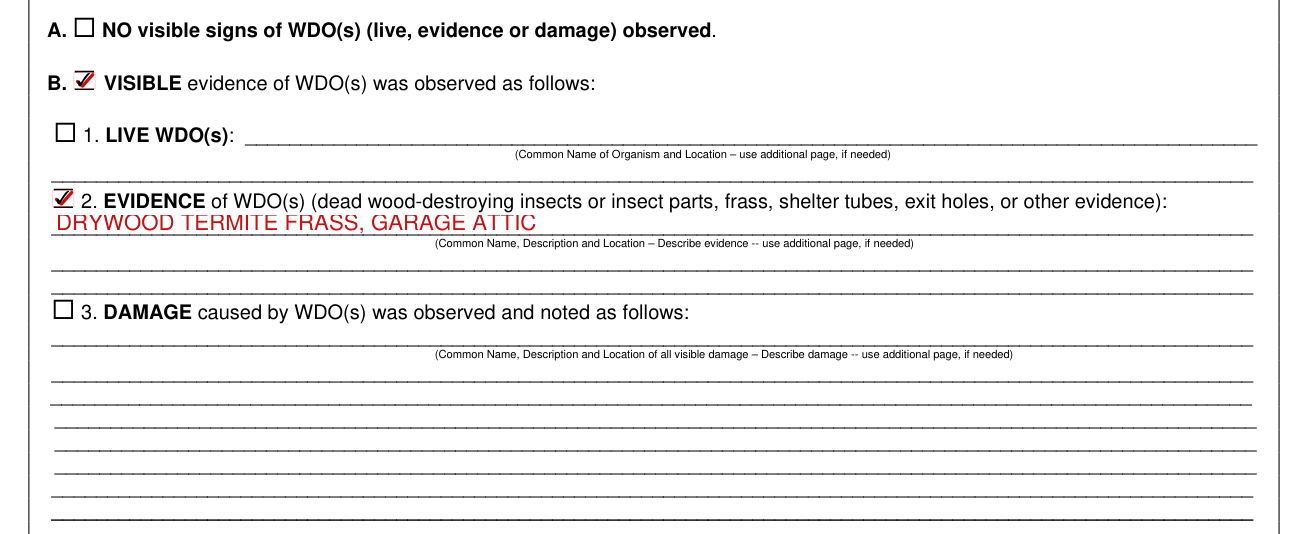
Mark B. VISIBLE evidence of WDO(s) was observed as follows: under 1. LIVE WDO(s), enter the Common Name of Organism and Location, and use an additional page, if needed.
Under 2. EVIDENCE of WDO(s) (dead wood-destroying insects or insect parts, frass, shelter tubes, exit holes, or other evidence), enter the Common Name, Description and Location, and describe evidence; use an additional page, if needed.
Mark 3. DAMAGE caused by WDO(s) was observed and noted as follows, and enter the Common Name, Description and Location of all visible damage; describe damage; use an additional page, if needed.
Obstructions and inaccessible areas
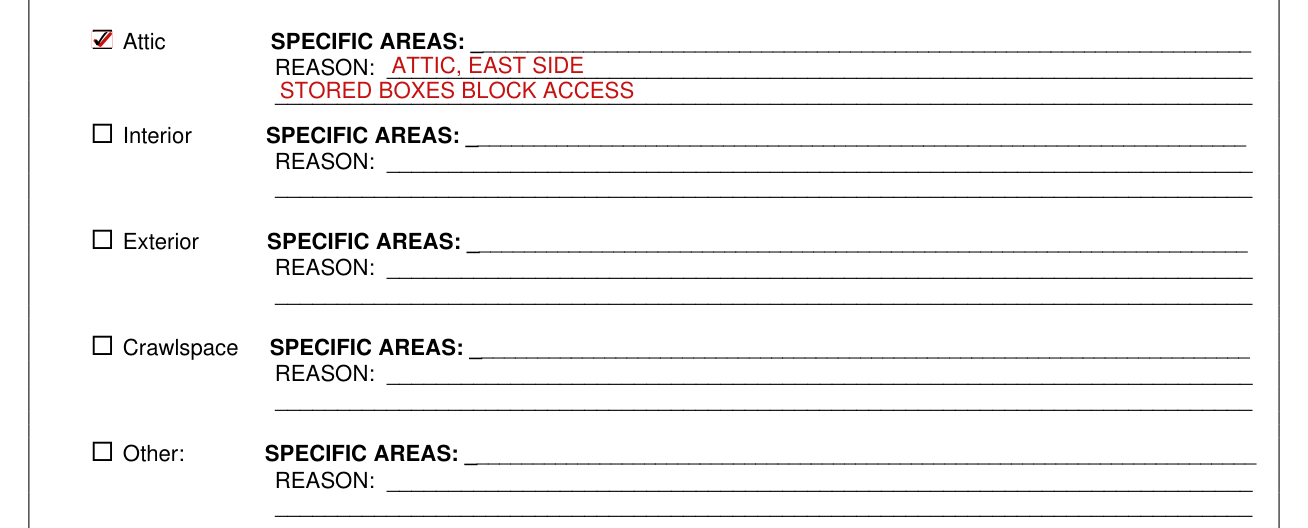
Section 3: The following areas of the structure(s) inspected were obstructed or inaccessible. NO INFORMATION on the status of wood-destroying organisms or damage from wood-destroying organisms in these areas is provided in this report.
In addition to those areas described in consumer information on Page 1, Section 2, mark Attic, Interior, Exterior, Crawlspace or Other for the specific areas not visible and/or accessible for inspection, and state the SPECIFIC AREAS and the REASON.
Notice of inspection and treatment information
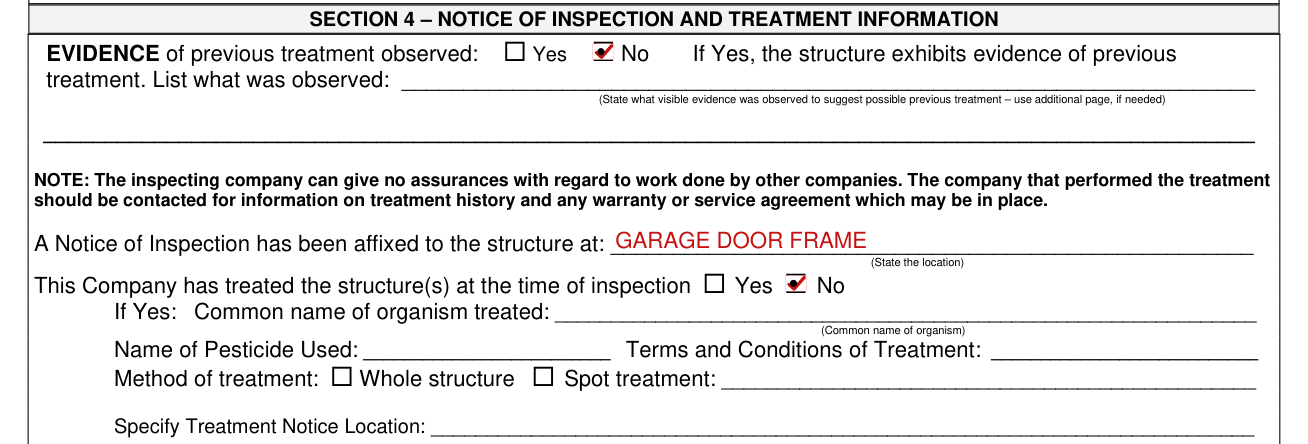
Mark Yes or No for EVIDENCE of previous treatment observed. If Yes, the structure exhibits evidence of previous treatment.
If Yes, list what was observed: state what visible evidence was observed to suggest possible previous treatment; use additional page, if needed.
NOTE: The inspecting company can give no assurances with regard to work done by other companies. The company that performed the treatment should be contacted for information on treatment history and any warranty or service agreement which may be in place.
Enter where a Notice of Inspection has been affixed to the structure.
Mark Yes or No: This Company has treated the structure(s) at the time of inspection.
If Yes: enter the Common name of organism treated, Name of Pesticide Used and Terms and Conditions of Treatment, and mark the Method of treatment: Whole structure or Spot treatment.
Specify Treatment Notice Location.
Comments and signature
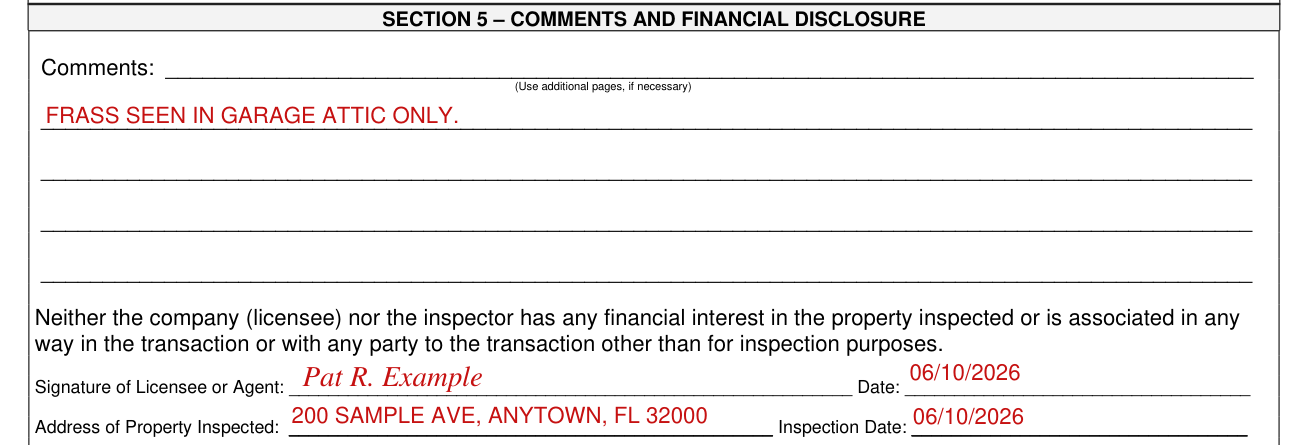
Enter Comments; use additional pages, if necessary.
Neither the company (licensee) nor the inspector has any financial interest in the property inspected or is associated in any way in the transaction or with any party to the transaction other than for inspection purposes.
Sign as Licensee or Agent and enter the Date.
Enter the Address of Property Inspected and the Inspection Date.
Sources
[1] Form FDACS 13645 (Rev 05/21), Wood-Destroying Organisms Inspection Report, Florida Department of Agriculture and Consumer Services (the Official source link on this page).