
A New Hampshire general power of attorney is a written document that lets one person, the principal, name an agent to handle financial matters for them. The principal chooses which powers the agent receives, such as banking, real property or tax matters. It does not cover medical decisions. This free NH power of attorney form PDF has 44 fillable fields. You can fill it out online, then print it and have the principal's signature acknowledged before a notary public.
Last Updated: October 2026. This guide is reviewed and updated regularly to reflect current New Hampshire law. If you notice an error or outdated information, please contact us.
Build Your Document
Answer a few simple questions to make your document in minutes
Save and Print
Save progress and finish on any device, download and print anytime
Sign and Use
Your valid, lawyer-approved document is ready
A New Hampshire general power of attorney must be signed by the principal. It can also be signed by another individual the principal directs to sign the principal's name, but only in the principal's conscious presence. Either way, the signature must be acknowledged before a notary public or another individual authorized by law to take acknowledgments.[1]
The statute states the rule this way:
With regard to a general power of attorney: the power of attorney must be signed (other than by electronic signature) by the principal or in the principal's conscious presence by another individual directed by the principal to sign the principal's name on the power of attorney and must be acknowledged before a notary public or other individual authorized by law to take acknowledgments.
The statute also requires a disclosure statement to be affixed to the power of attorney. The principal must sign it, or another individual directed by the principal to sign the principal's name. An electronic signature does not satisfy this rule. A power of attorney to convey real estate follows the same signing and acknowledgment rule as a general power of attorney.[1]
Tip: The FormsPal form has the notary acknowledgment on page 5 and the disclosure statement on page 6. Both pages print with the rest of the document.
On the form itself, the principal decides four things:
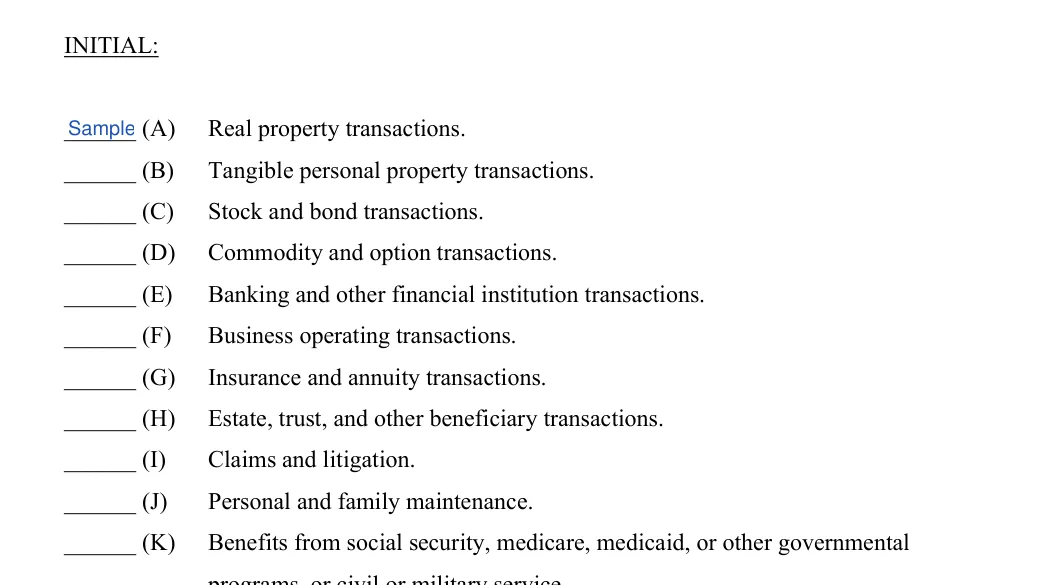
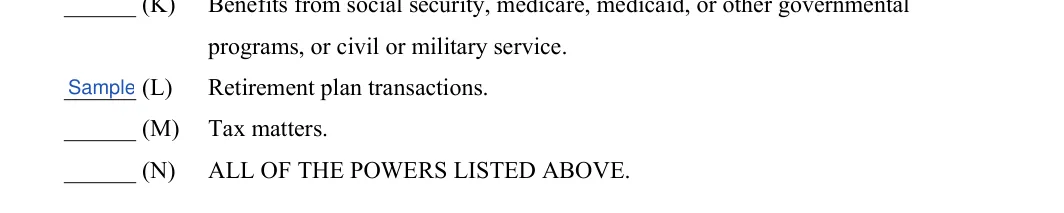
Some of the powers on the list reach far, such as those covering real property, estate and trust matters, and retirement plans. Many people read each line before initialing it and ask a lawyer when they are unsure. In practice, people also tend to pick an agent they trust to act in their interest and keep clear records.
| Document Name | New Hampshire General Power of Attorney Form |
| Other Name | New Hampshire Financial Power of Attorney |
| Relevant Laws | New Hampshire Revised Statutes Annotated, Chapter 564-E |
| Avg. Time to Fill Out | 10 minutes |
| # of Fillable Fields | 44 |
| Available Formats | Adobe PDF |
This is the general (financial) form. You can browse all New Hampshire POA forms or read more about power of attorney in general. Two other types are the New Hampshire durable power of attorney form and the New Hampshire limited power of attorney form. For health-care wishes, see the New Hampshire living will form.
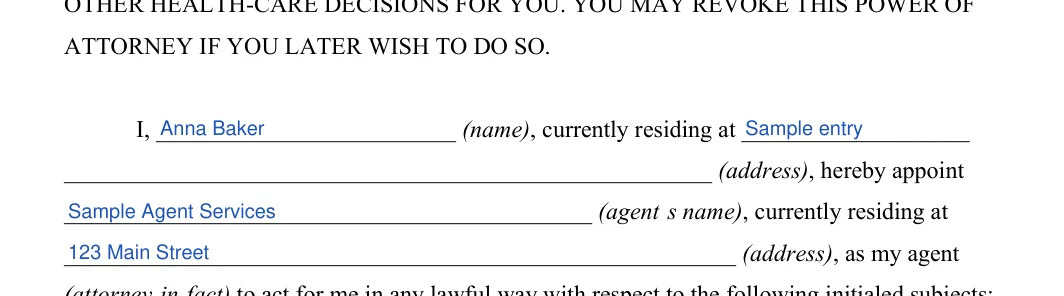
You can fill out the New Hampshire power of attorney form online, and this free NH power of attorney form PDF has six pages and 44 fillable fields. Work through it in the order below, from the names on page 1 to the disclosure statement on page 6. You can type your entries with our online PDF editor, then print the form.
The screenshots under each step show the FormsPal New Hampshire general power of attorney template filled with sample entries in blue, so you can see where each answer goes. The names, addresses, dates and amounts are examples only.
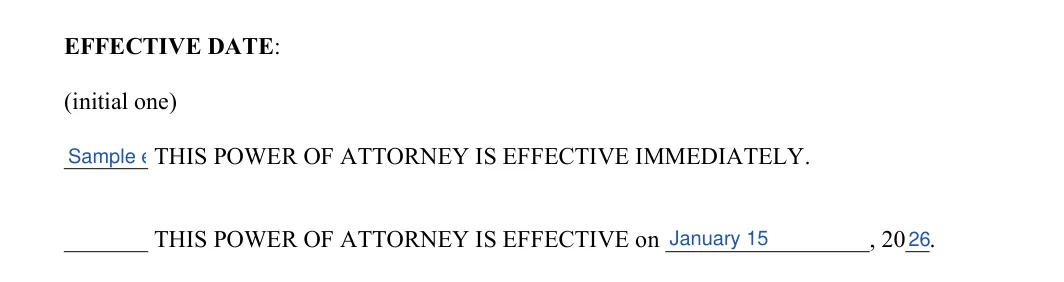

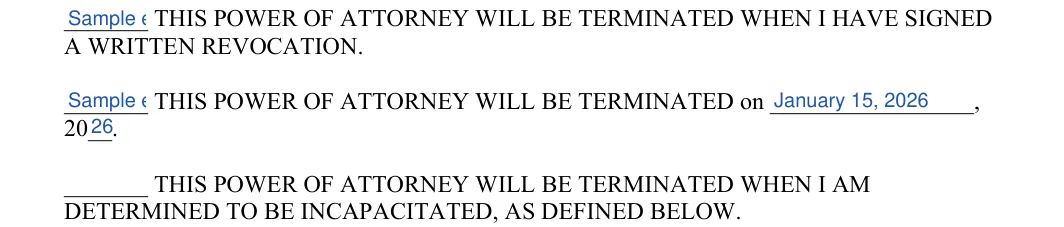
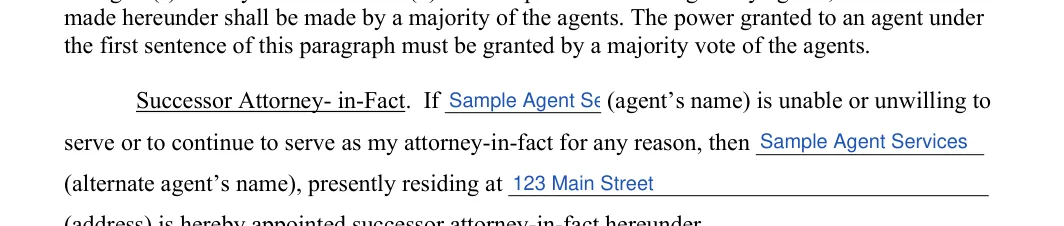
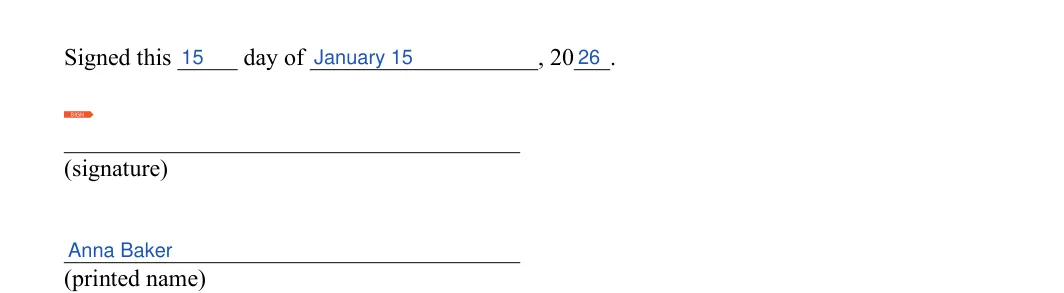
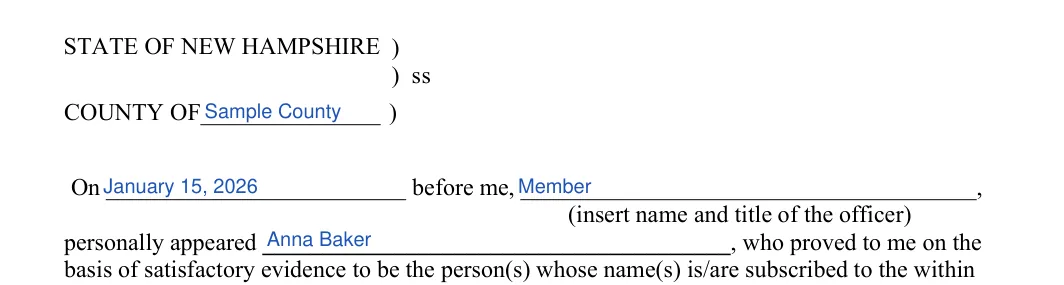

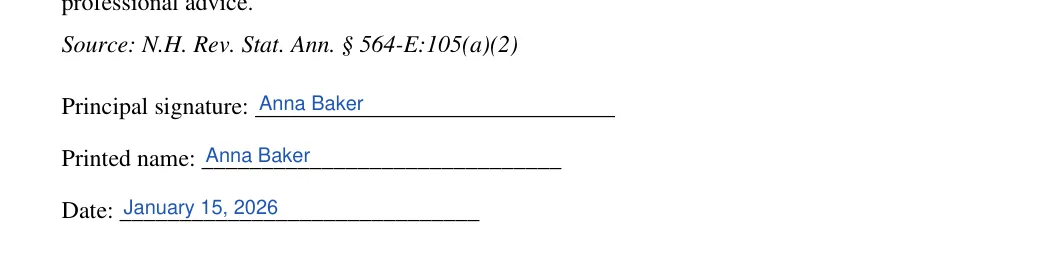
Once the form is filled out, the principal signs it and has the signature acknowledged before a notary public or another individual authorized to take acknowledgments.[1] The steps below cover what comes after the form is complete. They are general practice and are not printed on the form.
A New Hampshire power of attorney ends when the principal dies, when the principal revokes it, or when another event listed in the statute happens. The agent's own authority can also end separately, for example when the agent resigns. Both lists below come from the state's power of attorney revocation law.
A power of attorney terminates when any of these happens:[2]
An agent's authority terminates when any of these happens:[2]
These answers cover notarization, revocation and the end of a New Hampshire power of attorney. Each answer cites the statute section it comes from, so you can check the wording yourself.
For a general power of attorney, yes. It must be acknowledged before a notary public or other individual authorized by law to take acknowledgments. A power of attorney to convey real estate is acknowledged the same way, while any other power of attorney needs only the principal's signature. A signature is presumed to be genuine if the principal acknowledges it before such an individual.[1]
Yes. The power of attorney terminates when the principal revokes it, and the agent's authority terminates when the principal revokes that authority. Signing a new power of attorney does not revoke an earlier one by itself. The earlier one is revoked only if the new one provides either of these:
Termination does not bind an agent or another person who acts in good faith under the power of attorney without actual knowledge of the termination. An act done that way binds the principal and the principal's successors in interest, unless the act is otherwise invalid or unenforceable.[2]
It can. The agent's authority terminates when a petition for divorce, annulment, separation or a decree of nullity is filed about the agent's marriage to the principal. The power of attorney can provide otherwise.[2]
It depends on whether the power of attorney is durable. If it is not durable, the principal's incapacity terminates it. Even then, the incapacity does not revoke or terminate it as to an agent or other person who acts in good faith under it without actual knowledge of the incapacity.[2]
General information, not legal or tax advice.
Unless noted otherwise, the sources below are from the N.H. Rev. Stat. Ann..
