
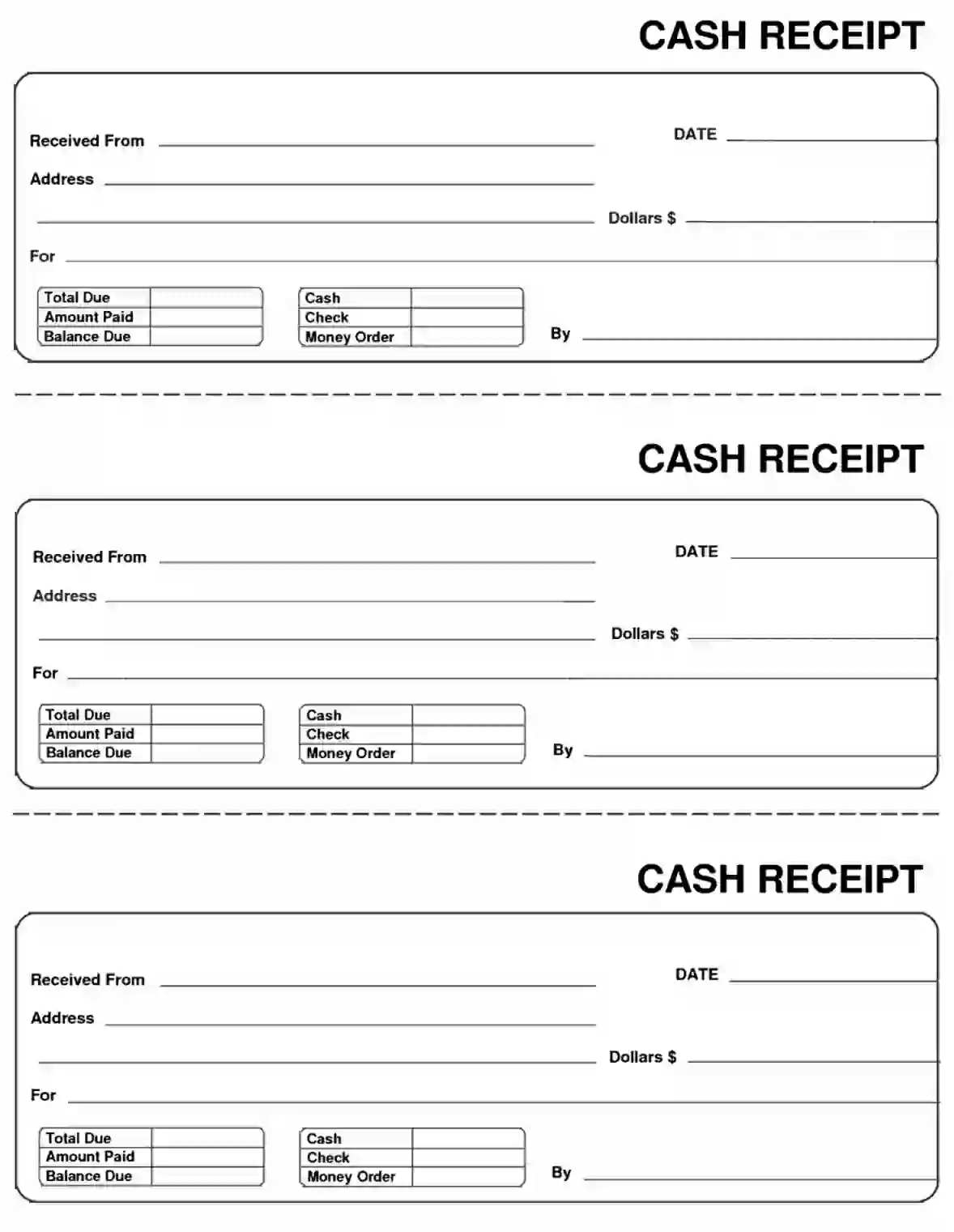
A Cash Receipt is a written acknowledgment that confirms the receipt of money following a transaction between two parties. Use this cash receipt template to record how much was paid, what it was for and who was involved. Then print the receipt and have the person who received the money sign it.
Last Updated: October 2026. This guide is reviewed and updated regularly to reflect current law. If you notice an error or outdated information, please contact us.
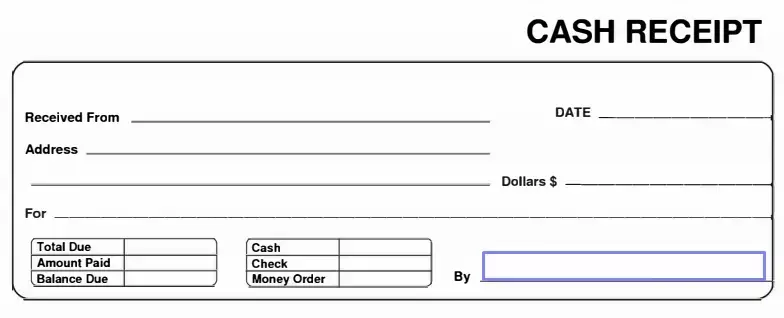
A cash receipt details the amount of cash received, the transaction date, the purpose or reason for the payment, and the payer’s and payee’s details. The template also includes a space for the signature of the person who received the money, providing an additional layer of verification.
The purpose of a Cash Receipt is to provide a tangible record of the transaction for both the giver and the receiver of the cash. It serves as proof of payment for the payer, which is crucial for financial record-keeping, resolving disputes, and, in some cases, tax documentation. For the recipient, it helps manage and track cash flow, ensure accurate accounting, and maintain detailed financial records.
A cash receipt and an invoice look alike but do different jobs. An invoice asks the customer to pay, while a cash receipt confirms that the money has been received. Many small businesses issue both, and a sales receipt works the same way for purchases made by card or check.
| Invoice | Cash receipt | |
|---|---|---|
| Purpose | Asks the customer to pay | Confirms the money was received |
| Issued | Before the customer pays | When the money changes hands |
| Shows | How much is owed | How much was paid and what is left |
Other Financial Forms
Are you interested in other financial forms? Check the list down below to see what you’ll be able to fill out and edit with FormsPal. Moreover, keep in mind that you may upload, fill out, and edit any PDF document at FormsPal.
Completing a cash receipt takes only a few minutes. Follow the ten steps below to complete the template, from the top of the page to the copies at the end. Each step covers one part of the receipt. Before you start, have these details ready:
Start with the right receipt template for a cash payment. FormsPal’s form-building software can create the file you need, so use it to get the proper template.
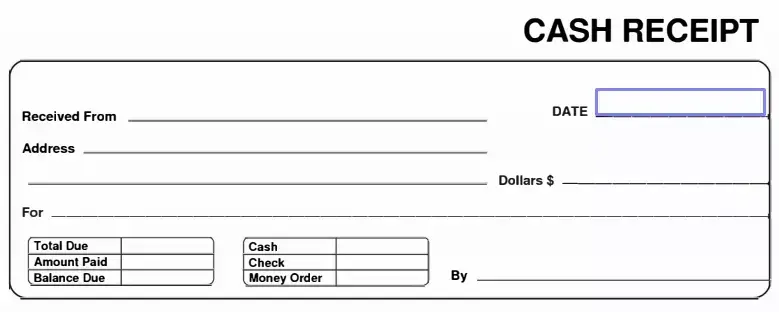
On the right-hand side, enter the date you issue the receipt.
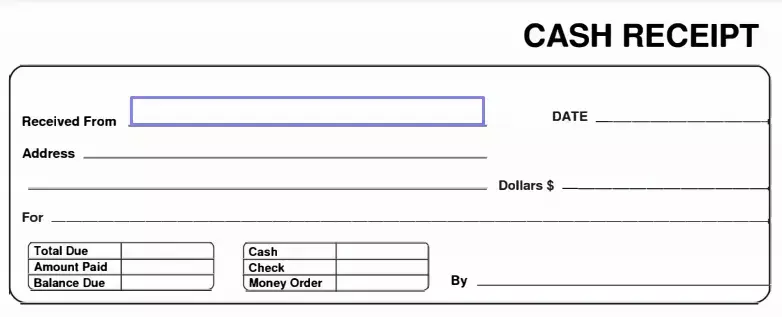
On the left-hand side, enter the full name of the person who gives you cash for services or goods.
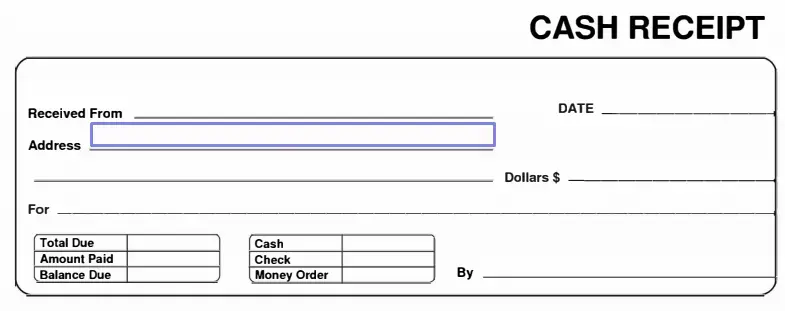
Next, enter the full address of the business that receives the cash. If you are the one receiving the cash, enter your own address.
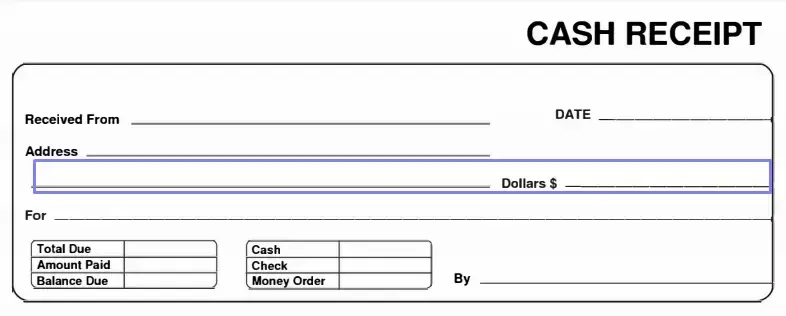
After the address, write the total sum in US dollars. Write it in words first, then repeat it in numbers.
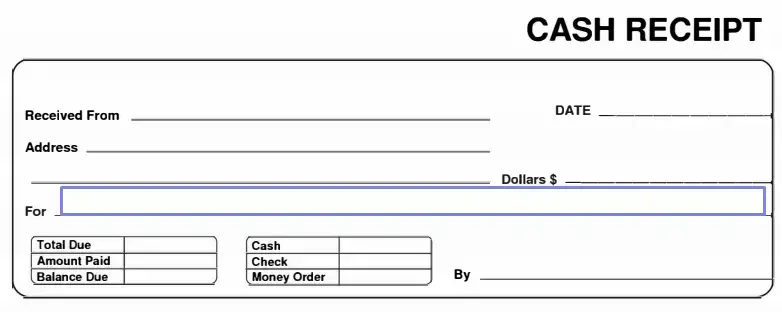
Explain what the money was for. Add the services or goods the customer paid for in the blank space provided.
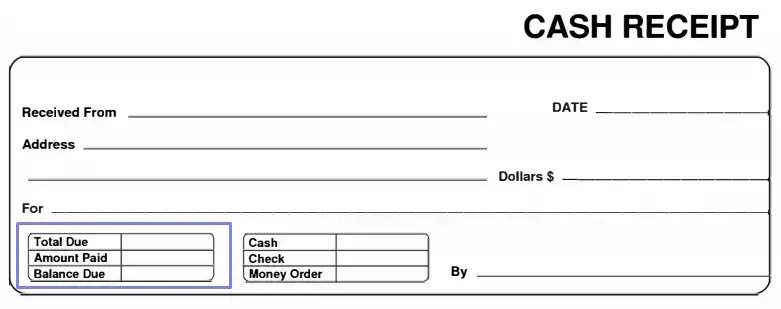
If the customer pays in parts, show it on the receipt. Near “Total Due”, enter the full amount the customer owes. Below it, enter the sum already paid and the sum left to pay (“Balance Due”).
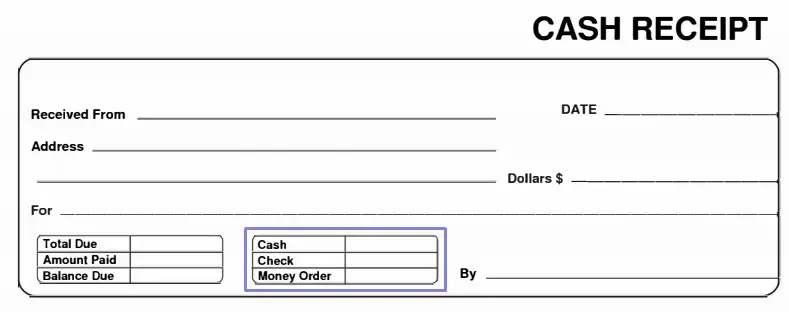
Select the method the customer is using. The three options are “Cash”, “Money Order” or “Check”.
Write either your own name or the name of the business, depending on who receives the money.
Make at least two copies of the receipt: one for the customer and one for the person who received the cash. Keep a third copy if you may need to prove that you were paid to a government office, for example for tax matters.
A cash receipt shows who paid, who received the cash, how much changed hands and what it was for. Add the method of payment, plus the sum left to pay if the customer pays in parts.
The signature shows that the person who received the money confirms the sale. It gives both sides a clear record of the transaction.
Yes. Enter the full total, then the sum paid so far and the sum left to pay. The last figure shows what the customer still owes.
The customer keeps the original as proof of the purchase, and the person who received the cash keeps a copy for their own records.
Yes. Enter each detail in the template online with FormsPal, then print the receipt so the person who received the money can sign it.
General information, not legal or tax advice.
