
Updated:
A Texas commercial lease agreement is a contract for renting business space. It names the landlord and tenant, the premises, the term, the rent and each side's repair duties. Landlords and tenants can fill it out online or download the free PDF below.

Build Your Document
Answer a few simple questions to make your document in minutes
Save and Print
Save progress and finish on any device, download and print anytime
Sign and Use
Your valid, lawyer-approved document is ready
A Texas commercial lease agreement sets out who rents which business space, for how long and at what rent, and who pays for the utilities, the insurance and each repair.
The FormsPal template runs 15 pages and walks through the parties, the leased premises, the term, rent, the security deposit, utilities, insurance, repairs, contact details and signatures. Most blanks are short, so a first draft of the rental paperwork takes about 20 minutes.
| Document Name | Texas Commercial Lease Agreement Form |
| Other Name | TX Commercial Lease Agreement |
| Relevant Laws | Tex. Prop. Code § 91.001 (notice to end a tenancy) and Tex. Prop. Code § 13.001 (unrecorded instruments) |
| Avg. Time to Fill Out | 20 minutes |
| # of Fillable Fields | 367 |
| Available Formats | Adobe PDF |
You need a Texas commercial lease agreement when a business rents space it uses for work, such as an office suite, a retail unit, a restaurant, a warehouse or a whole building, rather than a home.
Typical moments to put the deal in writing:
A different form fits better when the deal is not a lease of business space.
A commercial lease covers space a business uses for work, while a residential lease covers a dwelling, which Tex. Prop. Code § 92.001 defines as one or more rooms rented for use as a permanent residence under a single lease to one or more tenants.
A business space comes with more moving parts than a home, so landlords and tenants negotiate more of the details in writing. The commercial template adds these parts:
| Part of the lease | What the commercial template asks | Why it matters to a business |
|---|---|---|
| Use and hours | The permitted use of the space and the operating hours of the property | Ties the space to the business the tenant runs |
| After-hours HVAC | Whether heating and cooling outside opening hours is included or charged by the hour | Sets the cost of working late or on weekends |
| Repairs and maintenance | A table that assigns the roof, plumbing, HVAC, fire sprinklers and other items to the landlord or the tenant | Settles who pays when something breaks |
| Janitorial services | Whether the landlord or the tenant provides cleaning | Avoids a dispute over a monthly cost |
| Brokers | The principal and cooperating brokers, whom each represents and how each fee is paid | Shows who earns a fee from the deal |
| Relocation | Whether the landlord may ask the tenant to move to another space | Protects a tenant whose customers know its address |
| Signature blocks | By blocks with a printed name, title and date | Shows who signs for a company |
The deposit, late fee and lease copy rules that renters of a home read about sit in the same chapter as that dwelling definition. This page does not present them as rules for a business space; ask a Texas attorney which deposit and late fee rules reach your lease.
Tenants who rent a home should use a residential rental agreement instead.
Tex. Prop. Code § 91.001 (notice to end a tenancy) and Tex. Prop. Code § 13.001 (leases that are never recorded) are among the Texas commercial lease agreement laws that reach a lease of business space as well as a home.
| Topic | Rule | Citation |
|---|---|---|
| Notice to end a monthly or month-to-month tenancy, rent period of at least one month | Subsection (a) covers a monthly tenancy or a tenancy from month to month, which the tenant or the landlord may end by notice. If a notice of termination is given under subsection (a) and the rent-paying period is at least one month, the tenancy ends on the later of the day named in the notice or one month after the day the notice is given. These rules do not apply if the landlord and the tenant agreed in an instrument signed by both parties on a different period of notice or that no notice is required, or if there is a breach of contract recognized by law. | Tex. Prop. Code § 91.001 |
| Notice to end, rent period shorter than a month | If a notice of termination is given under subsection (a) and the rent-paying period is less than a month, the tenancy ends on the later of the day named in the notice or the day after a period as long as the rent-paying period, counted from the day the notice is given. | Tex. Prop. Code § 91.001 |
| Lease that is never recorded | An unrecorded instrument is binding on a party to it, on the party's heirs and on a subsequent purchaser who does not pay a valuable consideration or who has notice of it. | Tex. Prop. Code § 13.001 |
A Texas tenancy ended by a notice given under Tex. Prop. Code § 91.001(a), with rent paid for a period of at least one month, ends on the later of the day named in the notice or one month after the day the notice is given.
A fixed-term lease ends on the expiration date written in it, so enter the commencement and expiration dates in full and read the holdover paragraph with the other party.
Tex. Prop. Code § 13.001 makes an unrecorded instrument binding on a party to it, on the party's heirs and on a subsequent purchaser who does not pay a valuable consideration or who has notice of it, so a commercial lease that is never recorded still binds the landlord and the tenant.
Tex. Prop. Code § 93.005 sets the deposit refund date for commercial rental property: the landlord refunds the security deposit not later than the 60th day after the tenant surrenders the premises and gives notice of a forwarding address under Tex. Prop. Code § 93.009.
Before returning the deposit, the landlord may deduct damages and charges for which the tenant is legally liable under the lease or that result from a breach of the lease, under Tex. Prop. Code § 93.006.
Tex. Prop. Code § 93.006 bars the landlord from keeping any part of the deposit to cover normal wear and tear.
A landlord who keeps all or part of the deposit gives the tenant the balance, if any, with a written description and itemized list of all deductions, under Tex. Prop. Code § 93.006. Under Tex. Prop. Code § 93.006, that description and list are not required if the tenant owes rent when surrendering possession and no controversy exists over the amount of rent owed.
Write the terms below into the lease in plain figures and ask a lawyer whether a statute adds to them.
To fill out the Texas commercial lease agreement, complete the FormsPal template part by part in the order of the form, from the addenda checkboxes to the signature blocks, and initial each page as you go.
Download the PDF and fill it in with the PDF editor, or create the lease online with our form builder and enter the same information in each part.
The screenshots under each step show the FormsPal Texas commercial lease agreement template filled with sample entries in blue, so you can see where each answer goes. The names, addresses, dates and amounts are examples only.
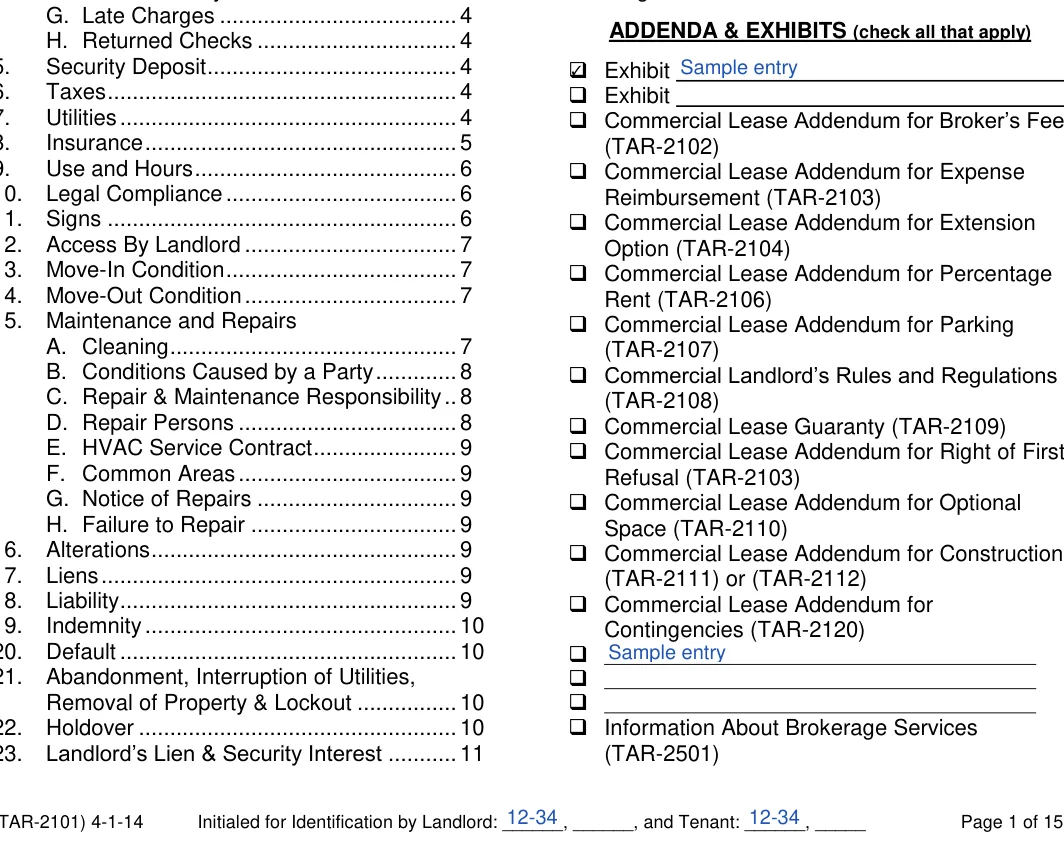


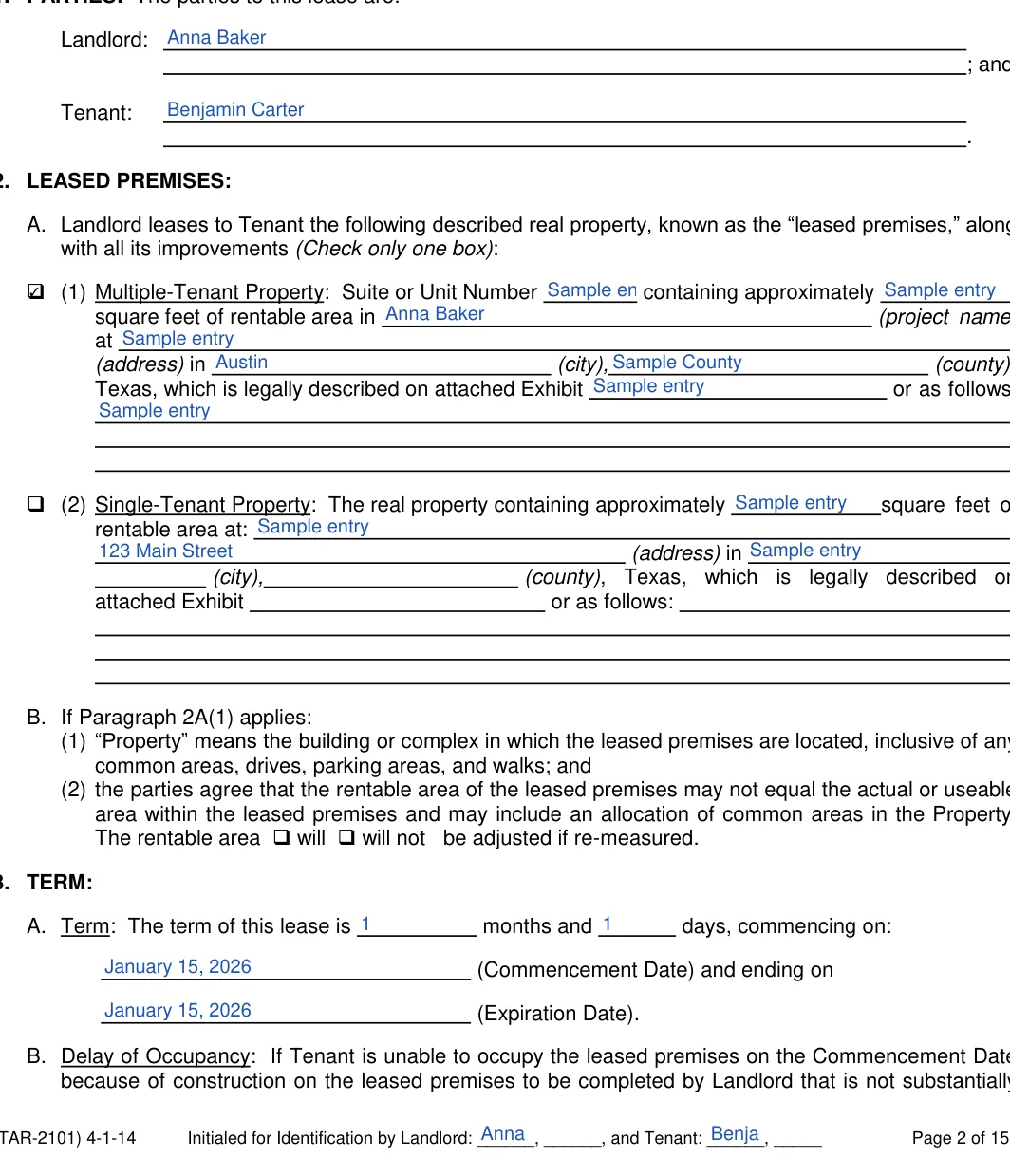

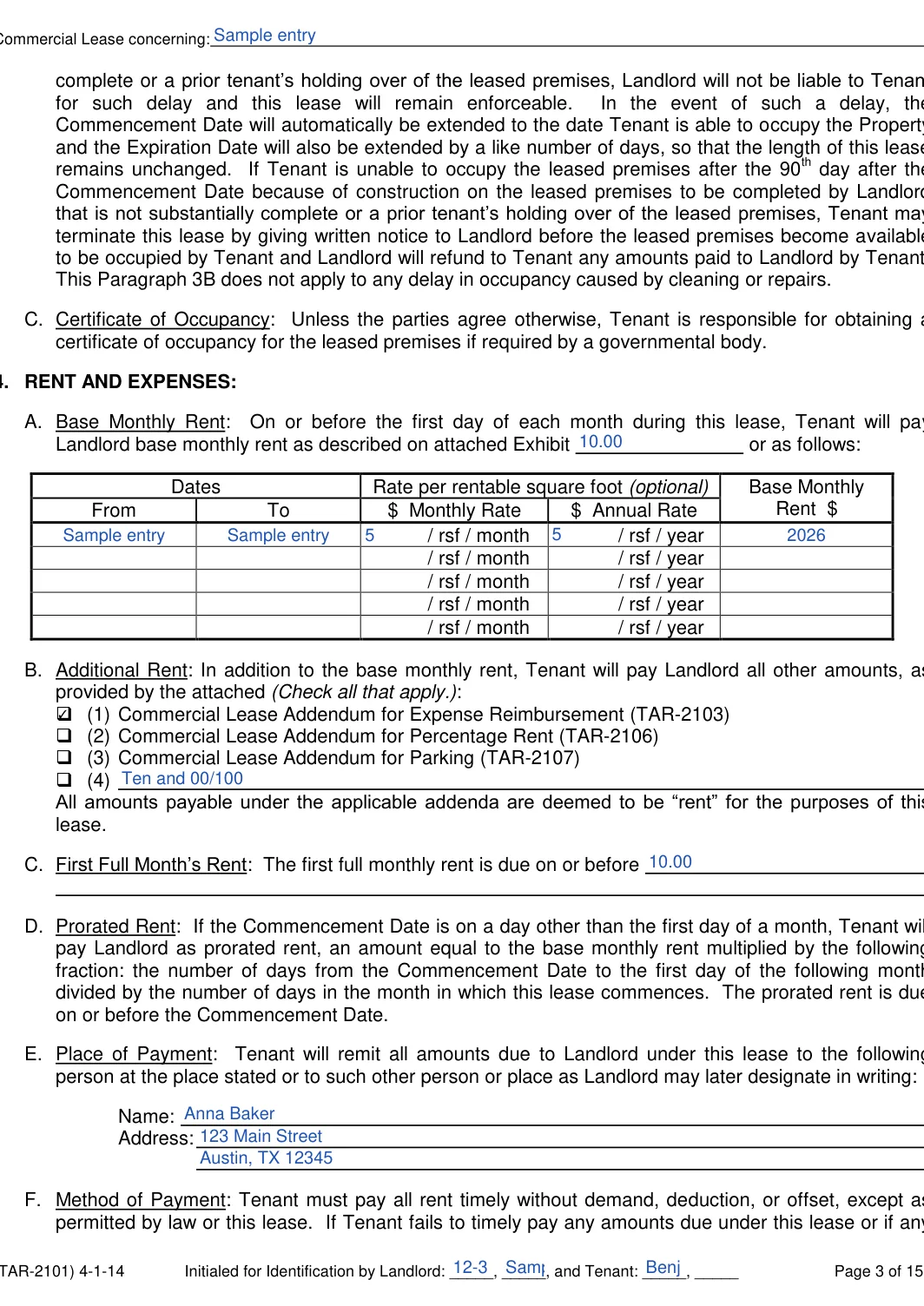

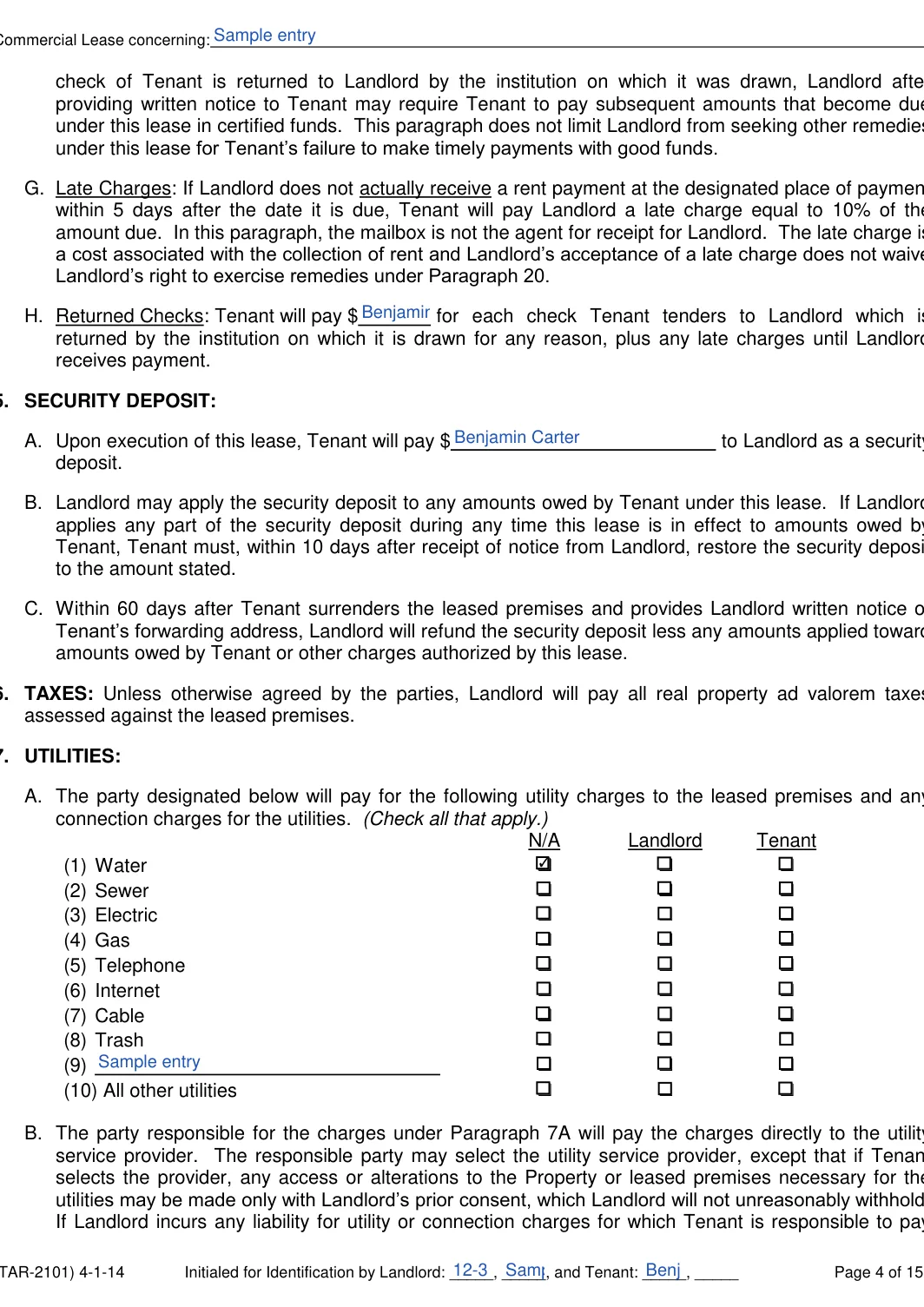
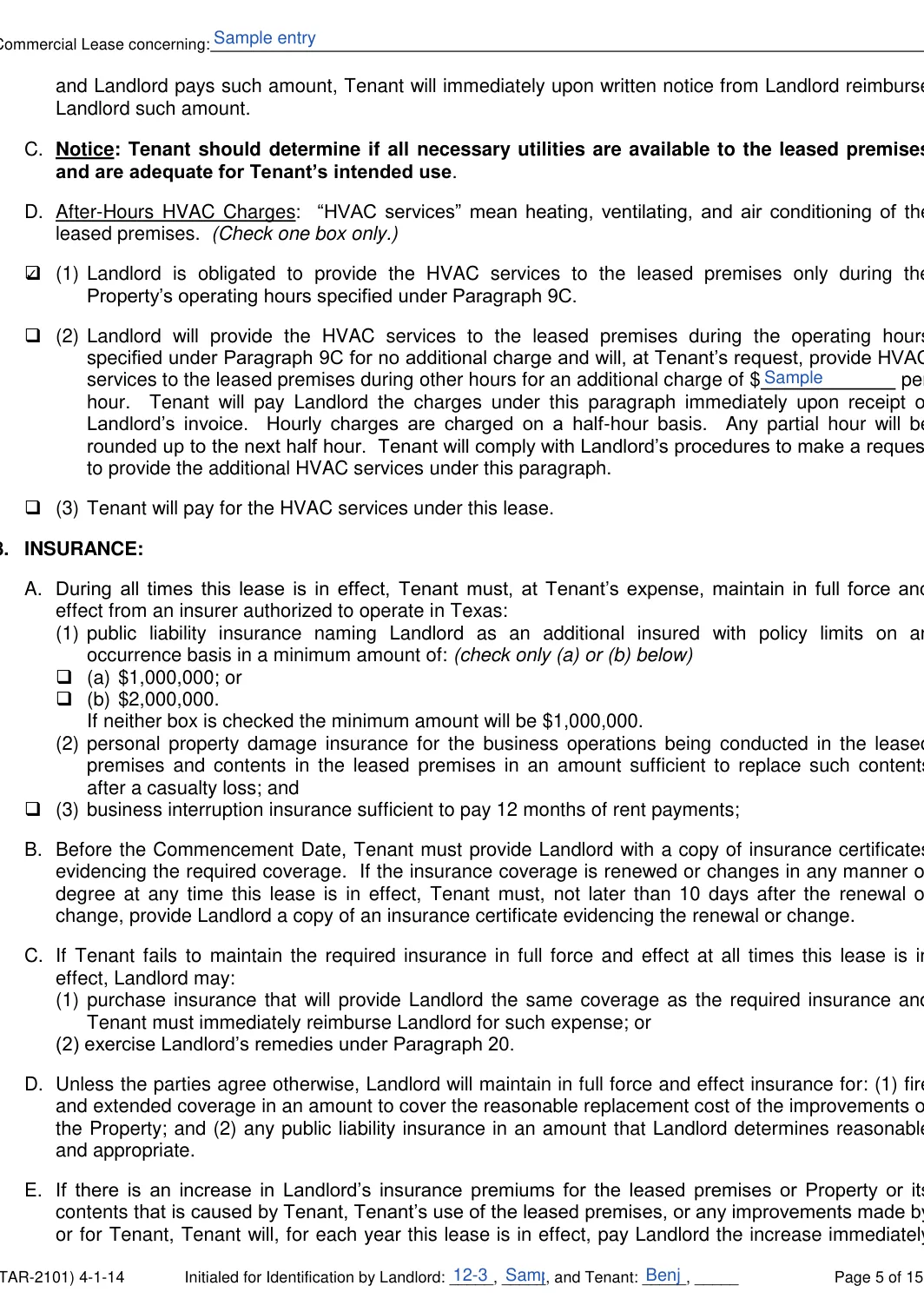

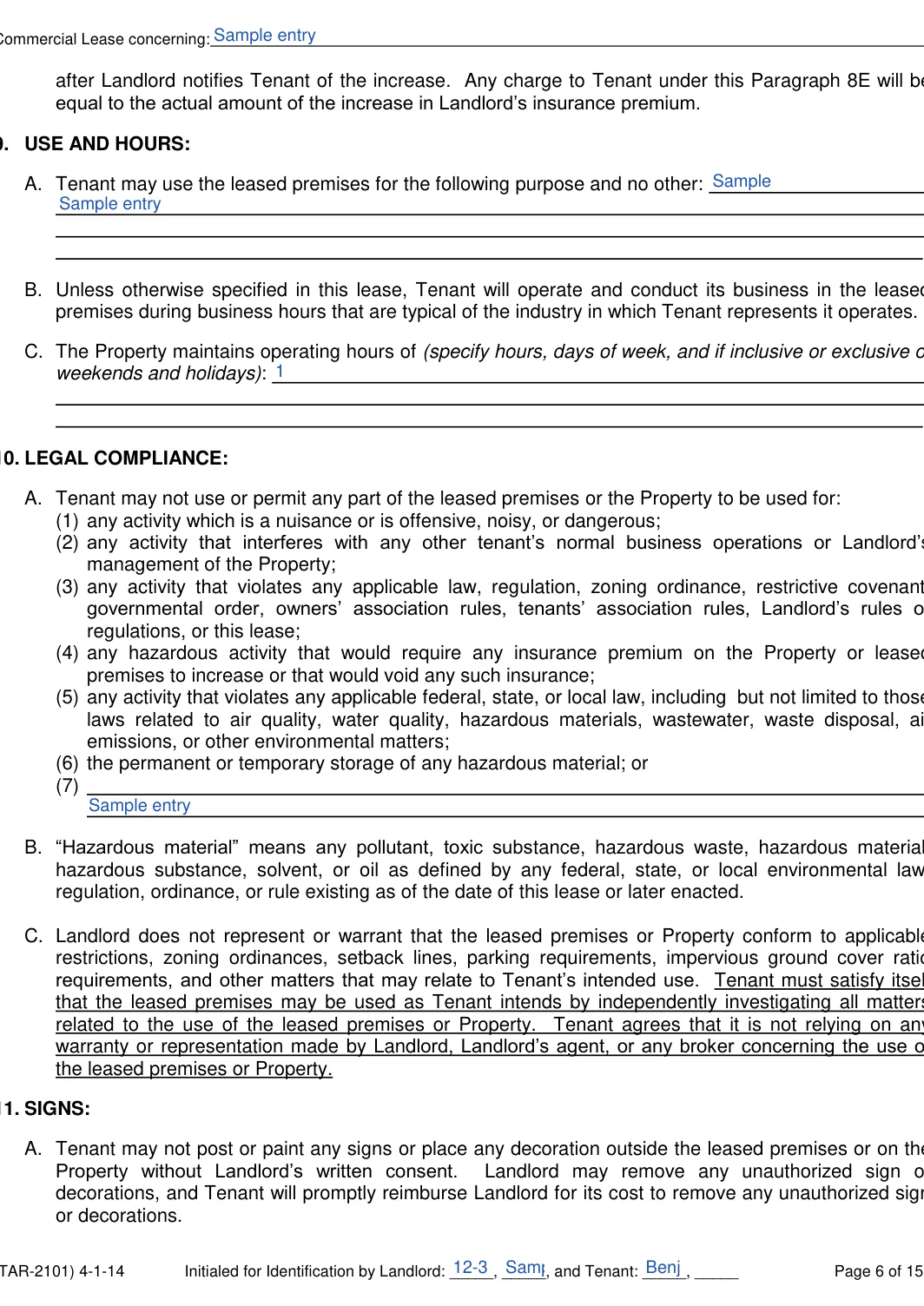
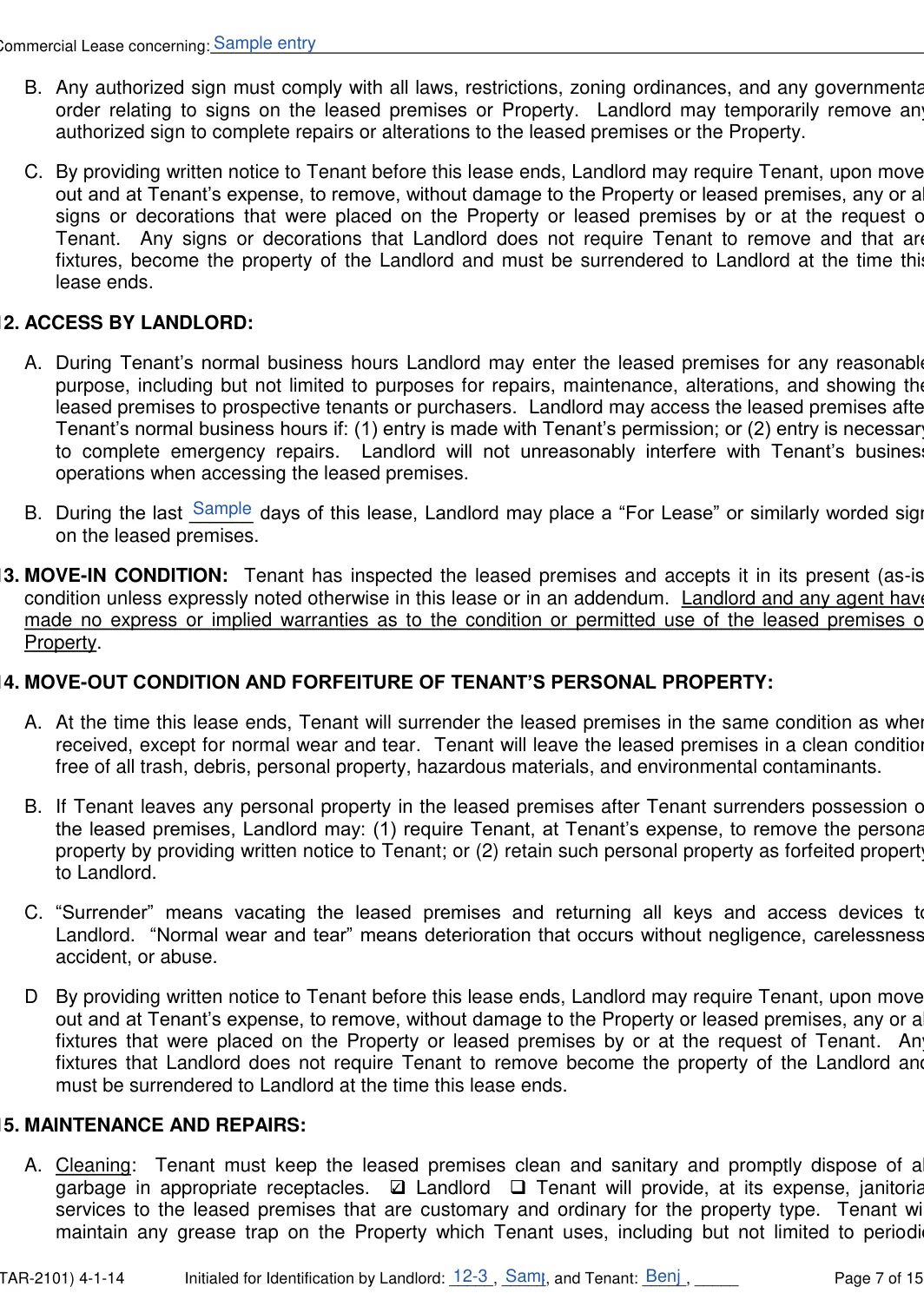

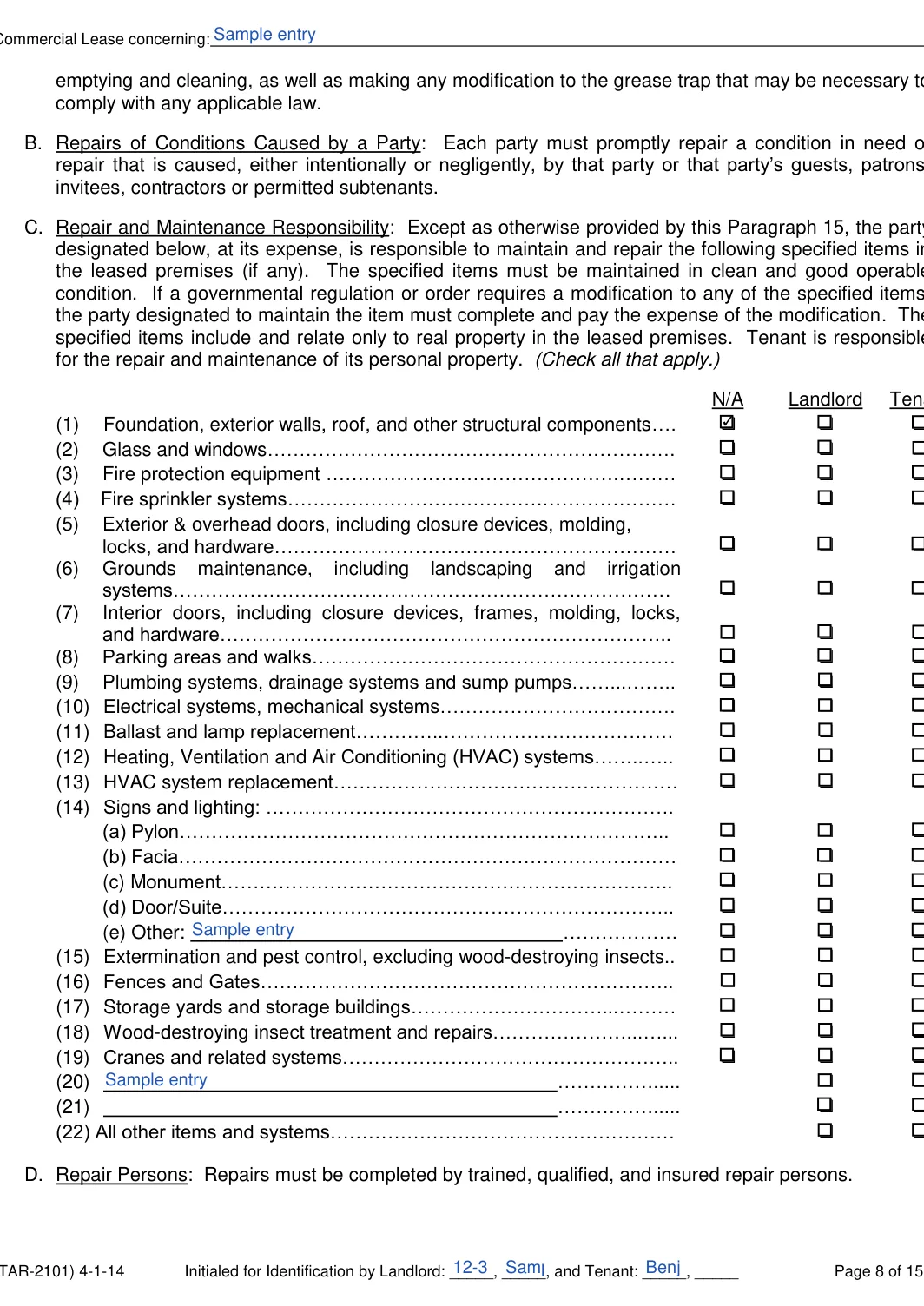
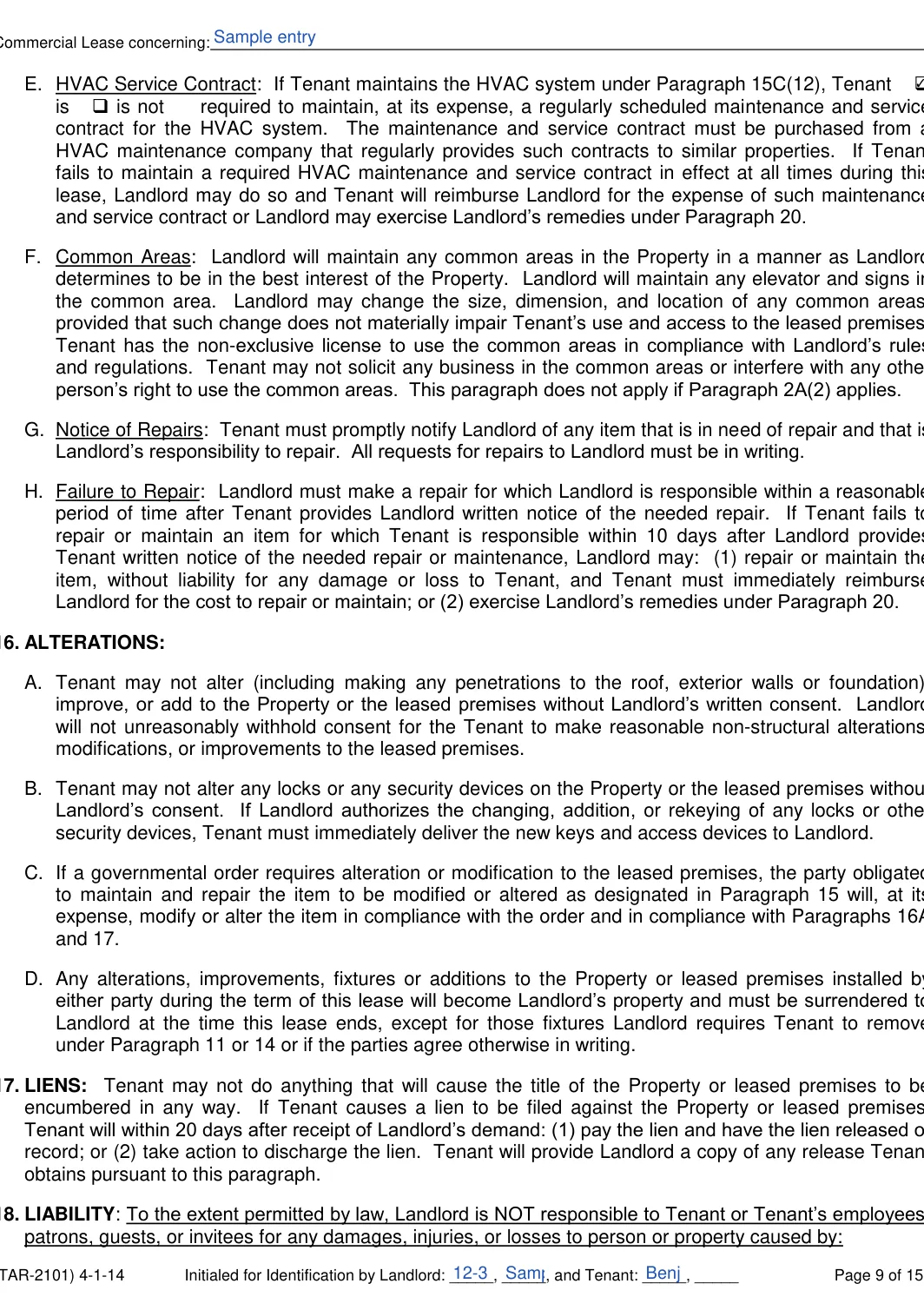

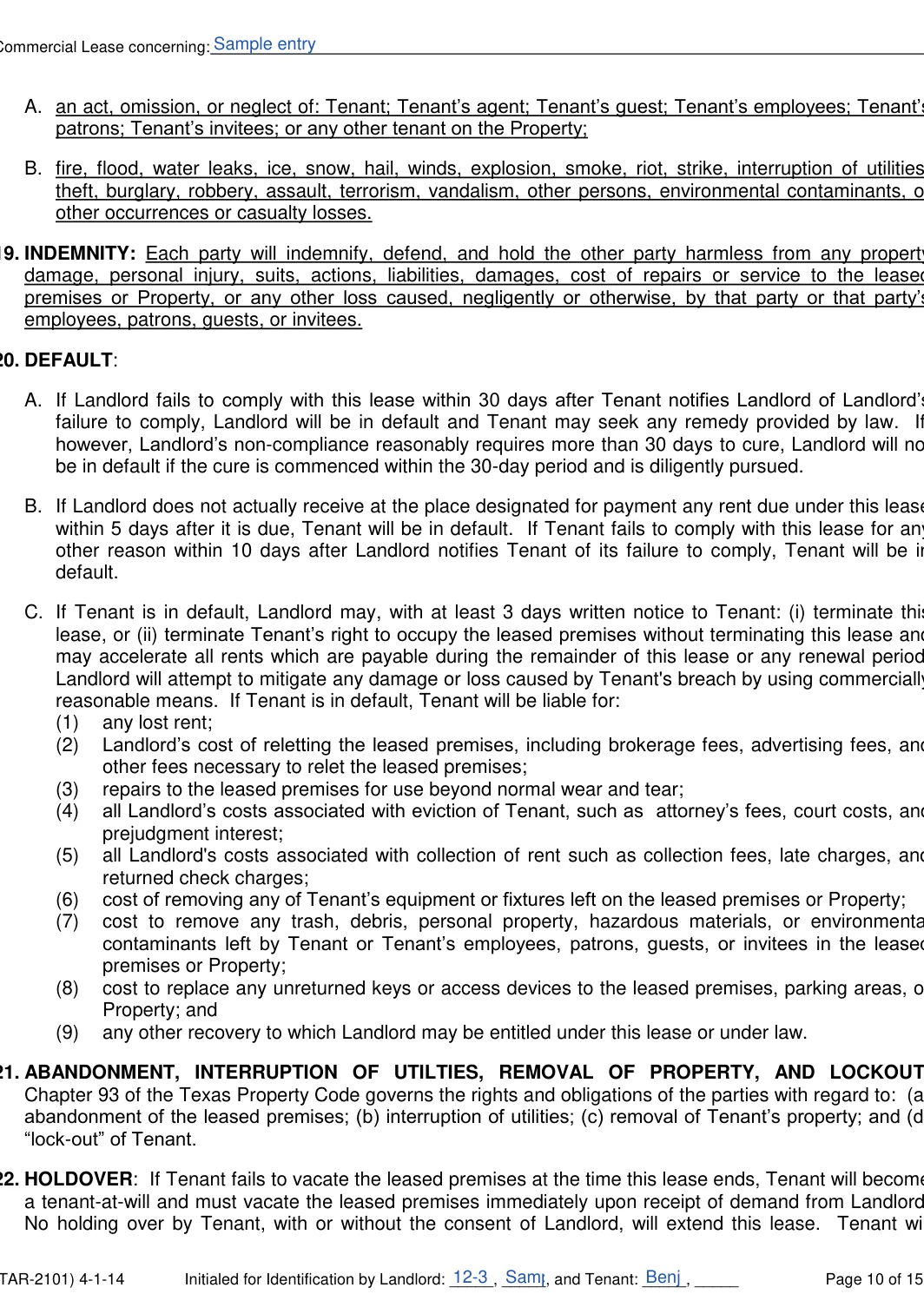
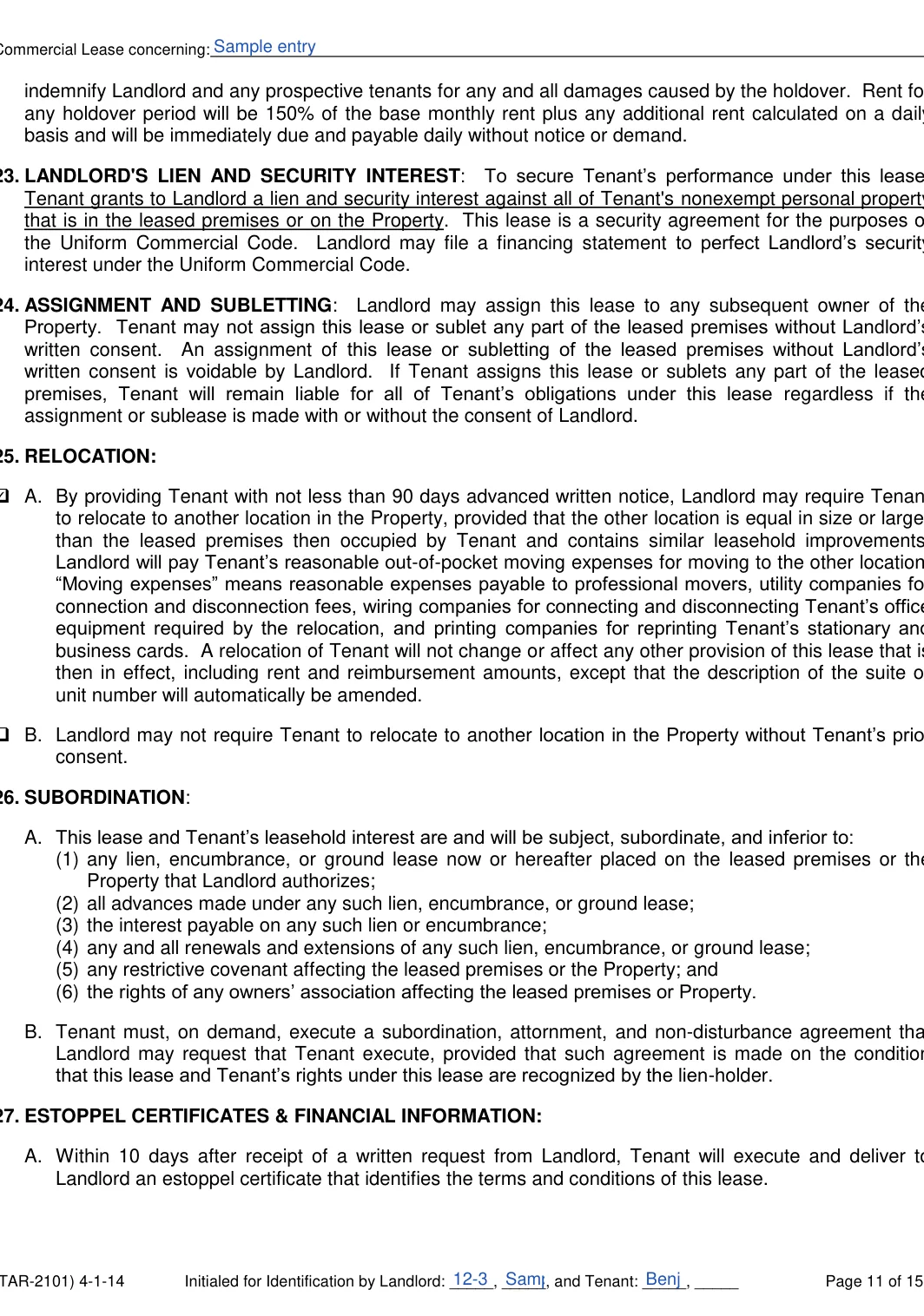

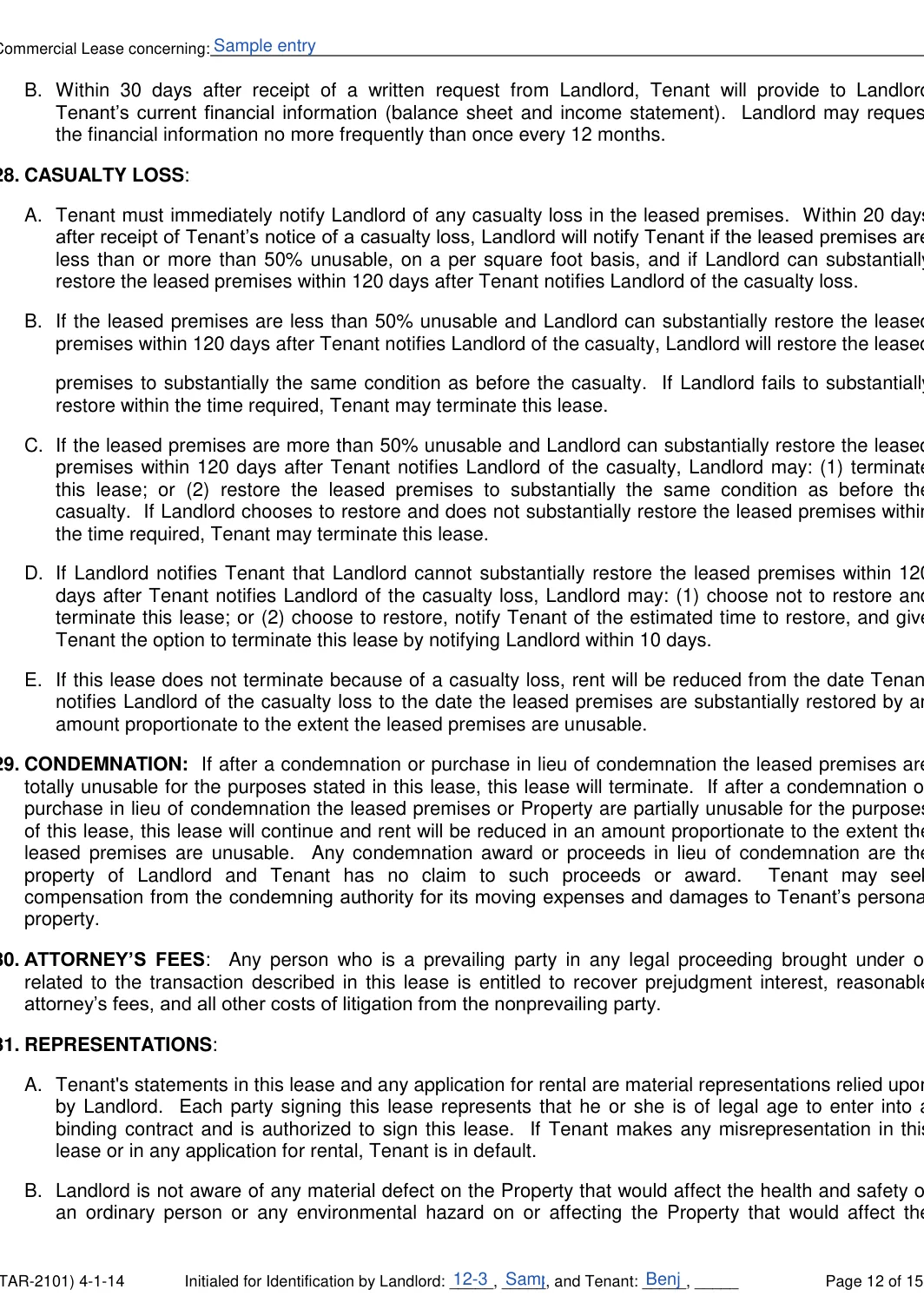
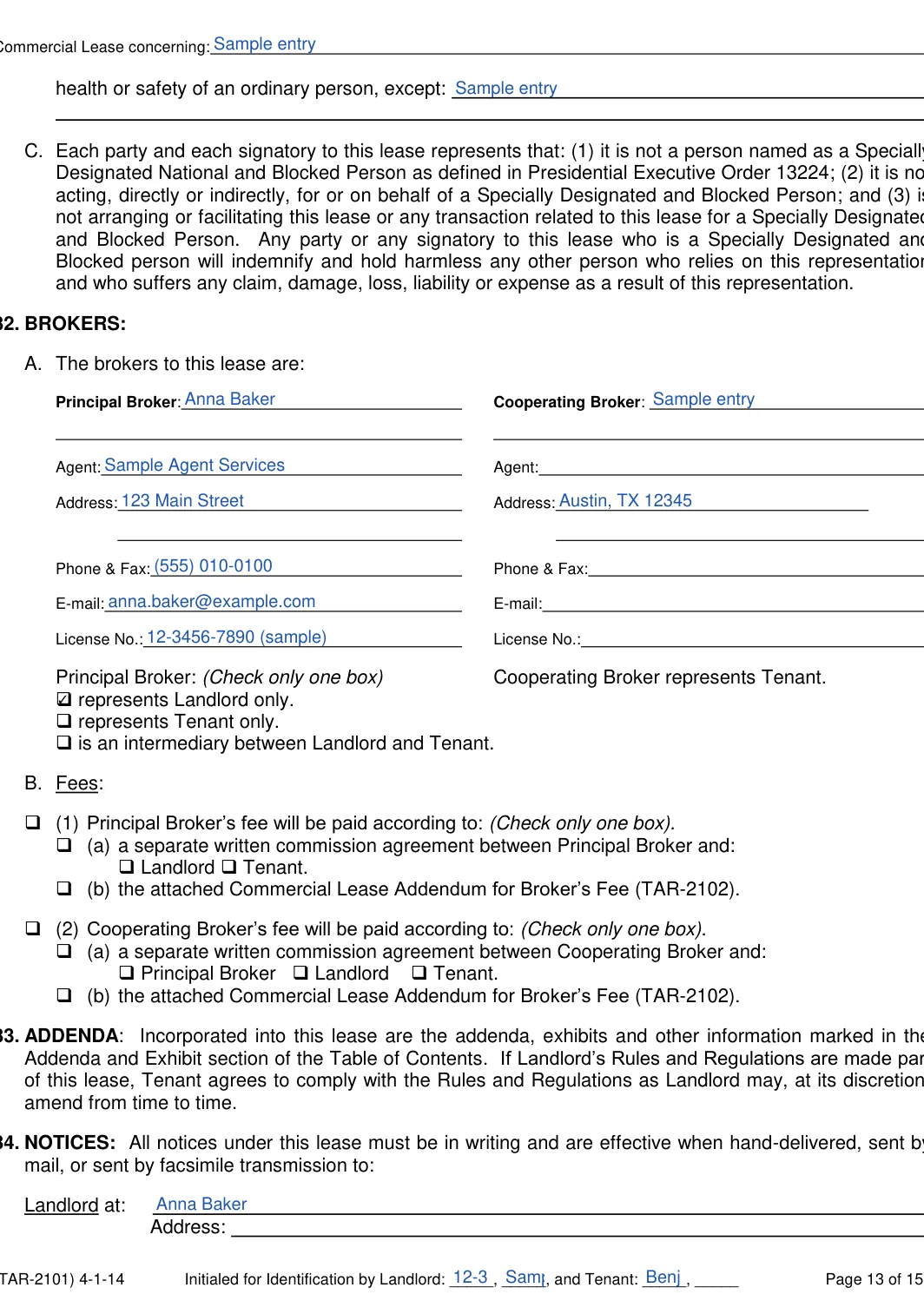

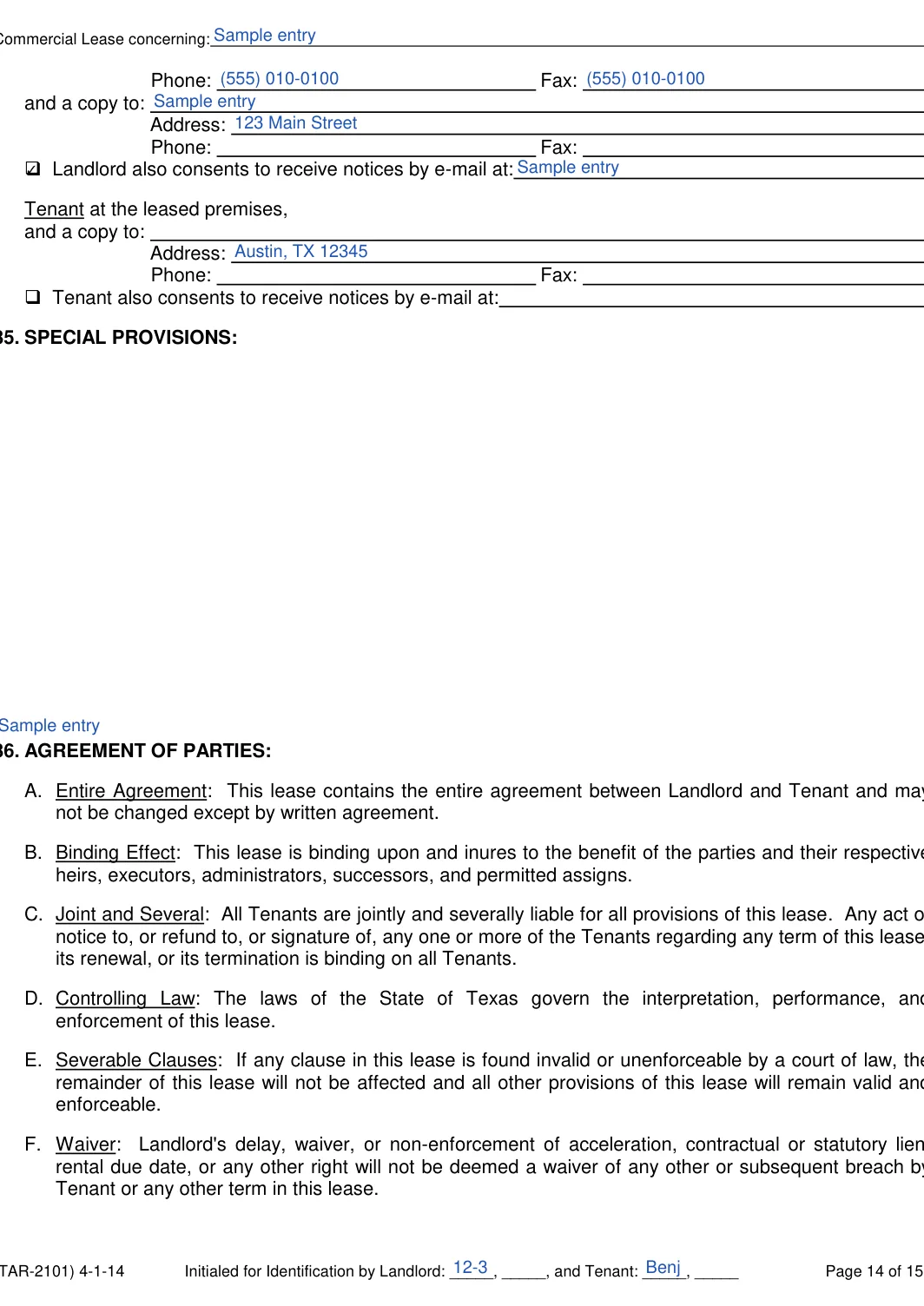

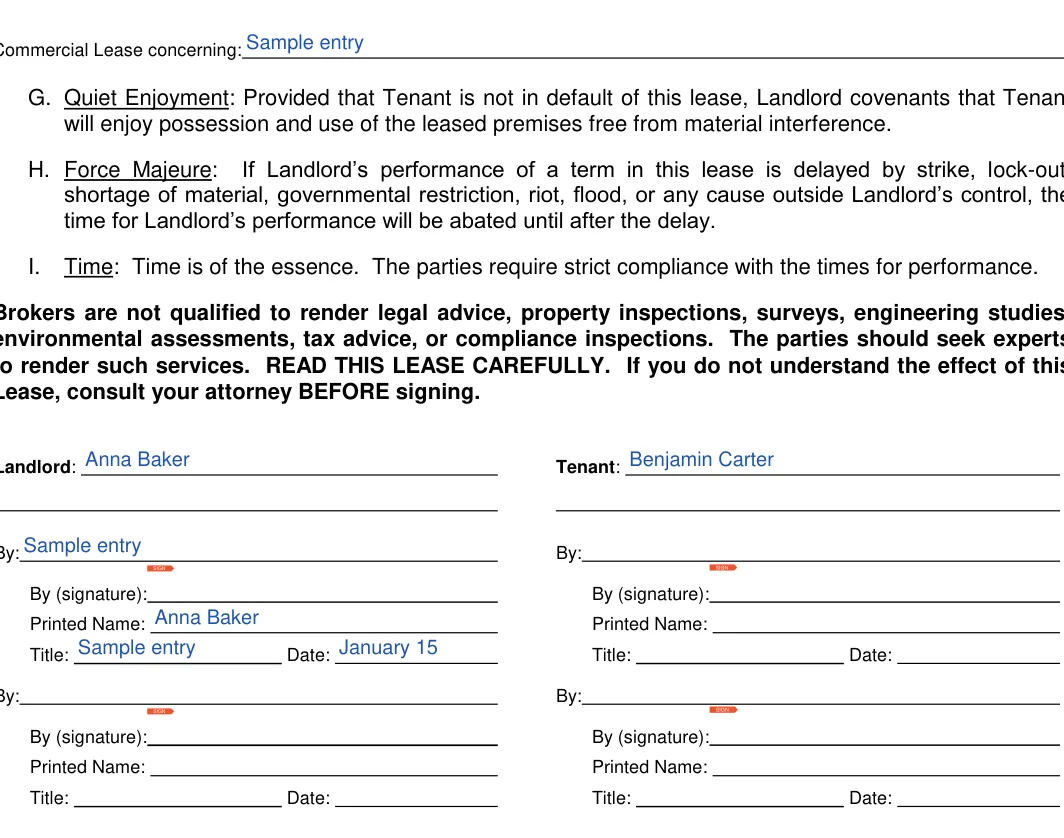
To sign the Texas commercial lease agreement, both parties read every page, initial each page, sign the By blocks with a printed name, title and date, and each keep a signed copy.
When every part is complete, check the names, dates and amounts against your notes one more time. Then follow these steps to finish the lease and share the finished copy with the other party.
Texas lease agreement templates: the other Texas lease forms on FormsPal, from home leases to termination letters.
A commercial lease agreement is a contract that lets a business tenant use a landlord’s property, such as an office, a shop or a warehouse, in exchange for rent. It lists the space, the term, the rent and the duties of each side.
Yes, the template has columns for a principal broker and a cooperating broker, with boxes for whom each broker represents and how each fee is paid. If your broker proposes another commercial lease form, compare its paragraphs with this template before you choose.
This template is a full commercial lease, not a short form, but many of its pages carry only printed paragraphs and initial lines. The blanks you fill in are short, and the online builder asks for them as plain questions.
Yes, choose Create My Document at the top of this page, answer a few questions and download the finished lease. You can also download the blank PDF and fill it in on your own device.
The template asks you to check multi-tenant or single-tenant property and to describe the space, so it can describe an office suite, a retail unit or a whole building.
Use the large box on page 14 for any extra terms and the exhibit lines on page 1 to name attachments.

General information, not legal or tax advice.
