
A Rhode Island living will is a written document that outlines an individual’s preferences for medical care, particularly end-of-life care such as life support and resuscitation efforts. Also known as an “advance directive,” it is used when a person is terminally ill, permanently unconscious, or otherwise unable to make decisions about their medical treatment.
Last Updated: September 2026. This guide is reviewed and updated regularly to reflect current Rhode Island law. If you notice an error or outdated information, please contact us.
A living will form includes decisions about using life-sustaining treatments, such as mechanical ventilation, artificial nutrition and hydration, and other medical interventions. The document is executed with a durable power of attorney for health care, which appoints another person (a healthcare proxy) to make medical decisions on the declarant’s behalf.
Healthcare providers in Rhode Island are legally bound to follow the instructions in a living will as long as it complies with state laws. If there is a conflict between the patient’s appointed health care proxy and the living will, the instructions in the living will generally take precedence unless the power of attorney document specifies otherwise.
Under R.I. Gen. Laws § 23-4.11-3, any competent individual eighteen years of age or older may sign a Rhode Island living will. Another person may sign at the declarant’s direction if the declarant cannot sign in person. The signing must happen in the presence of two subscribing witnesses who are not related to the declarant by blood or marriage.[1]
Each witness confirms in writing what they saw. Rhode Island’s statute gives the exact wording:
“The declarant is personally known to me and voluntarily signed this document in my presence.”
Once the declaration is signed and witnessed, give copies to your physician and your health care agent, and keep the original where they can find it.
Rhode Island’s statute also sets out its own model declaration wording in § 23-4.11-3(d), the language many printed Rhode Island forms follow. That model wording includes a checkbox for artificial feeding: the declarant marks whether the authorization includes or does not include withholding or withdrawing artificial nutrition and hydration.[2]
| Document Name | Rhode Island Living Will Form |
| State Form Name | Rhode Island Advance Directive |
| Signing Requirements | Two Witnesses |
| Validity Requirements | § 23-4.11-3 |
| State Laws: Rhode Island General Laws, Title 23, Chapter 4.11 | |
A Rhode Island living will is valid when a competent adult who is eighteen or older signs it, or directs someone else to sign it for them. The signing must happen in the presence of two witnesses who are not related to the declarant by blood or marriage. Each witness also signs, confirming they watched the declarant sign voluntarily.[1]
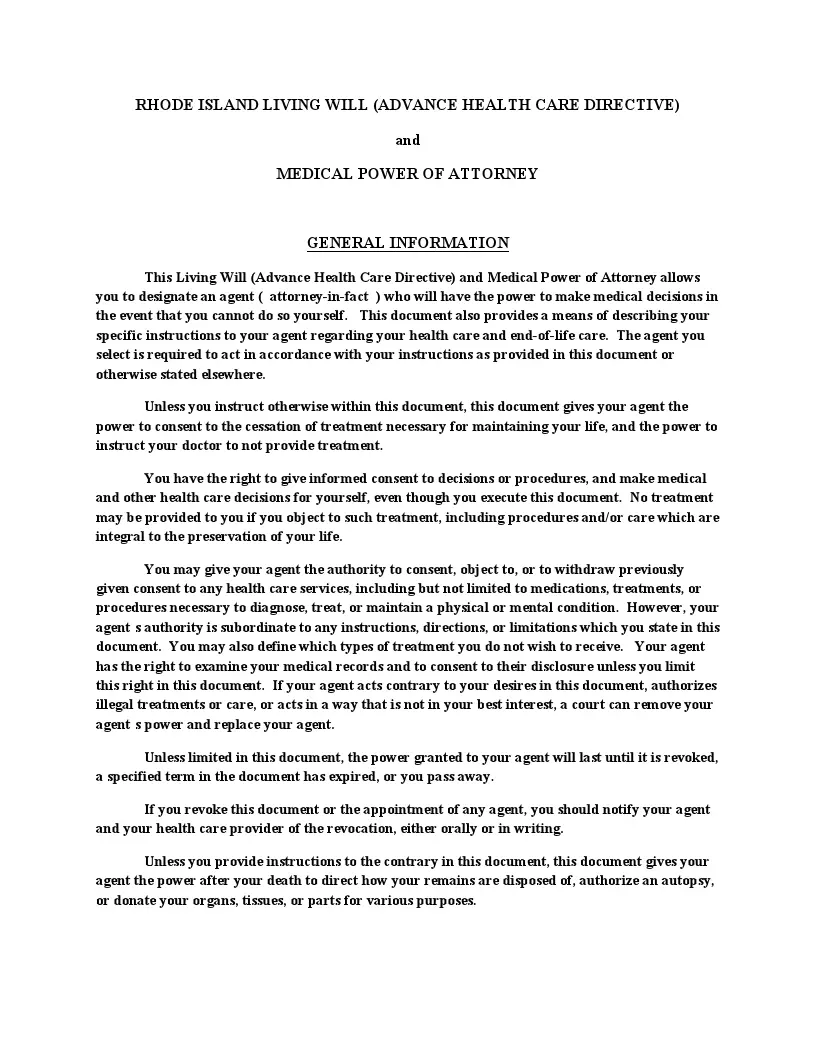
Below is a detailed guide to help you complete the Rhode Island living will form. Review the document periodically and update it if your health circumstances or preferences change. If you make changes, follow the same signing and witnessing steps for the new copy.

Other Living Will Forms by State
General information, not legal or tax advice.
Unless noted otherwise, the sources below are from the R.I. Gen. Laws.
