Batting Order Sheet Form PDF Details
In baseball and softball, the strategic arrangement of players in the batting order is one of the most consequential pre-game decisions a coach makes. The batting order sheet is the formal document that captures that decision and communicates it to scorekeepers, umpires, and the opposing team. Coaches approach the lineup with careful consideration of each player's current form, match-up advantages, and role within the team's offensive strategy.
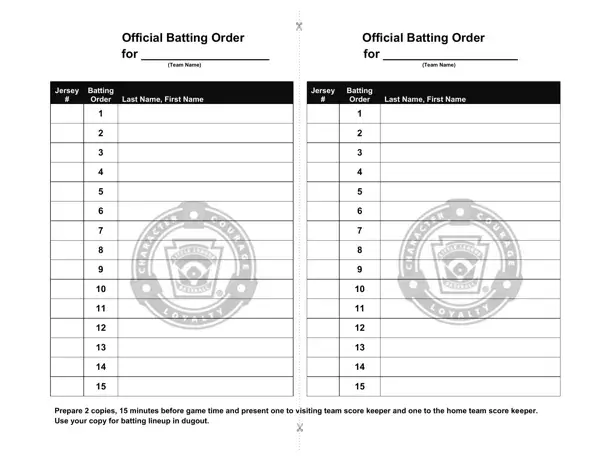
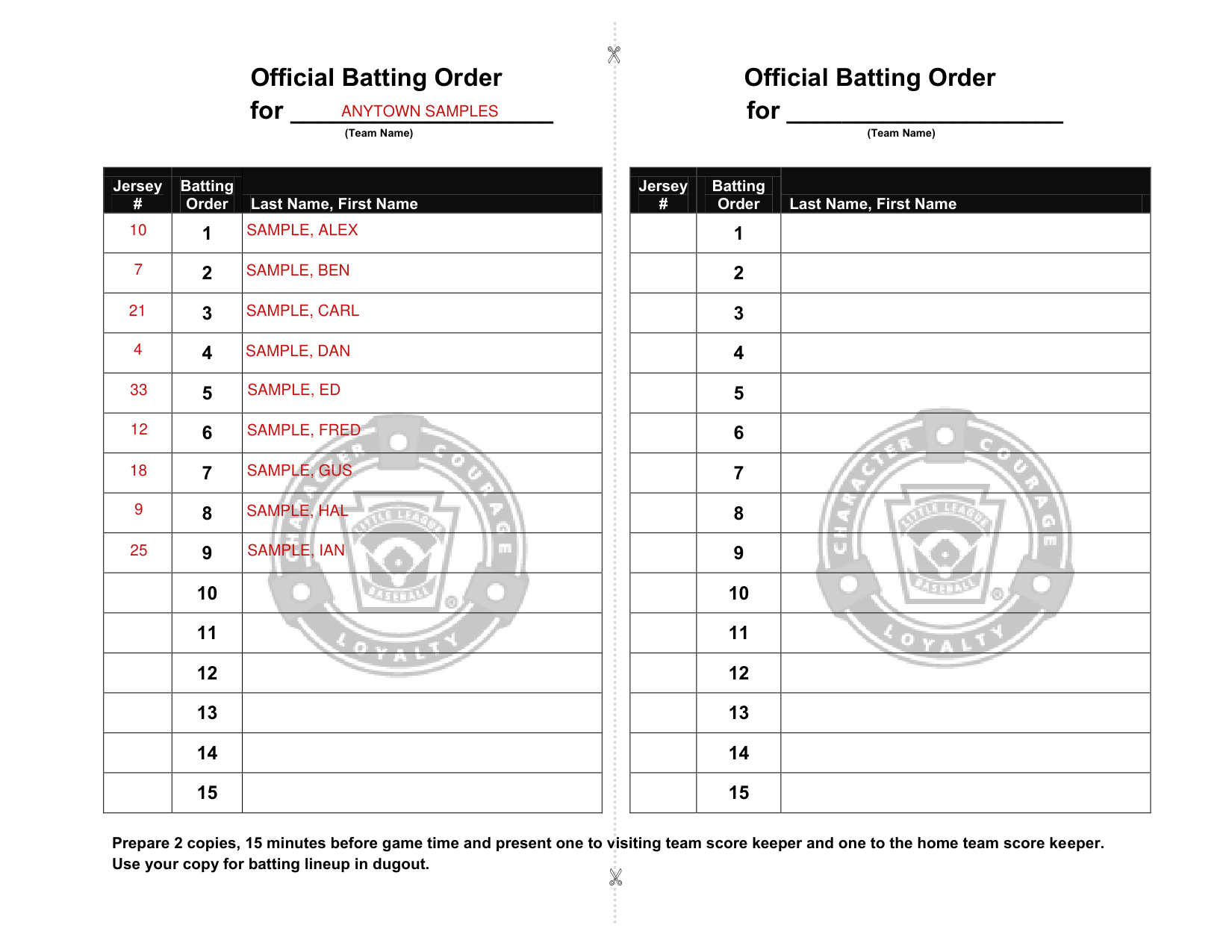
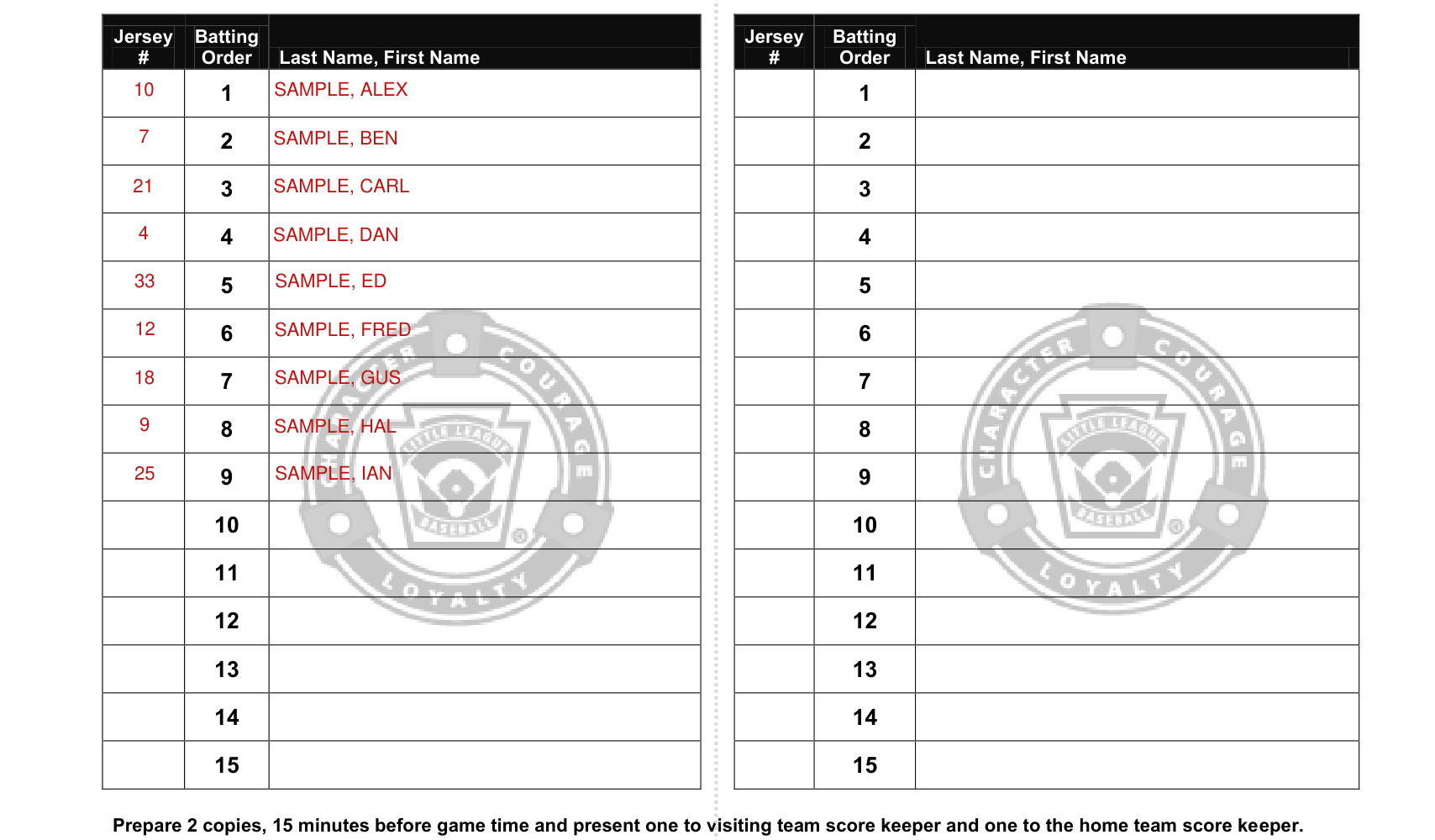
Each entry in the lineup lists the batting position number, the player's jersey number, and their last and first name. Most leagues require coaches to prepare the form in at least two copies and submit both no later than 15 minutes before the scheduled start. One copy goes to the home team's scorekeeper, one to the visiting team's scorekeeper, and a third is typically kept in the dugout for reference during the game.
What information a batting order sheet includes
A standard batting order sheet records the following details for each position in the lineup:
- Batting position - numbers 1 through 9, or up to 15 in youth leagues using a continuous batting order
- Jersey number - the official number on the player's uniform, used for quick identification by scorekeepers
- Player name - last name listed first, then first name, for consistent identification throughout the game
- Defensive position - where each player fields (pitcher, catcher, first base, shortstop, outfield, etc.)
How coaches structure an effective batting order
Most coaches follow a proven framework when building the lineup:
- Leadoff (1st) - fastest runner, highest on-base percentage, skilled at reading pitches and working the count
- 2nd batter - consistent contact hitter who can execute hit-and-run plays and move runners into scoring position
- 3rd batter - the team's best all-around hitter, combining power and contact for maximum production
- Cleanup (4th) - primary power hitter responsible for driving in runners and setting the offensive tone
- 5th through 7th - reliable run-producers who can sustain rallies and protect the cleanup hitter in the order
- 8th and 9th - weaker hitters or, in leagues without a designated hitter, the pitcher
Coaches track the results of each at-bat using a baseball scorecard, which works alongside the batting order sheet to record runs, hits, and errors inning by inning. Teams assembling a new roster can also document player eligibility and contact details using an AABC roster form.
Lineup changes and substitutions
Once the batting order is submitted, it is official and cannot be altered except through substitution. A pinch hitter or pinch runner must bat in the same spot in the order as the player they replace. All substitutions must be reported to the home plate umpire and recorded by the official scorer.
Youth and recreational leagues often allow a free substitution rule, where players may re-enter the game without restriction. Coaches should confirm their league's substitution rules before the game to avoid confusion during play. Coaches who want to track player development across a full season can use a baseball field lineup template to log defensive assignments alongside batting positions game by game.
| Question | Answer |
|---|
| Form Name | Batting Order Sheet Form |
| Form Length | 1 pages |
| Fillable? | No |
| Fillable fields | 0 |
| Avg. time to fill out | 15 sec |
| Other names | t ball batting order template, official batting order, batting lineup template, baseball batting order template |