
Dd Form 2507 PDF Details

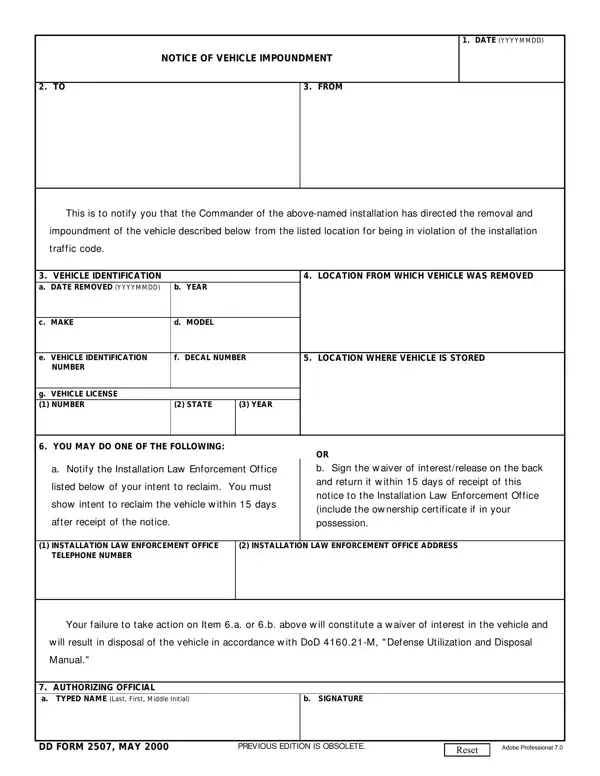
The DD Form 2507, officially titled Notice of Vehicle Impoundment, is a U.S. Department of Defense form issued by military installation law enforcement when a vehicle is towed for violating installation traffic codes. The form provides formal written notification to the vehicle owner, satisfying due process requirements before the installation may dispose of an abandoned or unclaimed vehicle.

What the form covers

The form documents essential details across several sections. The Notice section records the date of the notice and the date the vehicle was impounded. The Vehicle Identification section captures the complete vehicle description, including make, model, year, color, body style, license plate number, state of registration, and the vehicle identification number (VIN). A remarks field allows enforcement personnel to note pre-existing damage, contents left in the vehicle, or other relevant observations at the time of towing.

Owner options and the 15-day deadline

Once notified, the vehicle owner has two choices. The first option is to contact the Installation Law Enforcement Office directly to arrange for reclaiming the vehicle, pay any applicable towing and storage fees, and provide proof of ownership. The second option is to complete and sign the waiver section, formally giving up any claim or interest in the vehicle. Owners must respond within 15 days of the notice date. Failure to act within that period allows the installation to begin disposal proceedings under applicable federal regulations.

The certification section requires the owner to acknowledge their identity, certify vehicle ownership, waive any applicable statute of limitations for property disposal, and disclose any outstanding liens or encumbrances on the vehicle. Lienholders may also have separate notification rights under applicable law.

For other official Department of Defense forms, see DD Form 93 (Record of Emergency Data), DD Form 1351-2 (Travel Voucher), and DD Form 2656 (Data for Payment of Retired Personnel). For vehicle-related forms, the 7-Day Vehicle Permit and Abandoned Vehicle form are also available on FormsPal.

QuestionAnswer
Form NameDD Form 2507
Form Length2 pages
Fillable?No
Fillable fields0
Avg. time to fill out30 sec
Issuing agencyU.S. Department of Defense
Other namesNotice of Vehicle Impoundment, dd 2507, vehicle impoundment notice

How to Edit Dd Form 2507 Online for Free

Opening and completing the form through FormsPal is fast and straightforward. The FormsPal online PDF editor lets you view and fill in the document directly in your browser without installing any software. Follow the steps below to get started.

Step 1: Click the orange Get Form button at the top of this page. This opens the form in the FormsPal PDF editor.

Step 2: Review Section 1, the notice header. This section is typically pre-filled by installation law enforcement at the time of impoundment. It includes the notice date, the impoundment date, and the specific installation traffic regulation that was violated. Confirm all dates are accurate before proceeding.

Step 3: Check the Vehicle Identification section. Cross-reference the listed make, model, year, VIN, and license plate number against your vehicle registration documents. If any details appear incorrect, note the discrepancy before responding to the notice, as errors may affect the reclaim process.

Step 4: Select your response option. If you intend to reclaim the vehicle, choose the first option and contact the Installation Law Enforcement Office listed on the form. If you choose to relinquish ownership, complete and sign the Waiver of Interest portion. You must respond within 15 days of the notice date to preserve your ownership rights.

Step 5: Complete the Owner Certification block by signing and dating the form. This certifies your ownership, waives the statute of limitations for property disposal, and confirms whether any liens or encumbrances exist on the vehicle. Print clearly using your full legal name. Lienholders named on the vehicle title may also need to complete this section.

Step 6: Click Done to finalize the form. Download the completed PDF and keep a copy for your records before submitting it to the appropriate installation office. FormsPal does not store personal information entered into forms.

Frequently asked questions

What is DD Form 2507 used for?

The form serves as the official Notice of Vehicle Impoundment for U.S. military installations. Installation law enforcement issues it to formally notify vehicle owners that their vehicle has been towed for a traffic violation. It outlines the two response options available and the 15-day deadline for acting on them.

Who fills out the form?

Installation law enforcement personnel complete the notice and vehicle identification sections at the time of impoundment. The vehicle owner then receives the notice and fills in the response section to either reclaim the vehicle or sign the waiver of interest. Both parties sign the completed form.

What happens if I do not respond within 15 days?

If the owner does not contact the Installation Law Enforcement Office or sign the waiver within 15 days of the notice date, the installation may begin disposal proceedings for the vehicle under Department of Defense property management regulations and applicable federal rules. Acting promptly is essential.

Can I contest the impoundment?

Yes. Vehicle owners who believe their vehicle was impounded in error should contact the Installation Law Enforcement Office as soon as possible. Doing so promptly prevents the 15-day deadline from expiring while the dispute is being resolved. Bring your vehicle registration, proof of insurance, and a valid government-issued ID when you visit the office.

Are there fees to reclaim an impounded vehicle?

Towing and daily storage fees typically apply when reclaiming an impounded vehicle from a military installation. The specific fee schedule varies by installation. Contact the Installation Law Enforcement Office for the current fee amounts and accepted payment methods before arriving to pick up the vehicle.