
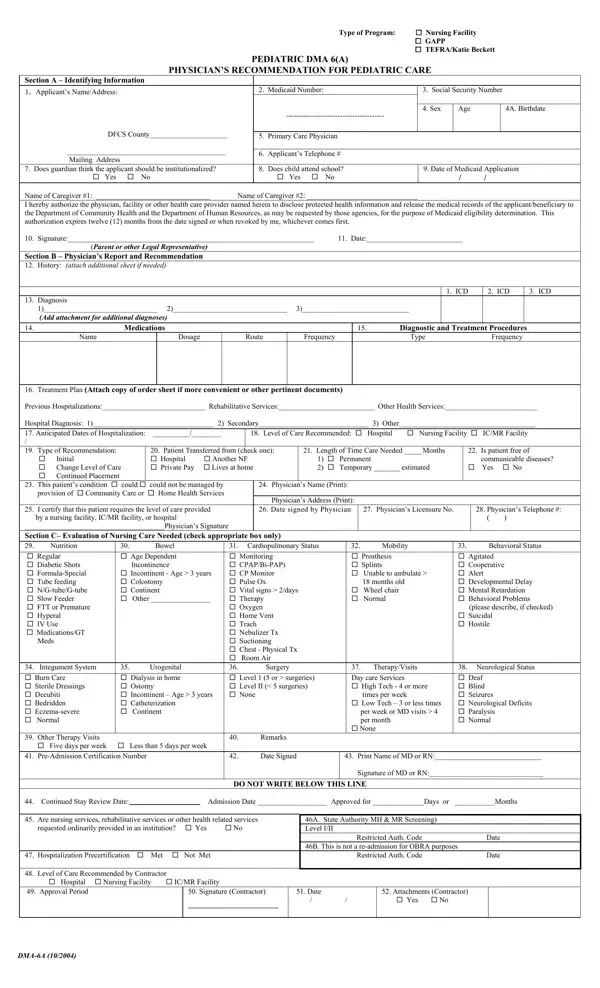
In addition to basic medical information, families and providers often use the DMA 6A form for the TEFRA/Katie Beckett program. It helps show that a child meets an institutional level of care while continuing to live at home. That distinction matters because TEFRA looks at medical need, not family income.
Physicians use the DMA 6A to explain how much care a child needs each day, what type of skilled support is required, and what could happen if services stop.
The DMA-6A form asks the physician to describe the child’s real-life care needs. Doctors explain whether the child needs hands-on nursing care, constant supervision, medical equipment, or frequent treatments. Medicaid reviewers read these details closely to understand how the child functions outside a hospital or facility. Families often submit the Pediatric DMA 6(A) form for new TEFRA applications, renewals, or when a child’s condition changes.
The DMA 6A form commonly covers:
• Level of medical supervision the child needs,
• Skilled nursing tasks and how often they occur,
• Dependence on caregivers for daily activities,
• Medications, therapies, and equipment in use,
• Risk of hospitalization or placement in a facility.
Note! The DMA 6A form is often confused with the Georgia DMA 6 form. DMA 6 applies to adults and nursing facility placement, while DMA 6A is only for children and supports pediatric Medicaid programs like TEFRA.
| Question | Answer |
|---|---|
| Form Name | Form DMA 6A Georgia |
| Form Length | 1 pages |
| Fillable? | Yes |
| Fillable fields | 155 |
| Avg. time to fill out | 20 min |
| Other names | dma-6a form, pediatric dma 6(a) form, Georgia dma 6a, physician recommendation for pediatric care form |
Form DMA 6A isn’t the one you’re looking for?