
A New York 3 day notice is a written eviction notice in which a landlord tells a tenant to pay overdue rent or give up the home. It is also called a 3 day notice to quit or a 3 day notice to vacate. For unpaid rent, state law calls for a written demand with at least fourteen days' notice.[1] Create the form with the free builder below or download it as a PDF.
Last Updated: October 2026. This guide is reviewed and updated regularly to reflect current New York law. If you notice an error or outdated information, please contact us.
Build Your Document
Answer a few simple questions to make your document in minutes
Save and Print
Save progress and finish on any device, download and print anytime
Sign and Use
Your valid, lawyer-approved document is ready
New York lets a landlord bring a court case over unpaid rent only after a written demand for payment has been made with at least fourteen days' notice. The demand asks, in the alternative, for payment or for possession of the premises, and it must be served as the statute prescribes.[1]
The printed text of the template gives the tenant three days to pay or leave. For unpaid rent, Section 711 calls for at least fourteen days' notice, so count the longer period.[1]
| Document Name | New York 3-Day Eviction Notice Form |
| Other Names | 3-Day Notice to Quit, 3-Day Notice to Vacate |
| Relevant Laws | New York Consolidated Laws, RPA Section 711 |
| Avg. Time to Fill Out | 8 minutes |
| # of Fillable Fields | 11 |
| Available Formats | Adobe PDF |
Looking for another notice? See our New York eviction notice templates, the 3-day notice to vacate or the general free eviction notice templates.

The printed text of the FormsPal template gives a tenant three days to pay or leave. The statute for an unpaid-rent case calls for a written demand with at least fourteen days' notice.[1]
A 3 day notice that gives too little time may be premature, so many landlords count the longer period to be safe. Whatever the form says, the days are counted from the day the tenant is served, so the date of delivery matters as much as the date of signing.
In practice, many landlords wait the longer period before going to court, to be safe. Use the days below as a rule of thumb, and ask an attorney if the case is close.
Taking payment after the court case has started does not end that case. Under Section 711, acceptance of rent after the special proceeding has begun on this ground does not terminate the proceeding or affect any award of possession to the landlord or to the new lessee.[1]
Acceptance of rent after commencement of the special proceeding upon this ground shall not terminate such proceeding nor effect any award of possession to the landlord or to the new lessee, as the case may be.
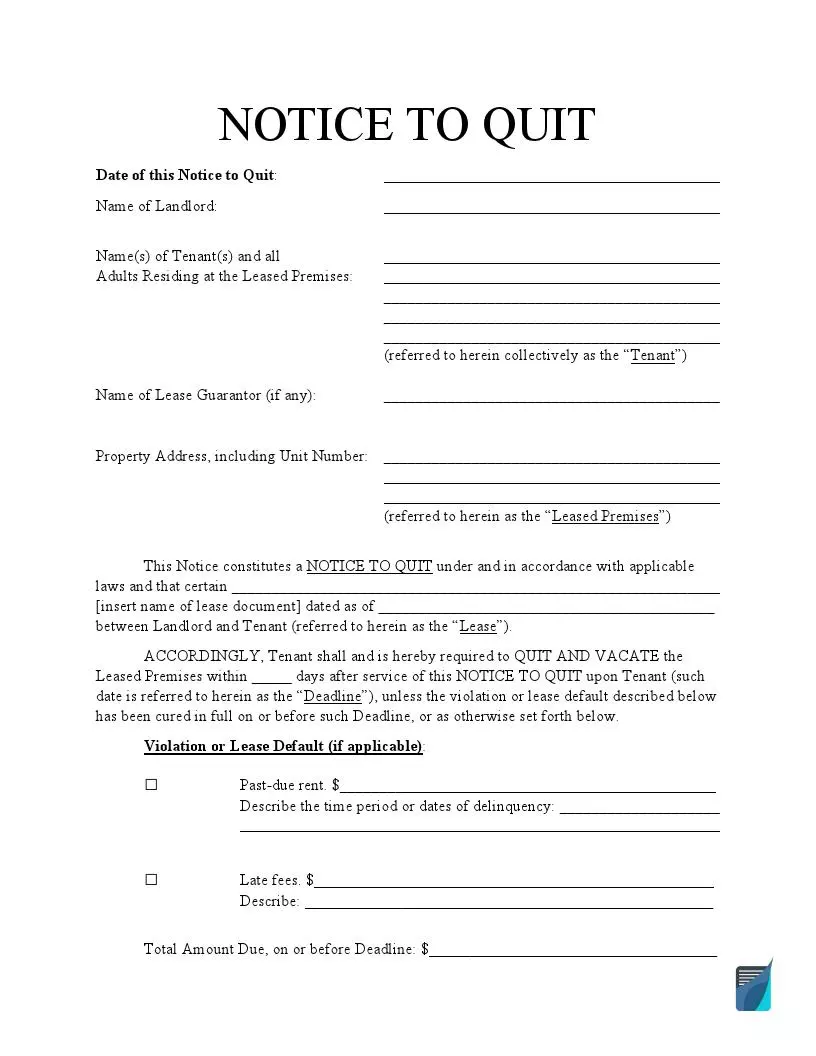
The FormsPal template is one page with two parts, and you fill them in from top to bottom. The first part holds the tenant, the premises and the amounts owed, and the second part holds the date and the landlord's signature. Use the online builder above, or fill in the downloaded PDF with our PDF editor. Check every entry before you print the form.
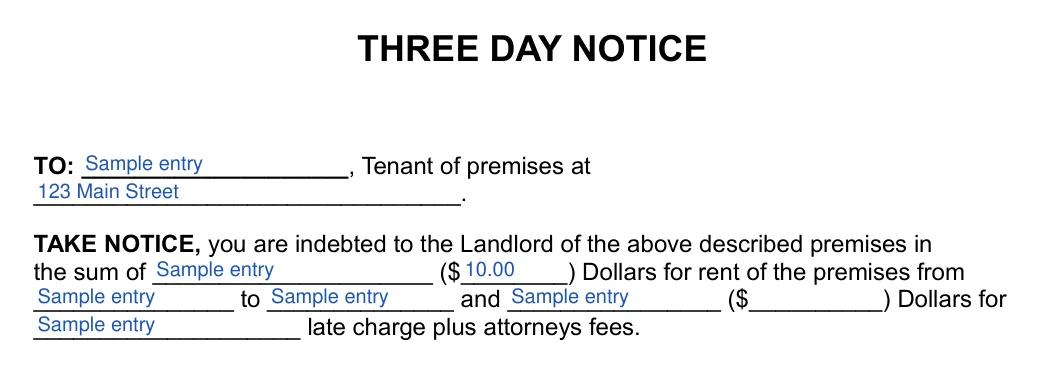
The screenshots under each step show the FormsPal New York 3-day eviction notice template filled with sample entries in blue, so you can see where each answer goes. The names, addresses, dates and amounts are examples only.

Serving means getting the signed form to the tenant and keeping proof that you did. These steps cover what many landlords do once the form is signed. The statute says the demand must be served as Section 735 of the same article prescribes.[1]
A signed form is only the first step. If the time runs out and the tenant has not paid or moved out, the landlord cannot simply retake the home. No tenant or lawful occupant of a dwelling or housing accommodation may be removed from possession except in a special proceeding, which is a court case.[1] The court, not the landlord, decides whether the landlord gets possession of the rental home.
In practice, a landlord who expects to go to court usually gathers the papers first. Many landlords keep these items together:
Payment accepted after the case starts does not end it, as the section on accepting rent explains. A tenant who gets court papers should read them right away.
Most problems with a 3 day notice come from small errors that are easy to avoid. Before you hand the form to a tenant, check it against the list below. Each item is a common slip, not a legal rule, so use it as a quick review and not as advice for your own case.
A careless eviction notice can cost a landlord time and money, because a mistake on the form may need to be fixed before the case can move forward. These are habits that many owners find helpful before they send the form to a tenant, whether the rental is a house, an apartment or other housing.
A tenant who gets an eviction notice over unpaid rent should not ignore it, because the next step may be a court case. The steps below are general ideas for people in rental housing, not legal advice, and they do not replace a lawyer.
Eviction paperwork uses a few words that can confuse first-time landlords and tenants. These short meanings may help you read the form, the statute and any court papers, though they are general and not a legal definition.
These answers cover two common questions that landlords and tenants ask about an eviction in New York. Each answer comes from the statute listed at the end of the page, and neither one is legal advice for your own case.
No. No tenant or lawful occupant of a dwelling or housing accommodation may be removed from possession except in a special proceeding. A landlord may not force a tenant out by self-help.[1]
No. Acceptance of rent after the special proceeding has begun on this ground does not terminate the proceeding or affect any award of possession to the landlord or to the new lessee.[1]
General information, not legal or tax advice.


