
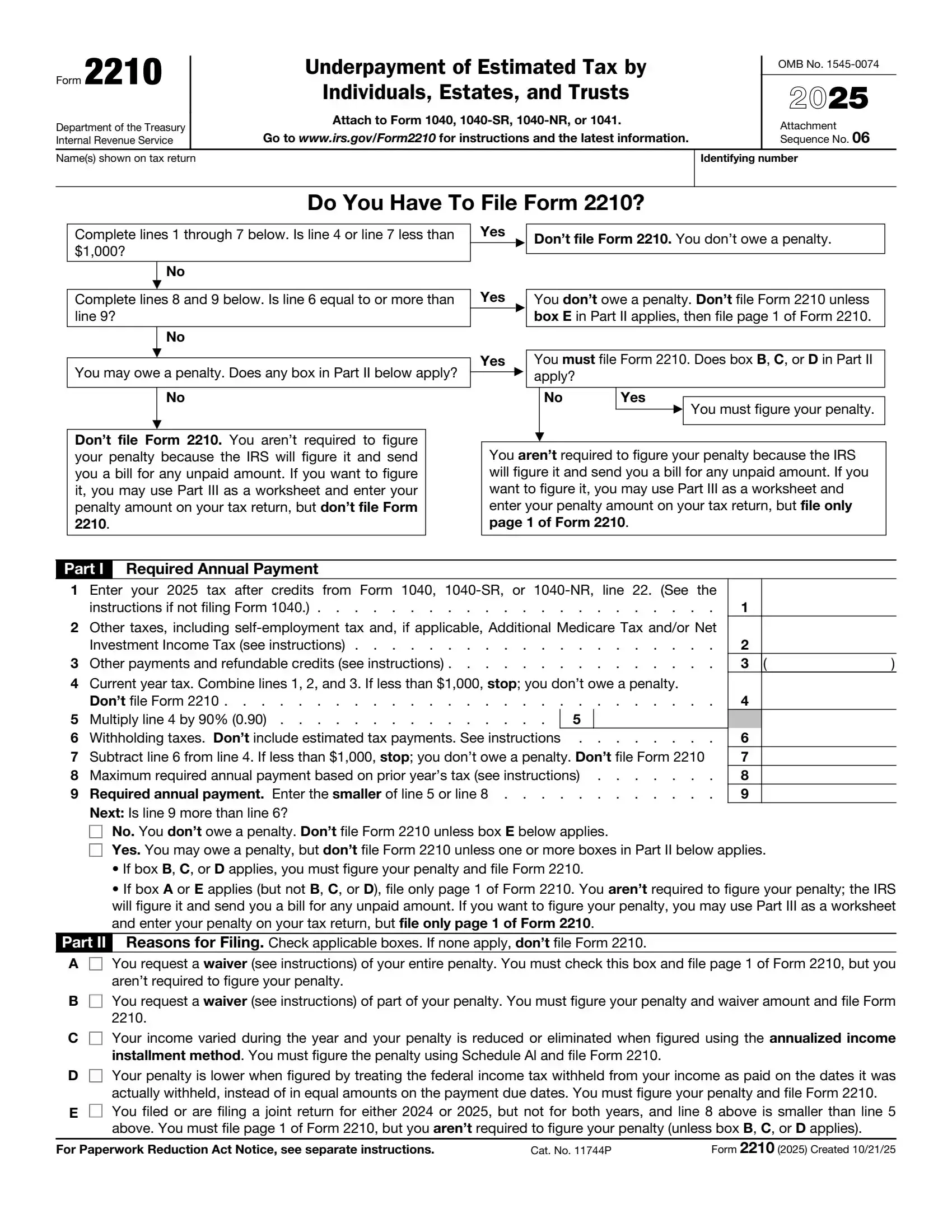
Form 2210, titled “Underpayment of Estimated Tax by Individuals, Estates, and Trusts,” is a document used to determine if a taxpayer has underpaid their estimated tax and, if so, to calculate any penalty for that underpayment. This form is relevant for taxpayers who didn’t pay enough tax throughout the year through withholding or making estimated tax payments. Typically, this includes self-employed individuals, investors, retirees, and those with other sources of income not subject to automatic withholding.
Filing Form 2210 allows taxpayers to determine the penalty they owe due to underpayment of estimated tax. It also provides a space to explain any special circumstances that might waive the penalty, such as casualty, disaster, or other unusual conditions. The form includes detailed instructions to calculate the penalty based on required annual payments, actual withholding, and the dates the amounts were paid. Taxpayers can choose to have the IRS calculate the penalty for them, or they can fill out the form themselves if they want to determine the specific amounts involved or if they believe they have a case for reducing the penalty.
If you file Form 2210, attach it to your tax return: Form 1040, 1040-SR, 1040-NR, or 1041. The return is generally due April 15 of the year after the tax year; when April 15 falls on a weekend or legal holiday, the deadline moves to the next business day.
You are allowed to send your tax return and all related papers via two methods: either regular mail (you have to visit the post office convenient for you and send an envelope with all the forms to the address the Service offers) or the special electronic system proposed by the Service (online, via your browser). The second option is usually recommended because it is easier (you can file everything without leaving your home or office) and your documents will be checked quicker.