

Form FL-210 at a glance
What it is: Form FL-210 is the SUMMONS (Parentage-Custody and Support), and its page 2 is the STANDARD RESTRAINING ORDER (Parentage-Custody and Support).
Who signs: The Deputy Clerk signs on the Clerk, by line.
A filled-in Form FL-210 example: a petitioner without an attorney prepares the summons
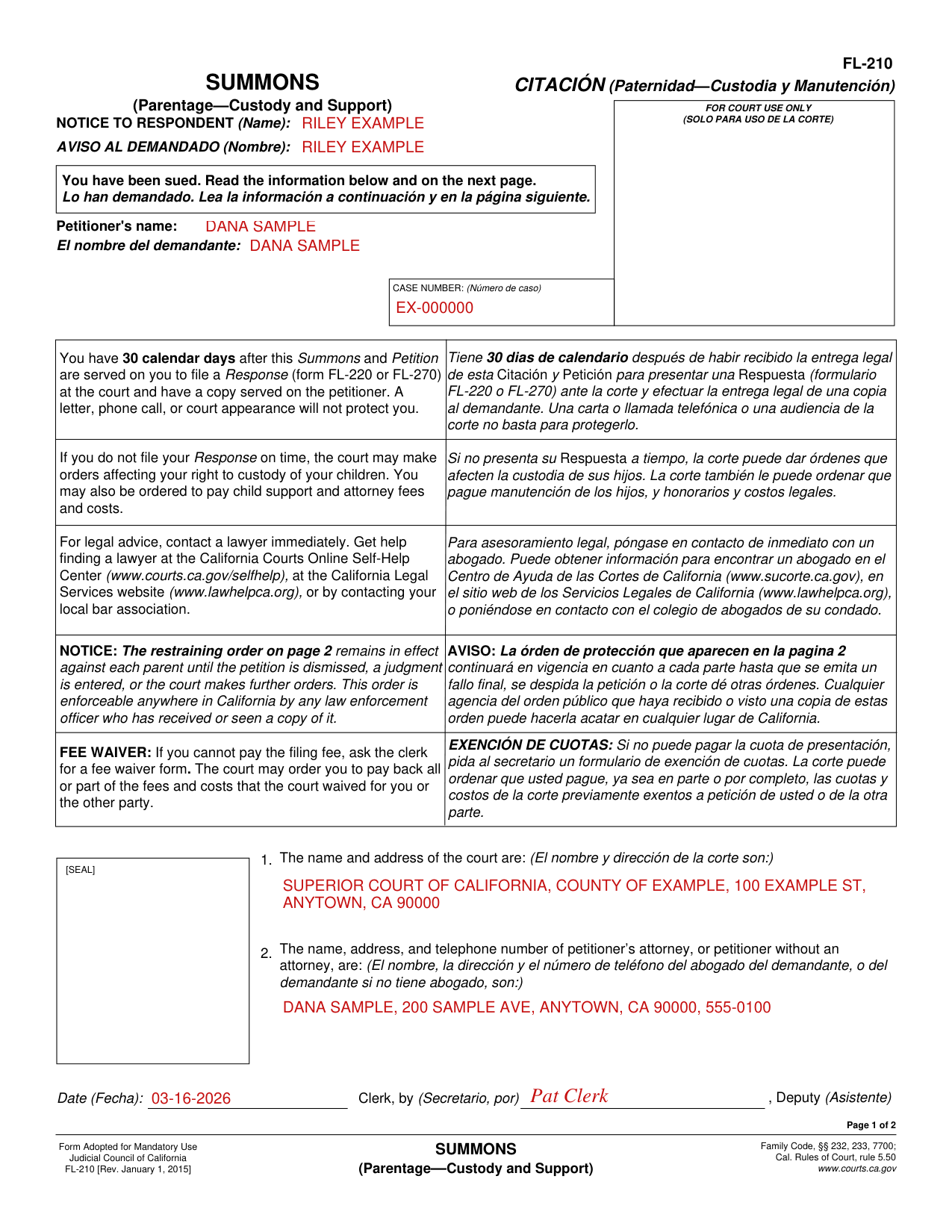
How to fill out Form FL-210, box by box
Notice to Respondent (Name), Petitioner's name and Case Number
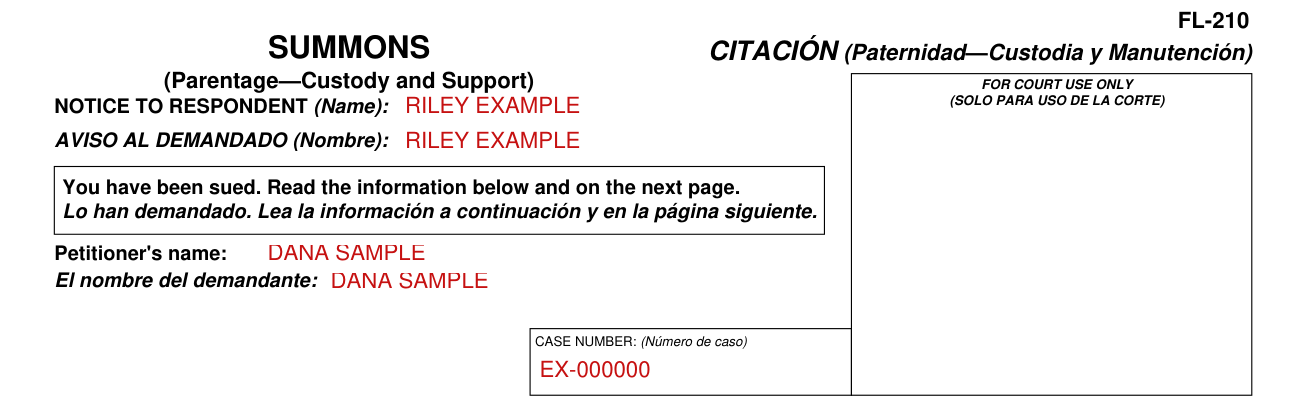
Enter the respondent's name after NOTICE TO RESPONDENT (Name) and the petitioner's name after Petitioner's name.
Enter the CASE NUMBER.
The name and address of the court

Enter the name and address of the court.
The name, address, and telephone number of petitioner's attorney, or petitioner without an attorney

Enter the name, address, and telephone number of the petitioner's attorney, or of the petitioner without an attorney: if the petitioner has no attorney, enter the petitioner's own.
Date

The Deputy Clerk enters the Date.
Clerk, by

The Deputy Clerk signs on the Clerk, by line.
More rules for Form FL-210
If the respondent does not file the Response on time, the court may make orders affecting the respondent's right to custody of the children. The respondent may also be ordered to pay child support and attorney fees and costs. For legal advice, contact a lawyer immediately.
This restraining order takes effect against the petitioner when he or she files the petition and against the respondent when he or she is personally served with the Summons and Petition OR when he or she waives and accepts service.
This restraining order remains in effect until the judgment is entered, the petition is dismissed, or the court makes other orders.
This order is enforceable anywhere in California by any law enforcement officer who has received or seen a copy of it.
Common questions about Form FL-210
What is form fl 210?
Form FL-210 is the SUMMONS (Parentage-Custody and Support), and its page 2 is the STANDARD RESTRAINING ORDER (Parentage-Custody and Support). Starting immediately, you and every other party are restrained from removing from the state, or applying for a passport for, the minor child or children for whom this action seeks to establish a parent-child relationship or a custody order without the prior written consent of every other party or an order of the court.
Is there a deadline?
The respondent has 30 calendar days after this Summons and Petition are served to file a Response (form FL-220 or FL-270) at the court and have a copy served on the petitioner; a letter, phone call, or court appearance will not protect the respondent.
Are there fees?
If you cannot pay the filing fee, ask the clerk for a fee waiver form. The court may order you to pay back all or part of the fees and costs that the court waived for you or the other party.
Sources
[1] Form FL-210 (Rev. January 1, 2015), SUMMONS (Parentage-Custody and Support), Judicial Council of California.
