
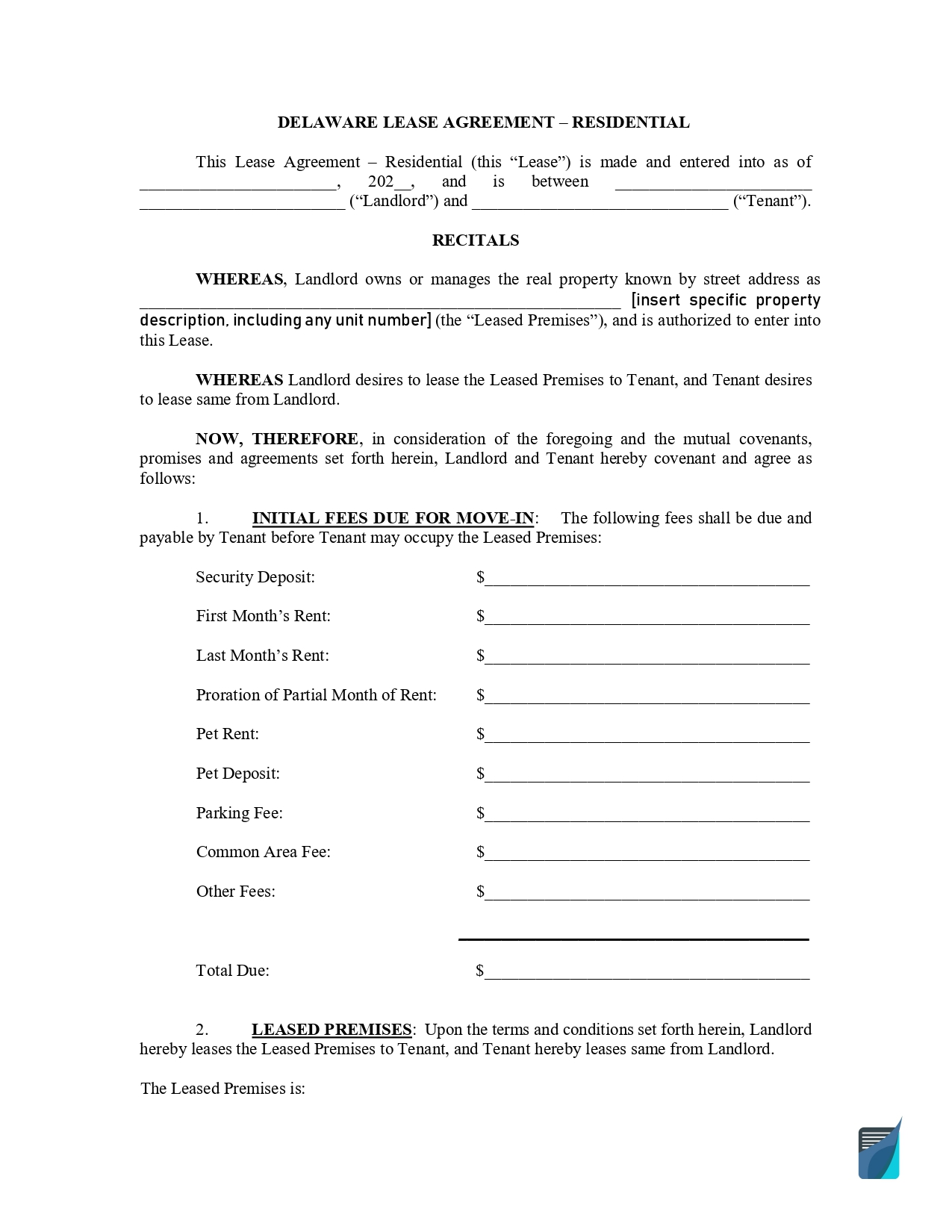
A Delaware lease agreement is a written contract between a landlord and a tenant that sets the terms for renting a residential property in the state. It states the rent, the security deposit, the length of the tenancy, and each side's duties for repairs and upkeep, and it must follow the rules in Title 25 of the Delaware Code.
Last Updated: September 2026. This guide is reviewed and updated regularly to reflect current Delaware law. If you notice an error or outdated information, please contact us.
Build Your Document
Answer a few simple questions to make your document in minutes
Save and Print
Save progress and finish on any device, download and print anytime
Sign and Use
Your valid, lawyer-approved document is ready
Every Delaware lease agreement must follow the state rules below. All rental lease agreement forms in Delaware must match them, and the builder above creates a document that already does.
Delaware's landlord-tenant law is set out in Title 25 of the Delaware Code, mainly Sections 5301 through 5317 and Sections 5106 through 5107 of the Residential Landlord-Tenant Code. These sections cover security deposits, notice periods for ending a lease, required disclosures, repair duties, utility billing, and bed bug rules, and every rule below names the exact section it comes from.
The Residential Landlord-Tenant Code (Title 25, Sections 5101 to 5907) regulates the rights and obligations under every residential rental agreement in the state, and commercial rental agreements are excluded (Section 5101).[1.1]
Delaware sets a clear deadline for returning a tenant's security deposit after the lease ends.
Within 20 days after the rental agreement ends, the landlord must give the tenant an itemized list of any damage to the property and the estimated cost to repair each item. The landlord must then pay back the difference between the deposit and those repair costs.[3]
Within 20 days after the termination or expiration of any rental agreement, the landlord shall provide the tenant with an itemized list of damages to the premises and the estimated costs of repair for each and shall tender payment for the difference between the security deposit and such costs of repair of damage to the premises.
For a lease of one year or more, and for a month-to-month tenancy after its first year, the deposit may not exceed one month's rent (Section 5514(a)). The cap does not apply to furnished units.[3.1]
Section 5514 also requires the landlord to tell the tenant where the security deposit escrow account is held. If the landlord does not disclose it within 20 days of the tenant's written request, the deposit is forfeited to the tenant.[3.2]
How much notice a lease needs before it ends depends on why it is ending and what kind of tenancy it is. The rules below come from Delaware's landlord-tenant statutes. Use FormsPal's deadline calculator to count any of these notice periods from the day you send or receive the notice.
These notice periods depend on the specific reason the lease is ending. Read each one carefully, or talk to a Delaware attorney, before sending a termination notice.
Delaware law requires a rental unit to meet a lead-safety standard before it is leased, and the Landlord-Tenant Code also requires the written disclosures below.
Federal law also requires the landlord of housing built before 1978 to give the tenant the EPA lead hazard pamphlet, disclose any known lead-based paint or lead hazards, and include a lead warning statement in or attached to the lease before the tenant is bound (42 U.S.C. 4852d and 40 CFR 745.113).[4.1]
When a tenant gives written notice of a problem the landlord must fix, the law sets deadlines for the landlord's response.
Landlords must also keep the records of each rental application for at least 6 months.[2.6]
Delaware law blocks a landlord from putting certain terms in a lease and gives tenants remedies when a landlord breaks specific rules.
Under Section 5509(b), the landlord must give the tenant at least 48 hours' notice before entering, except for repairs the tenant requested, and may enter only between 8:00 a.m. and 9:00 p.m. In an emergency the landlord may enter at any time.[3.3]
When a landlord bills a tenant separately for utilities, several rules apply to protect the tenant from unfair charges.
Delaware has detailed rules for checking a unit for bed bugs before it is rented and for responding once a tenant reports a possible infestation.
A Delaware lease agreement typically covers the rent and accepted payment methods, such as check or cash, the security deposit, and each side's responsibilities for repairs and utilities. It also states each party's liability for damage and any additional lease terms included in the document, such as pet policies, parking, or the option to sublease the unit. Read the full content of the document carefully so you do not skip a clause that affects your deposit or your right to renew.
| Document Name | Delaware Rental Lease Agreement Form |
| Other Names | DE Rental Lease, Delaware Residential Lease Agreement |
| Relevant Laws | Delaware Code, Title 25, Part III |
| Security Deposit Return | Twenty (20) days following contract expiration |
| Avg. Time to Fill Out | 18 minutes |
| # of Fillable Fields | 119 |
| Available Formats | Adobe PDF |
These answers cover common questions about the Delaware lease agreement process, drawn from the same sections of the Delaware Code used throughout this guide, so readers get a short, sourced answer before returning to the full explanation above.
Where the landlord's violation is one the statute treats as a repeat problem, the tenant may end the rental agreement. The tenant must give the landlord at least 15 days' written notice that states the violation and the date the tenancy will end.[2.2]
A Delaware lease cannot ask the tenant to waive or give up rights or remedies under the Landlord-Tenant Code.[2.1]
When a landlord must fix a problem after a tenant's written notice, state law gives the landlord 30 days from receiving that notice to complete the repair.[2.4]

General information, not legal or tax advice.
