
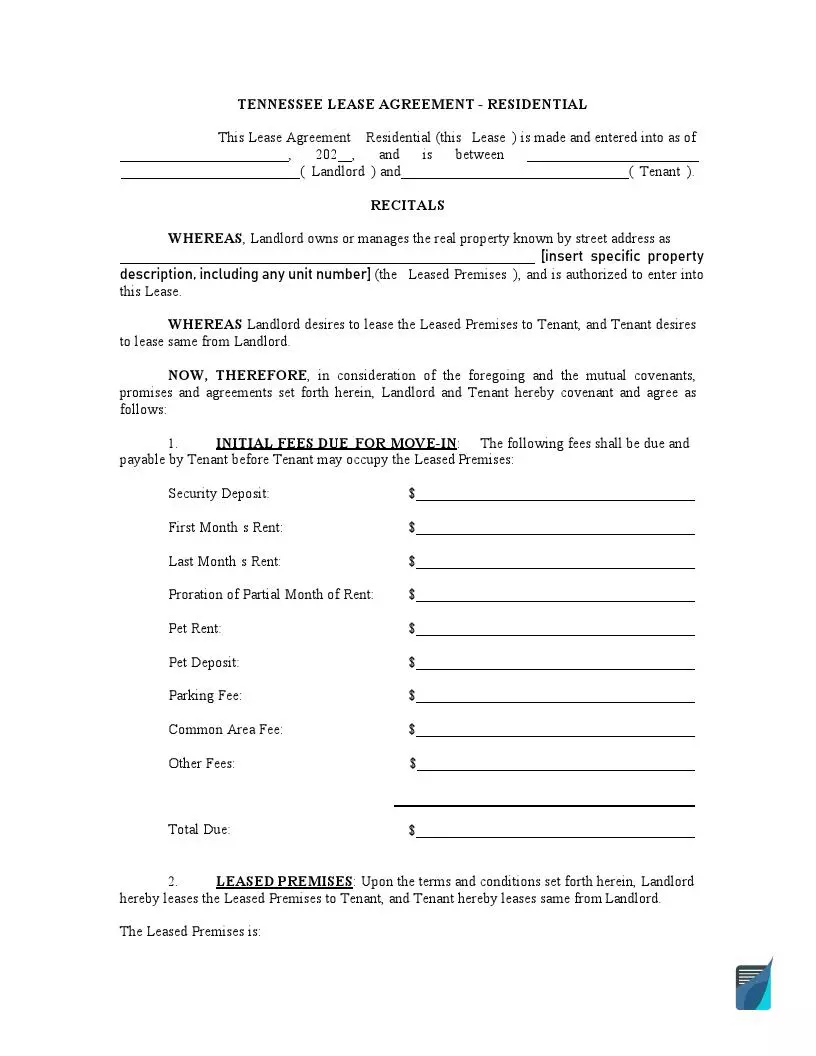
A Tennessee lease agreement is a legal contract between a landlord and a tenant that sets the rent, term, and rules for renting residential or commercial property in the state. It spells out each party's rights and responsibilities, including the security deposit, the lease term, and the notice needed to end the tenancy.
This rental agreement works for a fixed term or a month to month arrangement, and it suits both private homes and commercial spaces. Anyone renting out property in Tennessee should use a written lease agreement form, no matter the size of the property.
Many states, including Tennessee, allow verbal rental agreements for terms up to one year. A written lease still protects both sides with clearly stated terms and is easier to rely on in court.
Use our form building software to create your Tennessee lease agreement quickly and without effort.
Build Your Document
Answer a few simple questions to make your document in minutes
Save and Print
Save progress and finish on any device, download and print anytime
Sign and Use
Your valid, lawyer-approved document is ready
According to United States federal law, every lessor planning to let a property built before 1978 must prepare a lead-based paint disclosure before the tenant signs the Tennessee lease agreement. This federal rule applies in all fifty states, including Tennessee, and it exists alongside any state-level disclosure rules.
Here is the checklist of other disclosures that the lessor should include in a conventional Tennessee lease agreement:
The lessor usually asks for a security deposit to cover potential damage to the property or unpaid rent at the end of the tenancy. The tenant pays it before the lease starts. In practice, many Tennessee landlords are not bound by a state-set maximum, so the amount is typically agreed on by both parties.
Landlords and tenants often disagree about damage to the property. Ordinary wear and tear is not covered by the deposit, only damage caused by the tenant's or a guest's improper or careless use of the property. A lease may also include a separate pet deposit clause if the tenant has a pet and the landlord allows pets on the property.
Tennessee law requires the landlord to keep the deposit in its own account. This account must be at a bank or other lending institution regulated by the state or federal government.[1.1] The landlord must tell the tenant, at lease signing and deposit payment, where that account is held, though not the account number.[1.1]
A landlord who skips either requirement, the dedicated account or the required list of damages, is not entitled to keep any part of the deposit.[1.1] Where Tennessee law provides for a move-out inspection, it must happen either on the day the tenant completely vacates or within four calendar days after.[1.1]
The landlord may notify the tenant of the right to be present at that inspection. This notice can come when the landlord asks the tenant to vacate, or within five days of getting the tenant's written notice of intent to vacate.[1.1]
The landlord can only recover the cost of physical damage if it is discovered in time. The deadline is the earlier of thirty days after the tenant vacates or seven days after a new tenant moves in.[1.1]
If the landlord sends that required notice and gets no response within sixty days, the landlord may remove the deposit from the account. The landlord may then keep it free of the tenant's claim.[1.1]
Tennessee statute does not set a general deadline for when a landlord must return a security deposit after the lease ends.
Many Tennessee leases include a right-of-entry clause. It lets the landlord enter for reasonable purposes, such as inspections or repairs. It can also let the landlord show the property to prospective tenants near the end of the lease.
In practice, landlords typically give the tenant advance notice before entering, and the lease itself should spell out how much notice the tenant can expect.
| Document Name | Tennessee Rental Lease Agreement Form |
| Other Names | TN Rental Lease, Tennessee Residential Lease Agreement |
| Relevant Laws | Tennessee Code Annotated, Title 66, Chapter 28 |
| Security Deposit Amount | No state-set maximum |
| Security Deposit Return | No statewide deadline (TN statute) |
| Avg. Time to Fill Out | 18 minutes |
| # of Fillable Fields | 119 |
| Available Formats | Adobe PDF |
Not every Tennessee lease looks the same. The most common versions differ in how long they run and who is renting from whom, and picking the right one up front makes the rest of the lease easier to follow for both the landlord and the tenant.
Pick the version that matches the actual arrangement. Using a fixed-term lease for what is really a month-to-month rental, or the reverse, can make the notice and renewal terms confusing for both sides.
Tennessee law sets minimum notice periods for ending a periodic tenancy, meaning a lease that renews automatically rather than ending on a fixed date. The number of days required depends on how often rent is due, whether monthly or weekly:
"the landlord or the tenant may terminate a month-to-month tenancy by a written notice given to the other at least thirty (30) days prior to the periodic rental date specified in the notice."
Whichever side is ending the tenancy, put the notice in writing, include the specific move-out or renewal date, and keep a dated copy for your records.
If you need a document for this step, FormsPal's lease termination letter template follows this notice requirement. See the types above for the document built for a tenancy that renews automatically.
Tenants who want to end a Tennessee lease before the term is up should review our guide on ending a lease early first. If a tenant stays past the notice period without fixing a lease violation, the landlord's next step is usually a Tennessee eviction notice.

General information, not legal or tax advice.
