
Updated:
A New York rental application is an applicant's written request to rent. The form lists household members, income, assets and the current landlord for the landlord's review. This guide covers each section, the fee rules and the signature before a lease agreement.
Key facts

Build Your Document
Answer a few simple questions to make your document in minutes
Save and Print
Save progress and finish on any device, download and print anytime
Sign and Use
Your valid, lawyer-approved document is ready
The New York Rental Application Form is a PDF with fillable fields, and this table lists its other names, fill time, deposit limit and fee cap.
| Document Name | New York Rental Application Form |
| Other Names | NY Rental Application, New York Application to Rent |
| Max Amount of Security Deposit | One month's rent, unless the unit is a seasonal use unit or an owner-occupied cooperative apartment (N.Y. Gen. Oblig. Law § 7-108) |
| Max Application Fee | $20 for a credit and background check before a lease is signed (N.Y. Attorney General, Residential Tenants' Rights Guide) |
| Avg. Time to Fill Out | 20 minutes |
| # of Fillable Fields | 226 |
| Available Formats | Adobe PDF |
The New York rental application has eight parts, Sections A to H, covering the applicant, the household, income, rental subsidy, the current landlord and the signature.
The form also asks about a needed accommodation and veteran status between Section B and Section C. Each answer gives the landlord one piece of the household picture: who will live there, what the household earns and where it rents now.
Section D of the form asks whether the household receives a Section 8 voucher or other rental assistance. A Section 8 voucher counts as lawful source of income, and New York landlords may not discriminate against tenants based on it (N.Y. Attorney General, Residential Tenants' Rights Guide).
The form leaves two answers to the applicant's choice: the SSN or TIN of each household member in Section B and the ethnic identification in Section G. The form marks Section G as optional, and Section B asks for an SSN or TIN only if the household member wants to add one.
The application fee on a New York rental application pays for the credit and background check a landlord runs on an applicant. Before a lease is signed, the most a landlord can charge for a credit and background check is $20 (N.Y. Attorney General, Residential Tenants' Rights Guide).
The landlord gives the applicant a copy of the credit or background check and an invoice from the company that ran it (N.Y. Attorney General, Residential Tenants' Rights Guide). If the landlord gives no copy, the landlord may not charge the applicant for the check (N.Y. Attorney General, Residential Tenants' Rights Guide).
An applicant can hand in their own background or credit check to avoid the fee, as long as it was performed within the past 30 days (N.Y. Attorney General, Residential Tenants' Rights Guide).
The same rental application serves a room for rent: the applicant lists themselves and anyone moving in with them in Section B, then fills in income and the current landlord as for an apartment. The room's rent and the shared parts of the home go in the lease that follows, not in the application.
A room renter who has lawfully occupied a dwelling unit for thirty consecutive days or longer, or who has a lease, can be evicted only under a warrant of eviction, another court order or a governmental vacate order (N.Y. Real Prop. Acts. Law § 768). A person who intentionally breaks that rule is guilty of a class A misdemeanor, and each violation also carries a civil penalty of $1,000 to $10,000 (N.Y. Real Prop. Acts. Law § 768). Notices for ending a tenancy are on the New York eviction notice page.
A guarantor rider is a separate form in which a second person, the guarantor, agrees to answer for the renter's lease if the renter does not pay. Landlords often ask for one when an applicant has a short credit history.
The rider names the guarantor and the lease it backs, and the guarantor signs it. The rental application itself has no guarantor section, so the rider travels with the application or with the lease as a separate page.
The ten-page PDF is filled out section by section, and these steps follow the form's own order and section names.
The screenshots under each step show the FormsPal New York New York Rental Application template filled with sample entries in blue, so you can see where each answer goes. The names, addresses, dates and amounts are examples only.

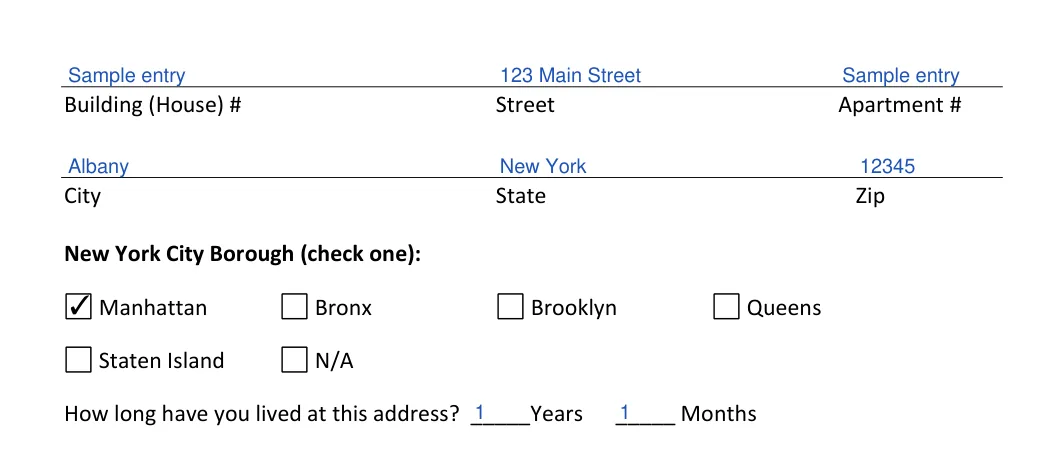
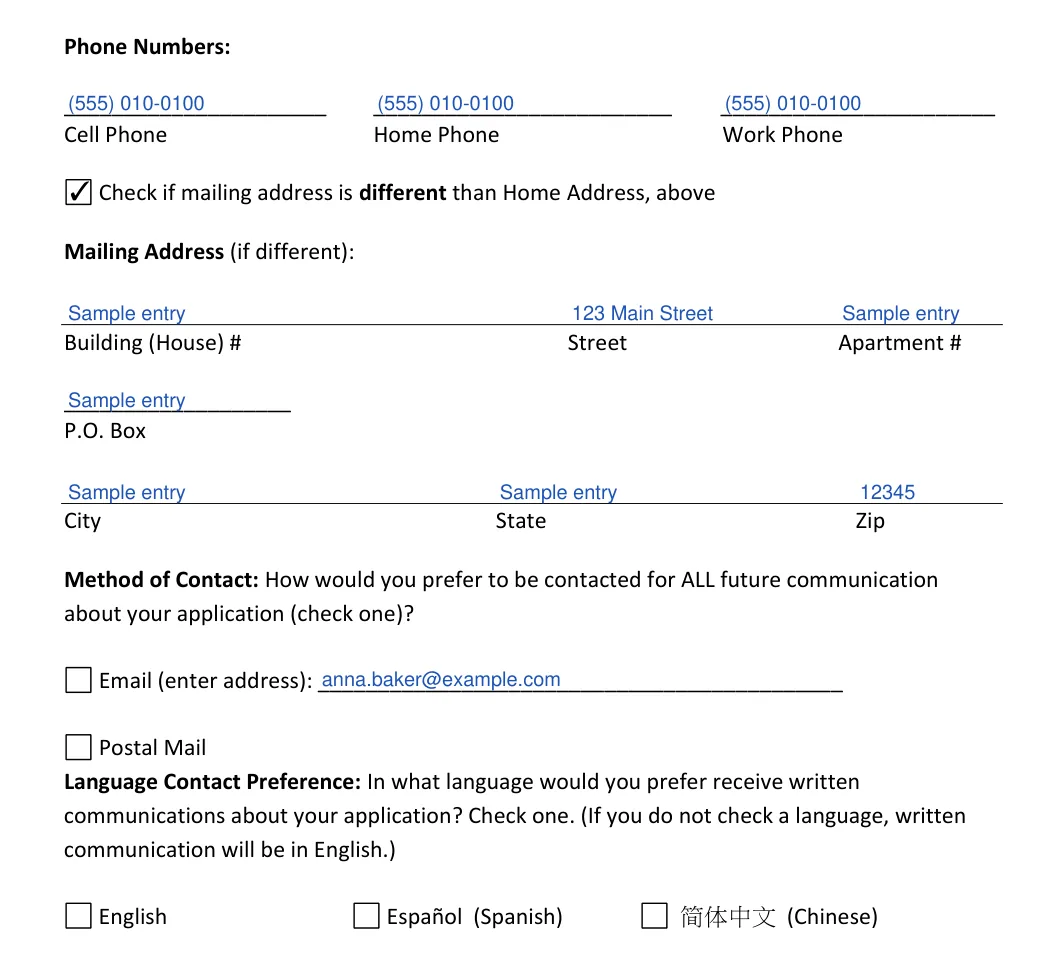

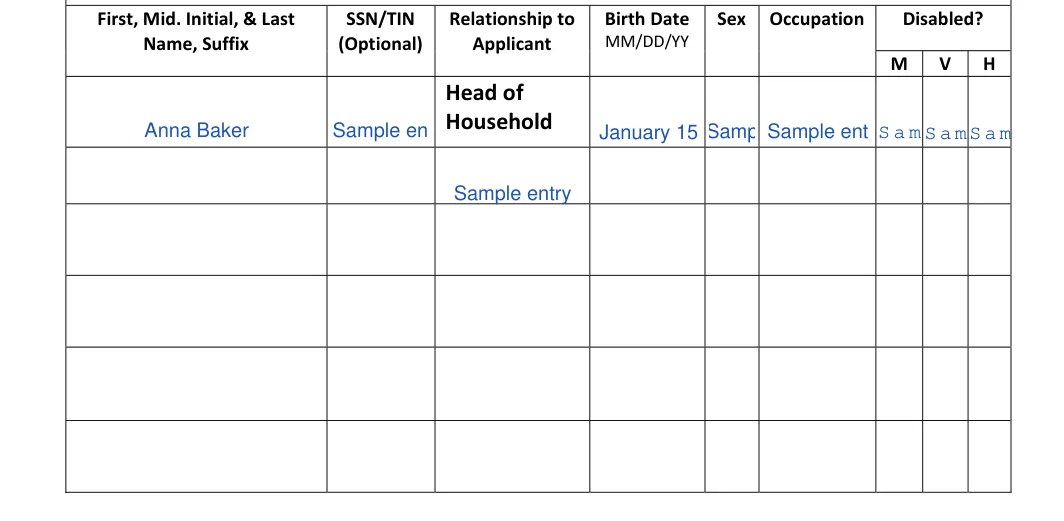
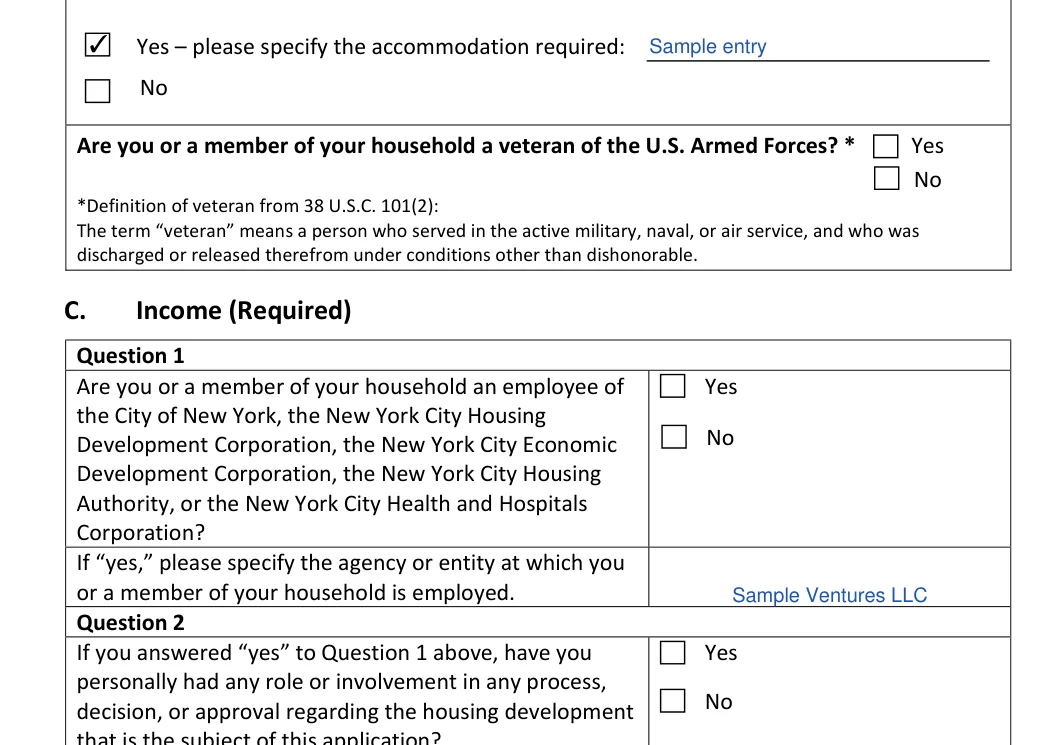
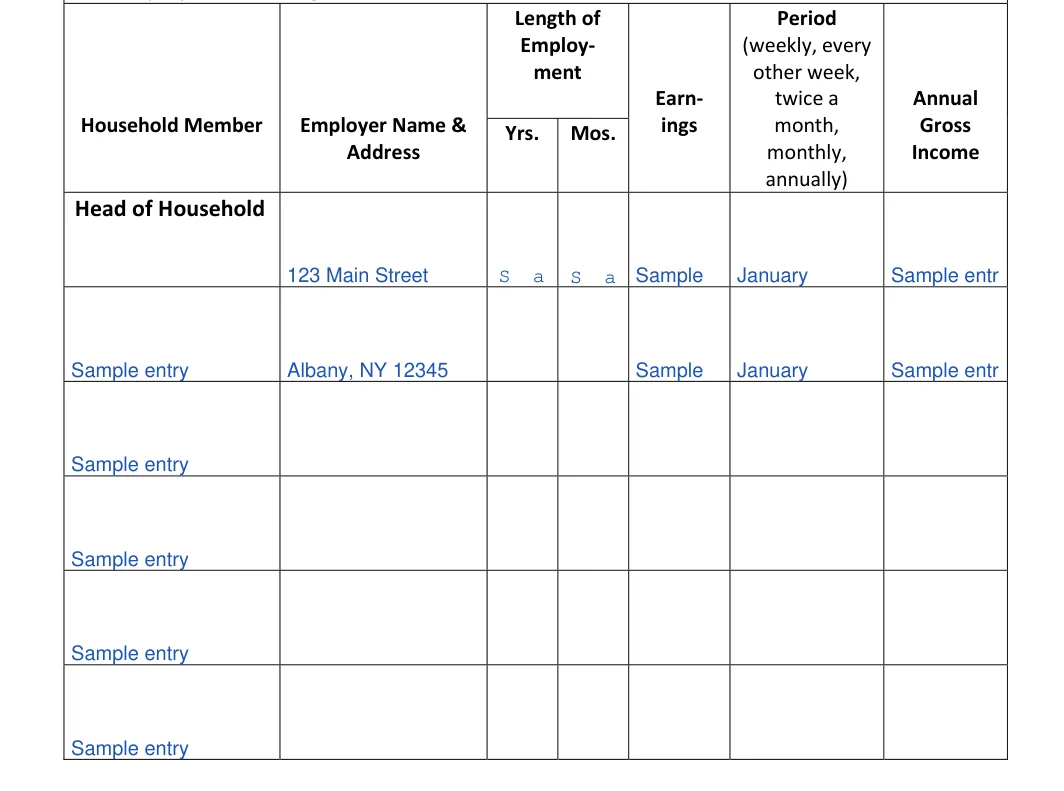
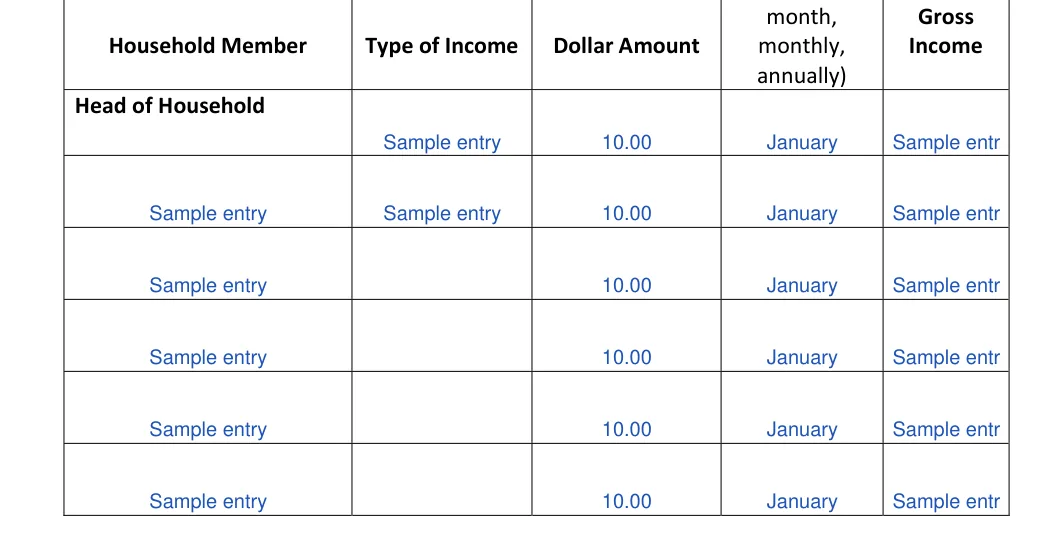


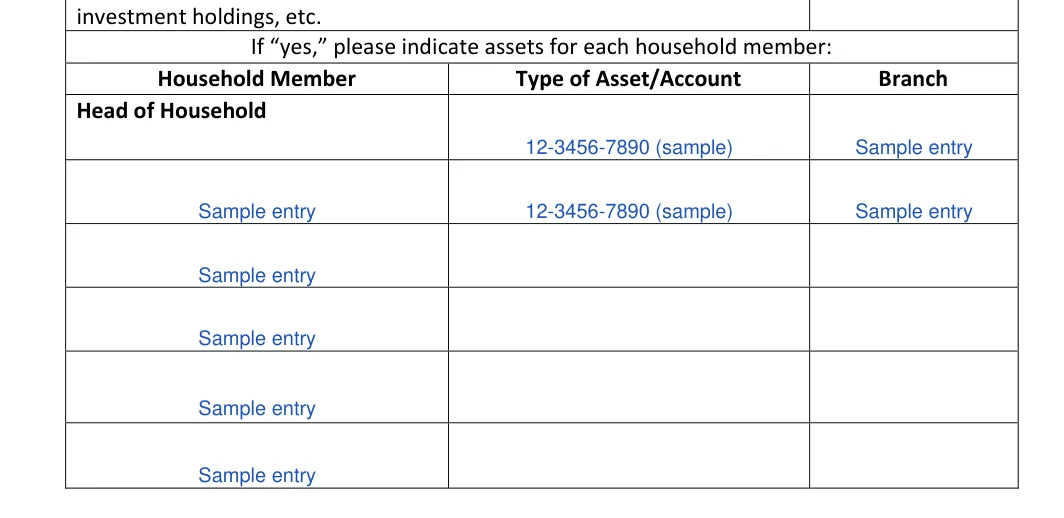
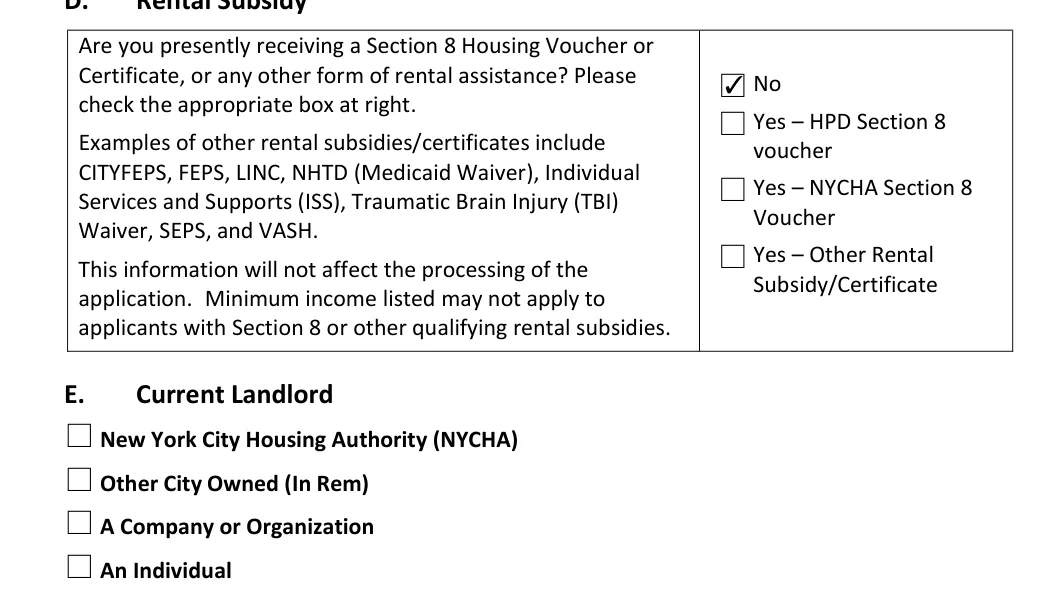
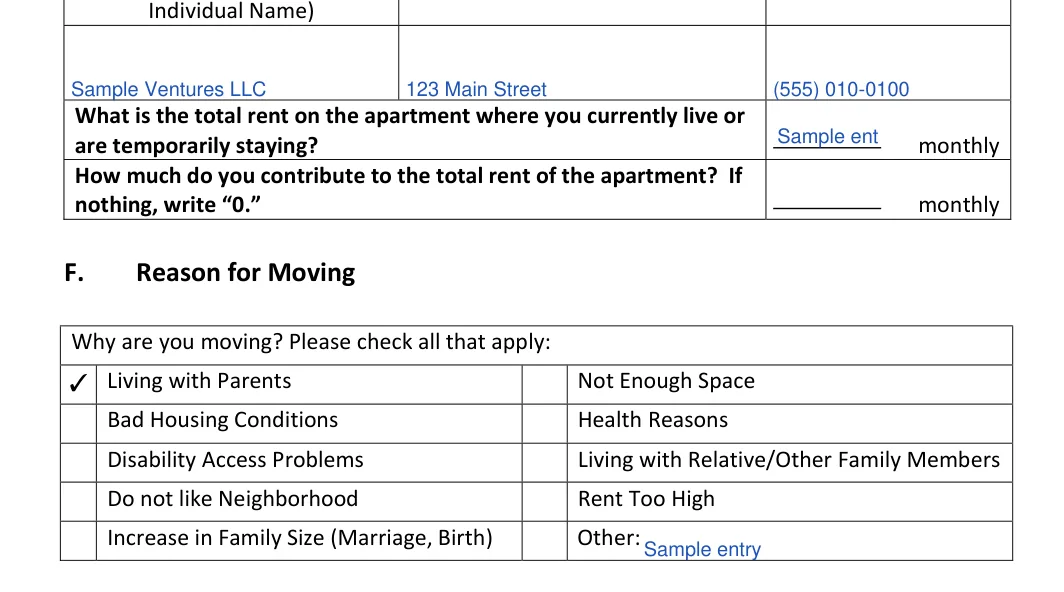
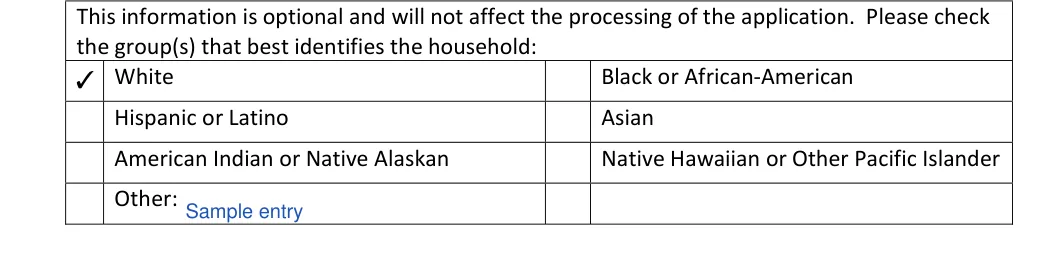
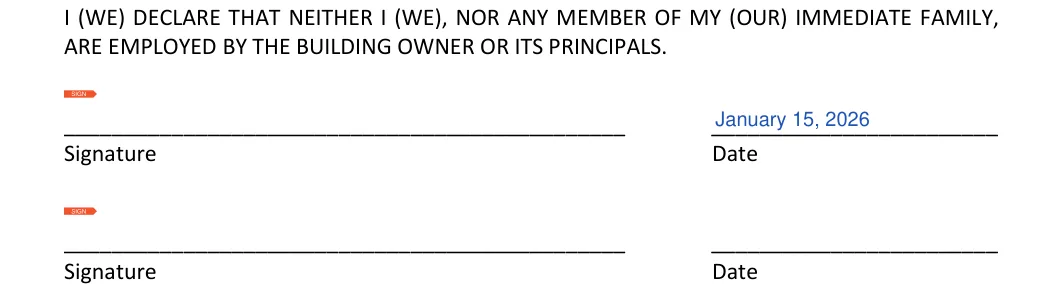
The signature in Section H confirms the declaration, so the application gets one last check before the applicant signs and hands it in.
The approved application leads to a lease and a security deposit, and each step below rests on a New York or federal statute.
| Rule | What it says | Source |
| Deposit limit | No deposit or advance exceeds one month's rent, unless the unit is a seasonal use unit or an owner-occupied cooperative apartment | N.Y. Gen. Oblig. Law § 7-108 |
| Move-in inspection | After the lease is signed and before move-in, the landlord offers the tenant an inspection of the unit with the landlord or the landlord's agent | N.Y. Gen. Oblig. Law § 7-108 |
| Bank notice | When the landlord puts the deposit in a bank, the landlord tells each tenant who paid it, in writing, the bank's name and address and the amount | N.Y. Gen. Oblig. Law § 7-103 |
| Deposit return | Within fourteen days after the tenant moves out, the landlord gives an itemized statement of any amount kept, if any, and returns the rest; if the landlord misses that deadline, the landlord forfeits any right to keep any part | N.Y. Gen. Oblig. Law § 7-108 |
| Sprinkler notice | Every residential lease gives conspicuous notice in bold face type of whether the unit has a maintained and operative sprinkler system | N.Y. Real Prop. Law § 231-a |
| Lead paint disclosure | For target housing, the lessor gives the lessee a lead hazard information pamphlet and discloses any known lead-based paint or lead-based paint hazards | 42 U.S.C. § 4852d |
| Target housing | Housing built before 1978, except housing for the elderly or persons with disabilities and a 0-bedroom dwelling, unless a child under 6 lives or is expected to live there | 42 U.S.C. § 4851b |
If a lease clause waives or modifies the tenant's deposit rights under that section, the clause is absolutely void (N.Y. Gen. Oblig. Law § 7-108). The New York lease agreement forms cover the lease that follows the application.
These answers cover what applicants ask most about the New York rental application: the lease, the time it takes, the signature, filling it out online, documents to bring and key money.
A rental application is the request to rent, with the applicant's details for the landlord's review. A lease agreement is the signed contract that sets the terms of the stay, and it comes after the landlord picks a tenant.
Plan on about 20 minutes. It goes faster when you have your past addresses, employer details and income figures at hand before you begin.
Sign and date on the signature line on page 10 of the PDF, after you read the declaration under Section H. A second line is there for a second signer.
Yes, the PDF has fillable fields, so the application can be typed on a computer, saved and printed. It can also be printed first and filled in by hand in ink.
A rental application goes faster with recent pay stubs, a photo ID and the current landlord's contact details at hand. The landlord or property manager may ask for more papers along with the finished form.
No. Key money, a fee above the lawful rent and security deposit for preference in renting a vacant apartment, is illegal to charge a prospective tenant (N.Y. Attorney General, Residential Tenants' Rights Guide, citing N.Y. Penal Law § 180.55). Fees that a licensed real estate broker may legally charge are a separate matter.
General information, not legal or tax advice.

