
Updated:
An artwork bill of sale is a signed record of ownership transfer. It names the buyer, the seller and the artwork, then gives the price and how the buyer paid. The free PDF or Word template serves artists, galleries and private sellers of original work.
This page gives you the template, a filled-in sample, a line-by-line guide to each part of the form and a plain comparison with a receipt and an invoice. It also covers what to do once both sides have signed.
You need an artwork bill of sale to keep a signed account of who sold which piece, to whom, at what price and on what terms. That account helps when someone later questions the price or the condition of the piece, when you prepare your taxes and when the work is resold.
The form is just as useful when you sell locally to family and friends, because memories of an informal deal fade quickly. A purchase agreement can set the terms while a larger deal is still open, and the bill of sale closes it.
An artist or other seller gets a dated, signed account of the agreed price, the payment terms and the piece that left the studio. It shows what you sold and what you were paid, which makes your sales history easy to follow over time.
Anyone buying a painting should leave with a signed artwork bill of sale that names the artist, the title, the size and the medium of the piece. Check those details against the work in front of you before you sign. Ask for a certificate of authenticity as well, and keep both papers with the piece, because together they show where it came from when you sell it on.
The FormsPal artwork bill of sale is also known as an artist bill of sale or an art bill of sale, and these are its basic details.
| Document Name | Artwork Bill of Sale Form |
| Other Names | Artist Bill of Sale, Art Bill of Sale |
| Avg. Time to Fill Out | 10 minutes |
| # of Fillable Fields | 54 |
| Available Formats | Adobe PDF, Microsoft Word |
An art sale receipt confirms that money changed hands, while an artwork bill of sale also identifies both parties, describes the piece and sets out the terms of the sale. If you searched for an art sale receipt template, the fuller form gives you the receipt and the description of the work in a single document. For a low-priced print or a market stall sale, a simple receipt template may be all you want.
| Document | What it does | When to use it |
|---|---|---|
| Artwork bill of sale | Names the parties, the piece, the price and the terms, with signatures | When the piece changes hands |
| Art sale receipt | Confirms the amount paid and the date | Right after payment |
| Artist invoice | Asks the buyer to pay and gives the payment details | Before payment, often for a commission |
| Certificate of authenticity | Describes the piece and confirms who made it | Handed over along with the piece |
| Consignment agreement | Sets the terms between an artist and a gallery or dealer | Before a gallery or dealer sells for you |
An artwork bill of sale should include the parties, the piece, the price, the payment terms and the signatures, in enough detail that a stranger could pick out the work. Use this checklist before you sign:
Describe the artwork by its title, artist, medium and size, and mention the frame if it comes with the piece, so nobody can confuse it with similar work. Add an edition number for a print and any known damage for an older piece.
Then settle the usage rights in plain words. Add a line saying whether the buyer may reproduce the image, for example on prints or merchandise, or whether the purchase covers only the physical piece. Ask an attorney about anything beyond that line, because this page does not cover copyright rules.
This art sale receipt sample shows how a finished artwork bill of sale reads, using made-up details in the same order as the sections of the FormsPal template.
Example only: every name, date and amount below is made up.
Date: May 14, 2026
Seller: Alex Rivera, 100 Sample Street, Exampleville, OH 45000, 555-0100, alex@example.com
Buyer: Sam Lee, 200 Demo Avenue, Exampleville, OH 45000, 555-0101, sam@example.com
Artwork: "Harbor at Dusk" by Alex Rivera, oil on canvas, 24 x 36 inches, framed
Purchase price: $1,800.00, with a $300.00 deposit on May 1, 2026 and the $1,500.00 balance on May 14, 2026
Payment method: Check # 1042
Reproduction rights: stay with the artist; the buyer may photograph the piece for insurance only
Signed: Alex Rivera (seller), Sam Lee (buyer), both dated May 14, 2026
Yes, you can create an artwork bill of sale online with the FormsPal builder, or download the free template as a PDF or Word document and complete it yourself. Pick the route that suits how you work.
With the FormsPal template, you can:
Start with the builder below, or download the blank template before you meet the buyer.

To sell your artwork, describe the piece, set a price, find a buyer and put the sale in writing with an artwork bill of sale.
Step 1. Describe the Artwork

Look at how other artists describe similar work, then write your own description: subject, style, medium and frame. Have a short answer ready for questions about the story behind the piece. The same wording can go into your bill of sale later.
Step 2. Determine the Cost

Base your price on what comparable artists charge, what you spent on materials and the time the piece took. Your reputation and past sales count too. Decide in advance how far you are willing to negotiate.
Step 3. Put It Up for Sale

Decide who your likely buyers are and where they look for art. Your own website, social media, art fairs and local galleries are the usual routes.
When a serious buyer appears, agree on the price and on how the piece will reach them. Agree on shipping and on who pays for it before you sign. Keep a copy of every sales record for your taxes. If a gallery or dealer sells the piece for you, a consignment agreement sets those terms first.
Step 4. Finalize the Artwork Bill of Sale

Once you and the buyer agree on the price and delivery, fill in the artwork bill of sale using the checklist above and sign it together. Make a copy for each side. The buyer takes the signed original with the piece, and you keep a copy for your own sales history.
A certificate of authenticity is a signed statement from the artist that describes the piece and confirms who made it, and it pairs naturally with an artwork bill of sale. The bill of sale covers the deal, while the certificate covers the work itself.
Details to include in this certificate are:
To fill out an artwork bill of sale, enter the date, the seller and the buyer, the piece, the price and the payment terms, then sign. The steps below follow the FormsPal artwork bill of sale template, so you can check each part of your form against the screenshots. If your local authorities supply their own form, use that form for the deal.
The screenshots under each step show the FormsPal Artwork Bill of Sale template filled with sample entries in blue, so you can see where each answer goes. The names, addresses, dates and amounts are examples only.
Step 1: Date of the bill of sale
Enter the date on the DATE line at the top of page 1.


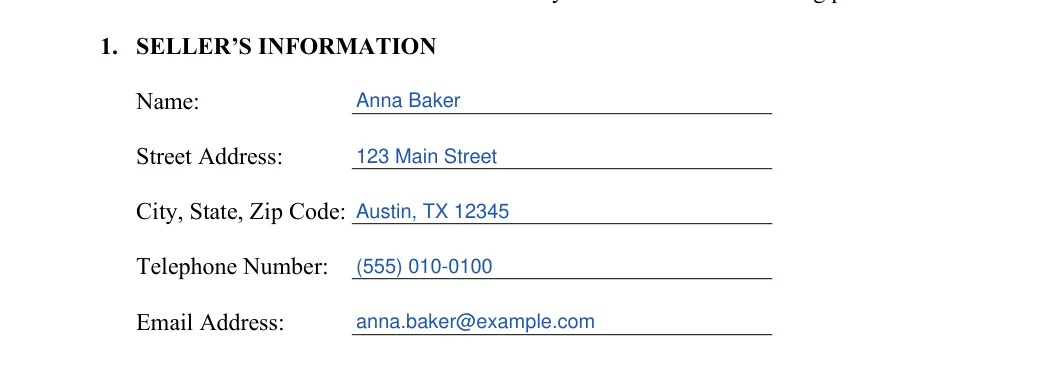
Step 2: 1. Seller’s information
Enter the seller’s name, street address, city, state and zip code on one line, followed by the telephone and email address where the seller can be reached.

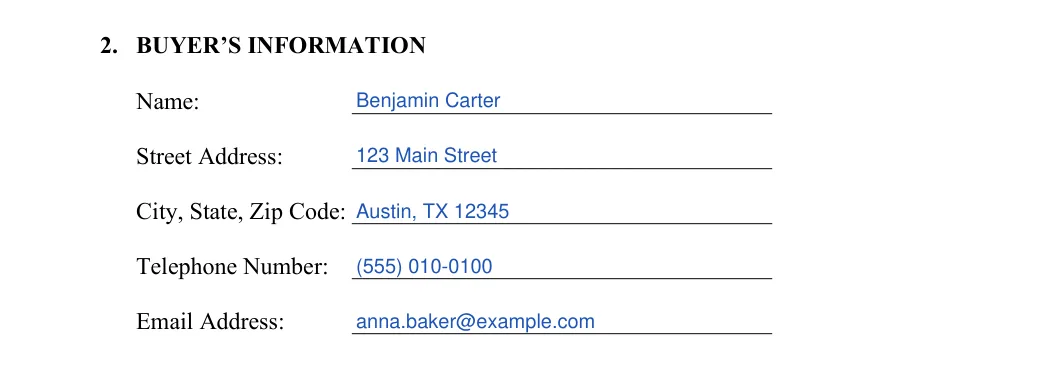
Step 3: 2. Buyer’s information
Enter the buyer’s name, street address, city, state and zip code on one line, followed by the telephone and email address where the buyer can be reached.
Step 4: 3. Description: names of the parties
Write the seller’s name and the buyer’s name again on the two lines of the sentence that opens Section 3.

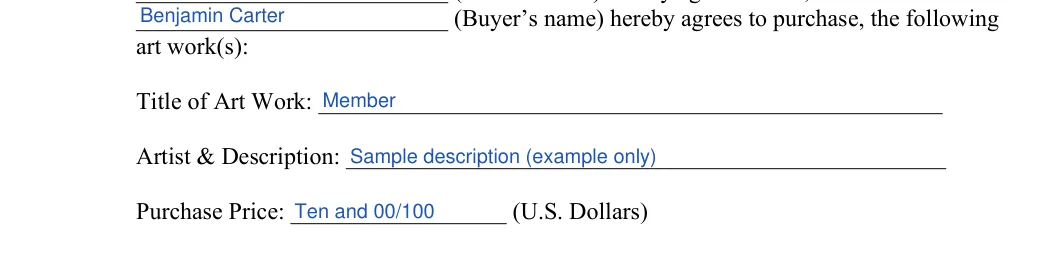
Step 5: 3. Description: the artwork
Fill in the title of the art work, the artist and a description, and the purchase price in U.S. dollars. Add the medium and the size so the piece is easy to identify.

Step 6: 4. Purchase date and total price
Type in the sale date and the full price of the artwork. On page 2, these go on the purchase date line and the total purchase price line. Use the same amount you entered in Section 3, because the two figures should always match.

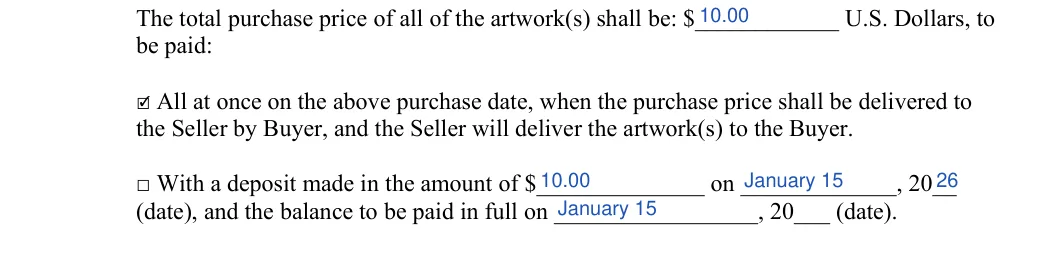
Step 7: 4. How the price is paid
Indicate how the buyer will pay:
Check one box. For a deposit, enter the amount, the deposit date and the balance date.

Step 8: 4. Payment method
Check one: Cash, Check, Cashier’s check or Money Order. When the buyer pays by check, write the check # on the line beside that option.

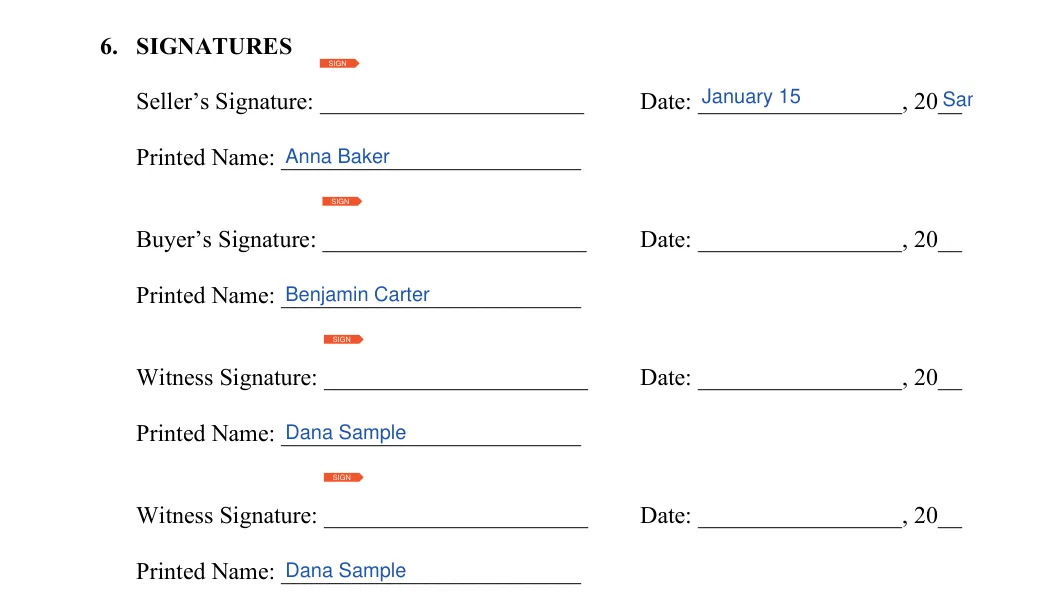
Step 9: 6. Signatures
On page 3, the seller and the buyer each sign and print their name. The form also has two witness lines, each with a signature and a printed name. Add a date beside each signature.
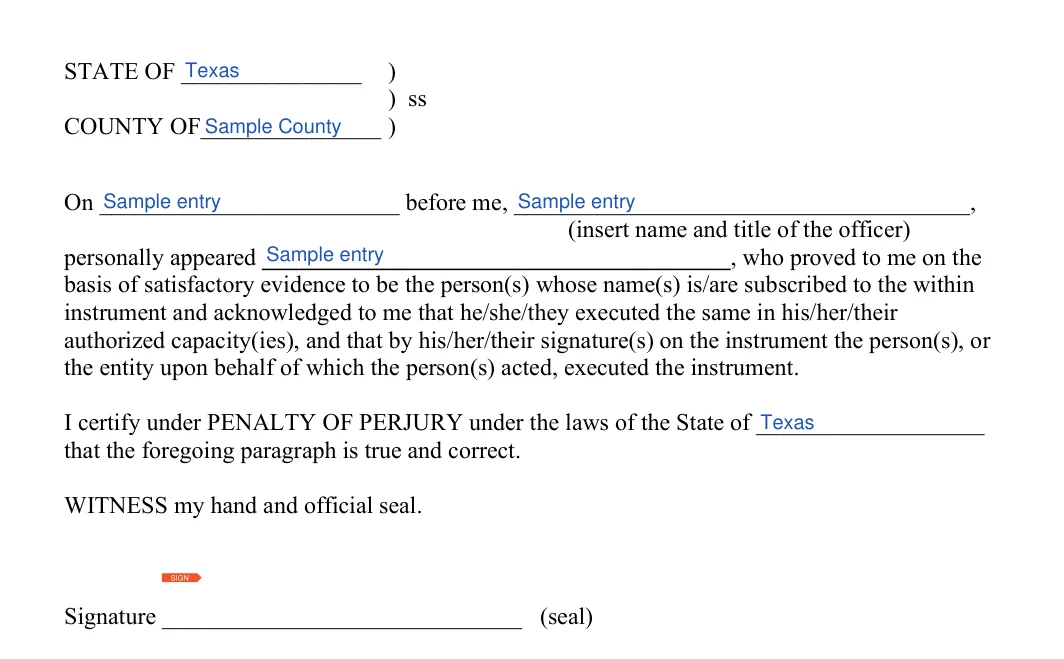
Step 10: Acknowledgment
If you use the acknowledgment on page 4, sign it in front of the notary. The notary fills in the state, county, date, officer name, name of the person appearing and the seal.
Once the form is filled in, read the terms together, sign it and decide whether to add a notary. Keep a signed copy for your records, and give the other party a copy of the signed form as well.
Read the standard terms. Look at standard terms and ensure both parties are familiar with them.
This part generally says that the seller is the owner and they are able to sell the piece legally. It also says that there are no outstanding debts on the artwork and that the Bill of Sale is filled out to the best of the seller’s knowledge.
Check what these terms say about the artwork’s condition and about who answers for it after the sale. If they use the words “as-is”, ask an attorney how far those words reach, for example to the seller’s ownership or to who made the piece.

Sign the form. Have the seller and the buyer both sign, so each side holds the other’s agreement in writing.
You could also have one or a number of witnesses verify the deal.

Use the help of a notary public.
Ask a notary to witness the signatures, or add a notary acknowledgment page.
This page cites no rule that settles whether an art sale calls for that step, so ask an attorney if the piece is valuable.

This page cannot confirm that for your location, because the official sources behind it cover vehicle sales, not art sales. We do not apply vehicle rules to a painting or a sculpture. Ask an attorney or your local tax office before a high-value sale.
Yes, you can use an artwork bill of sale when a finished commissioned piece changes hands and the final payment is settled. Agree on the schedule, the changes you allow and the deposit in a separate written agreement before you start the work.
Yes, a short artwork bill of sale is worth using with family or friends, because it keeps the price and the piece clear for both of you. It also helps later if either side resells the work or has to show what was paid.
When a gallery or dealer sells the piece for you, a consignment agreement sets the terms between you, and the bill of sale then goes to the final buyer. Agree in advance on who signs it as seller and who hands it over, so the buyer gets a clear paper trail.
Tick the deposit option on the form, then enter the deposit amount, its date and the date the balance comes due. Hold on to each payment receipt with the signed form, so both sides can show when the money arrived.
Make a copy of the artwork bill of sale for each party, and keep the signed original with the other papers for the piece:
A scan of the signed form also works as a backup if the paper copy is ever lost.
Yes, the FormsPal template is editable, so you can add details that fit your sale, such as a usage rights line, a shipping term or a note about the frame.
General information, not legal or tax advice.
