
A medical power of attorney is a legal document where you, the principal, name an agent to make health care decisions when you cannot make or communicate them yourself. Any adult who wants a trusted person to speak for them if they cannot can use one. Below you will find the signing rules by state and how to fill out your power of attorney form.
Last Updated: October 2026. This guide is reviewed and updated regularly to reflect current law. If you notice an error or outdated information, please contact us.
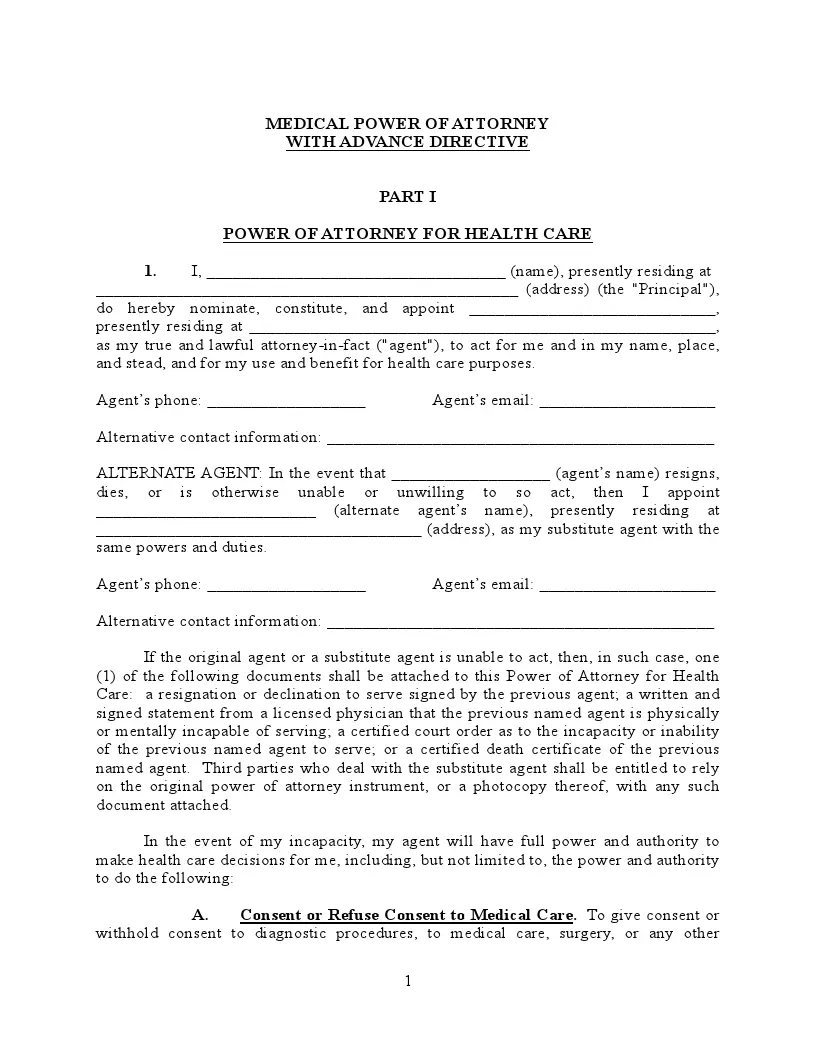
Build Your Document
Answer a few simple questions to make your document in minutes
Save and Print
Save progress and finish on any device, download and print anytime
Sign and Use
Your valid, lawyer-approved document is ready
A medical power of attorney names the person who speaks for you on health care when you cannot decide or communicate for yourself. That person is your agent, also called your attorney-in-fact. Depending on the state, you may see the terms proxy, surrogate or representative instead. Your agent follows your wishes and the powers you grant in the document.
Your agent does not need to be a family member. Choose someone who knows you well and understands your health care preferences. Depending on the state, these people cannot serve as your agent:
Some states make an exception for relatives.
Your agent may have to make critical decisions, including your end-of-life care. Talk through the kind of care you want before you sign.
A medical power of attorney is meant to work when you cannot decide for yourself, so make sure the document you use says so.
A medical power of attorney can give your agent powers such as these:
Your agent can decide whether to go ahead with the care your doctors recommend when you cannot decide yourself. Naming an agent tells your doctors whom you chose to speak for you.
Your agent can also choose between different medical professionals to provide your care.
You can give your agent access to your medical records so they can make informed decisions on your behalf.
You can give your agent the right to decide about life-prolonging procedures, such as a respirator or tube feeding. Your agent should follow your wishes, so talk about the care you would and would not want. Your agent can also choose to pursue those procedures if that is what you would want.
In some states, an agent cannot consent to or refuse treatment over your own objection. In some states, the document must grant authority over tube feeding specifically, so check what your form says.
Your agent can decide which kinds of pain control you receive and which medications you take. This is not the same as prescribing them. If your doctor offers morphine or another drug that can make you drowsy, your agent decides whether to accept it or ask for something else.
Some forms let you state your wishes on organ donation and the care of your remains, such as burial or cremation. Whether your agent has a say after your death depends on the state and the document. If you are a registered organ donor, say so in the document.
These are not all of the powers a medical power of attorney can grant, but they are some of the most common. You can customize the form to grant only some of them. The fewer powers you grant, the less your agent can do in a medical emergency.
Instead of limiting your agent's powers, you can put your wishes in writing in a living will or advance directive. Give your agent a copy and talk through your wishes with them.
Several documents sound alike but do different jobs, and the names change from state to state. Knowing which one you need helps you plan your care and your finances. This is how they differ:
Both of these documents are advance directives, but they are a little different in how they work.
A living will lets you state your wishes about end-of-life care. For example, you can say whether you want life support machines, blood transfusions, or pain medication that could make it hard to stay awake. A medical power of attorney names someone to make those decisions for you.
A living will gives you more control over the treatments it names, but it cannot cover a situation you did not anticipate. With a medical power of attorney, your agent has to understand your wishes and act on them. Your agent can respond to a wider range of circumstances.
Some states have one combined advance directive form for both documents. Other states keep them separate. Check your state's rules on combining them and on how each one must be signed.
A health care proxy is not a weaker or separate version of a medical power of attorney. In some states, it is simply the name for the document that appoints your health care agent. Other states use terms such as health care surrogate designation, patient advocate designation or health care representative.
Whatever the name, your agent makes decisions about your care. Paying bills from your accounts takes a financial power of attorney. In some states, a health care proxy cannot be on the same form as a financial power of attorney, so keep them as separate documents.
If you name different people for health care and for money, make sure each one knows your wishes.
Set up a medical power of attorney well before you need it. Your agent steps in when you cannot make or communicate your own health care decisions, so the document has to be in place beforehand. Any adult can create one. Your agent may need to act in situations like these:
You must understand what you are signing when you fill out the form. In some states, the witnesses confirm that you appeared of sound mind and free of pressure.
This table shows how each state wants a medical power of attorney signed: before witnesses, a notary, either one, or both, along with the statute. The number of witnesses and who may serve as one differ by state. Some states publish their own form. Laws change, so open your state's page or read the statute before relying on a cell.
| STATES | Signing requirements | STATE LAW |
| Alabama | Two Witnesses | Alabama Code, Section 22-8A-4 |
| Alaska | Notary Public OR Two Witnesses | Alaska Statutes, Section 13.52.010 |
| Arizona | Notary Public OR One Witness | Arizona Revised Statutes, Section 36-3221 |
| Arkansas | Notary Public OR Two Witnesses | Arkansas Annotated Code, Section 20-6-103 |
| California | Notary Public OR Two Witnesses | California Probate Code, Section 4673 |
| Colorado | Notary Public recommended | Colorado Revised Statutes, Section 15-14-506 |
| Connecticut | Two Witnesses | Connecticut General Statutes, Chapter 368w, Section 19a-575a |
| Delaware | One Witness | Delaware Code, Title 16, Section 2508 |
| Florida | Two Witnesses | Florida Statutes, Section 765.202 |
| Georgia | Two Witnesses | Georgia Code, Section 31-32-5 |
| Hawaii | Notary Public OR Two Witnesses | Hawaii Revised Statutes, Section 327E-3 |
| Idaho | Notary Public recommended | Idaho Statutes, Section 39-4510 |
| Illinois | One Witness | Illinois Compiled Statutes, Chapter 755, Section 45/4-5.1 |
| Indiana | Notary Public OR Two Witnesses | Indiana Code, Section 16-36-7-28 |
| Iowa | Notary Public OR Two Witnesses | Iowa Code, Section 144B.3 |
| Kansas | Notary Public OR Two Witnesses | Kansas Statute, Section 58-629 |
| Kentucky | Notary Public OR Two Witnesses | Kentucky Revised Statutes, Section 311.625 |
| Louisiana | Two Witnesses | Louisiana Revised Statutes, Section 28:224 |
| Maine | Two Witnesses | Maine Probate Code, Title 18-C, Section 5-803 |
| Maryland | Two Witnesses | Maryland Annotated Code, Health-General, Section 5-602 |
| Massachusetts | Two Witnesses | Massachusetts General Laws, Chapter 201D, Section 2 |
| Michigan | Two Witnesses | Michigan Compiled Laws, Section 700.5506 |
| Minnesota | Notary Public OR Two Witnesses | Minnesota Statutes, Section 145C.03 |
| Mississippi | Notary Public OR Two Witnesses | Mississippi Annotated Code, Section 41-41-205 |
| Missouri | Notary Public | Missouri Revised Statutes, Section 404.705 |
| Montana | Two Witnesses | Montana Annotated Code, Section 50-9-103 |
| Nebraska | Notary Public OR Two Witnesses | Nebraska Revised Statutes, Section 30-3404 |
| Nevada | Notary Public OR Two Witnesses | Nevada Revised Statutes, Section 162A.790 |
| New Hampshire | Notary Public OR Two Witnesses | New Hampshire Revised Statutes, Section 137-J:14 |
| New Jersey | Notary Public OR Two Witnesses | New Jersey Statutes, Section 26:2H-56 |
| New Mexico | Two Witnesses recommended | New Mexico Annotated Statutes, Section 24-7A-2 |
| New York | Two Witnesses | New York Consolidated Laws, Section 2981 |
| North Carolina | Notary Public AND Two Witnesses | North Carolina General Statutes, Section 32A-16 |
| North Dakota | Notary Public OR Two Witnesses | North Dakota Century Code, Section 23-06.5-05 |
| Ohio | Notary Public OR Two Witnesses | Ohio Revised Code, Section 1337.12 |
| Oklahoma | Two Witnesses | Oklahoma Statutes, Section 63-3101.4 |
| Oregon | Notary Public OR Two Witnesses | Oregon Revised Statutes, Section 127.515 |
| Pennsylvania | Two Witnesses | Pennsylvania Consolidated Statutes, Title 20, Section 5452 |
| Rhode Island | Notary Public OR Two Witnesses | Rhode Island General Laws, Section 23-4.10-2 |
| South Carolina | Two Witnesses | South Carolina Code of Laws, Section 62-5-503 |
| South Dakota | Notary Public OR Two Witnesses | South Dakota Codified Laws, Section 59-7-2.1 |
| Tennessee | Notary Public OR Two Witnesses | Tennessee Code Annotated, Section 68-11-1803 |
| Texas | Notary Public OR Two Witnesses | Texas Statutes, Health and Safety Code, Section 166.154 |
| Utah | One Witness | Utah Code, Section 75A-9-107 |
| Vermont | Two Witnesses | Vermont Statutes, Title 18, Section 9703 |
| Virginia | Two Witnesses | Virginia Code, Section 54.1-2983 |
| Washington | Notary Public OR Two Witnesses | Washington Revised Code, Section 11.125.050 |
| West Virginia | Notary Public AND Two Witnesses | West Virginia Code, Section 16-30-4 |
| Wisconsin | Two Witnesses | Wisconsin Statutes and Annotations, Section 155.10 |
| Wyoming | Notary Public OR Two Witnesses | Wyoming Statutes, Section 35-22-403 |
Getting a medical POA takes five steps. You choose your agent, decide on their powers, consider a living will, fill out and sign the form, and handle any other directives. If you have a lawyer, you can ask them to prepare it. Otherwise, you can use a medical POA form.
Step 1: Select an Attorney-in-Fact

The first thing to do is decide who you want to trust as your agent.
Choose someone who understands your wishes, is willing to take on the role, and who you trust with access to your medical records.
Step 2: Determine Health Care Attorney Powers

Once you know who you trust, you can also decide which powers to give them.
Step 3: Decide Whether You Also Want a Living Will

A living will lets health care providers know what you want for end-of-life care.
Some states have one combined advance directive form for both. Other states keep them as separate documents, so check your state's rules.
Step 4: Fill Out Your Medical Power of Attorney Form

Complete every required part of the form. If your state has its own form, follow it.
How the form must be signed depends on the state. Depending on the state, you may need:
Many states limit who may witness and want the document dated. Some want their statutory form used substantially as written. Check your state's row in the table above.
Do not ask your agent to sign as a witness. Many states bar it, and some also bar relatives, heirs or your health care providers.
Step 5: Attach Any Additional Health Care Directives

If you have another health care directive you want to create, do it at the same time. You can add directives later, but it is easier to do them all at once.
If you add a directive later, reread your medical power of attorney to make sure the two documents do not contradict one another.
Filling out the form takes six steps: your details and your agent's, alternate agents, the powers you grant, any changes, the revocation section, and signing. Work through them in order and complete every required part. Our form already lists several powers, so you only change what you want.
Step 1: Fill Out Your Personal Information and Name Your Agent
Write your full name and current address, including state, county, street and zip code. Then add the name and address of the person you want as your agent, plus their contact details, such as a phone number and email address.
Update this section if you or your agent move.

Step 2: Name Alternate Agents if Desired
An alternate (successor) agent is your backup if your first agent is also incapacitated or cannot be reached in time. The alternate also takes over if your first agent declines to act.
You can name one person, several people, or no alternate at all. If no named agent can act, your doctors turn to whoever your state allows. That may not be the person you would choose, so naming an alternate is wise.

Step 3: Approve or Disapprove the Provisions of Your Medical Power of Attorney Form
Our form has several powers already outlined for you. You can accept all of them, or you can edit the document to remove one or more.
You can also add medical powers, but it is a good idea to consult a lawyer before you change anything.

Step 4: Add Any Necessary Modifications
If you decided on any changes, make sure they are in place before you sign the document. An incomplete form can get in the way of your care.
Step 5: Leave the Revocation Clause Blank (Until Needed)
Some forms include a revocation section.

For now, leave this section blank. If you change agents later, revoke the old document in writing, tell your old agent and your doctors, and collect the old copies.
Step 6: Sign Before the Witnesses or Notary Your State Requires and Share Copies
Sign the document the way your state requires, in front of witnesses, a notary public, or both. The rules differ by state, so check what applies where you live.
Even if your state does not require a notary, you can use one to help the document be accepted.
Give copies to the people who need them:
Keep a copy yourself. Depending on the state, you may need to tell your attending physician about the document or place it in your medical record before your agent acts.

Your medical power of attorney covers health care decisions and nothing else. These related documents handle other parts of your planning, and each is a separate document you can prepare at the same time.
It depends on the state. Check your state's row in the table above, or open your state's medical power of attorney page, before you sign. Depending on the state, your document may need any of the following:
If you cannot make decisions and have no medical power of attorney, your doctors turn to whoever your state allows to decide for you. That is often a family member, but it may not be the person you would choose.
If no one can act, or the people involved disagree, a court may have to appoint someone. Emergency care does not wait for that to be settled.
Only the person you name in the document is your agent. Whether a spouse or partner can make health care decisions for you without one depends on the state.
Naming your spouse or partner in a medical power of attorney removes the doubt. In some states, a divorce or legal separation cancels a spouse's appointment as agent unless the document says otherwise.
No. Your agent does not pay for your care out of their own pocket. A medical power of attorney covers health care decisions, not your money.
Paying your bills from your accounts takes a financial power of attorney. Many people name the same person in both documents.
Who may witness depends on the state. Witnesses are adults, and in some states they confirm that you appeared of sound mind and free of pressure. Depending on the state, these people cannot be a witness:
In many states, another adult may sign at your direction and in your presence if you cannot sign yourself. The rules differ by state.
In some states, the person who signs for you cannot also be your agent or a witness.
General information, not legal or tax advice.
