
A Vermont living will is a written document, called an advance directive under state law, that states your medical treatment preferences if you become unable to communicate them yourself.[1]
Last Updated: September 2026. This guide is reviewed and updated regularly to reflect current Vermont law. If you notice an error or outdated information, please contact us.
Creating a Vermont living will lets your health care providers and family follow your medical wishes about end-of-life treatment instead of guessing. You can also register your advance directive with the Vermont Advance Directive Registry so providers can find it when they need it. Registration is optional and free, whether you do it online or by mail.
Vermont Statutes Annotated Title 18, Chapter 231 sets the rules for a valid advance directive. The advance directive must be dated and signed by the principal, the legal term for the person making the directive, or by someone else at the principal’s direction if the principal cannot sign. At least two witnesses who are 18 or older must also sign, confirming that the principal appeared to understand the advance directive and signed it free from duress.[1]
State law also limits who can serve as a witness. These people cannot witness your advance directive:[1]
State law also sets out what your witnesses confirm, and when they need to be with you in person. Since April 1, 2024, a witness can sign remotely instead of in person if you already know each other and the witness confirms your medical care understanding over a live video or phone call.[1]
On and after April 1, 2024, the principal shall have either signed in the physical presence of the witness or the following conditions shall have been met if the witness is a remote witness: the principal and the remote witness were known to each other; based on communication between the principal and the remote witness through a live, interactive, audio-video connection or by telephone, the remote witness attested that the principal seemed to understand the nature of the document and to be free from duress or undue influence at the time the advance directive was signed; and the principal included on the advance directive the name and contact information for the remote witness and the nature of the principal’s relationship to the remote witness.
You, your witnesses, or the person who explains the directive (see below) can each sign using a digital signature, as long as a remote witness still meets the conditions above.[1]
If you are being admitted to, or are already a patient or resident in, a hospital, nursing home, or residential care facility when you sign, your advance directive is not automatically valid. A qualified person must explain the advance directive to you first and sign a statement confirming they did.[1]
In a hospital, that explanation must come from one of these people:
In a nursing home or residential care facility, the same six roles qualify, plus two more: an unpaid, trained volunteer at the facility, or a clinician who does not work for that facility.[1]
In practice, you can change your mind about an advance directive whenever you want. Common ways to do this are signing a new statement that cancels the old one, telling your doctor directly, or destroying the paper copy.
Under 18 V.S.A. § 9704(b), you may suspend or revoke all or part of your advance directive, including the designation of an agent, whether or not you have capacity, by a signed statement, by personally informing your clinician, or by burning, tearing or obliterating the document. A provision made under § 9707(h) can be suspended or revoked only while you have capacity.[2]
| Document Name | Vermont Living Will Form |
| State Form Name | Vermont Advance Directive |
| Signing Requirements | Two Witnesses |
| Validity Requirements | 18 V.S.A. § 9703[1] |
| State Laws: Vermont Statutes Annotated, Title 18, Chapter 231 | |
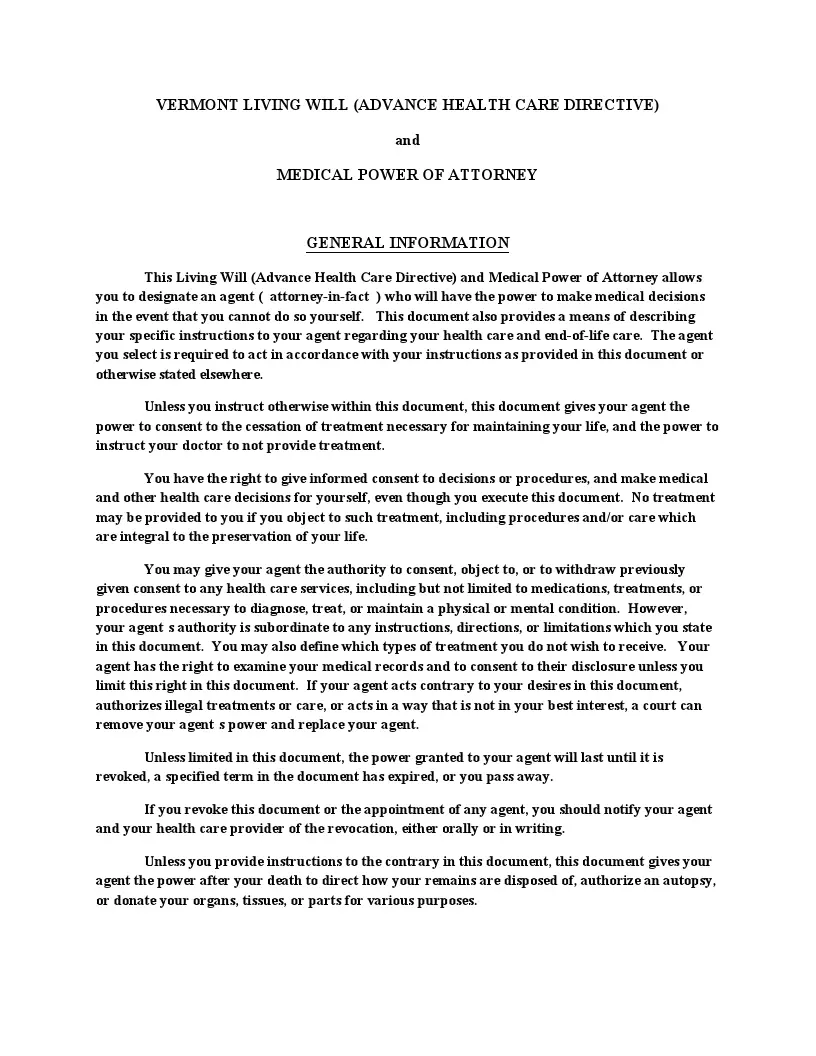
Your Vermont advance directive needs your signature and two witnesses who are 18 or older to be valid, so follow these steps as you fill out the health care power of attorney form FormsPal provides.[1]

A Vermont living will is valid when you sign and date it, or have someone else sign at your direction if you cannot. At least two witnesses who are 18 or older must also sign, confirming you appeared to understand the advance directive and signed it free from duress. If you are in a hospital, nursing home, or residential care facility when you sign, a qualified person must also explain the advance directive to you first and confirm that explanation in writing.[1]
General information, not legal or tax advice.
