Maryland Promissory Note Template

A Maryland promissory note is a written promise to repay borrowed money. It names the lender, the borrower, the amount, the interest rate and the payment terms. This free Maryland promissory note template covers each of those details and lets you choose an unsecured or a secured loan. Under Maryland usury law, the base limit is 8 percent simple interest a year when a signed written agreement states the rate. Some loans carry a higher limit.[1]

Last Updated: October 2026. This guide is reviewed and updated regularly to reflect current Maryland law. If you notice an error or outdated information, please contact us.
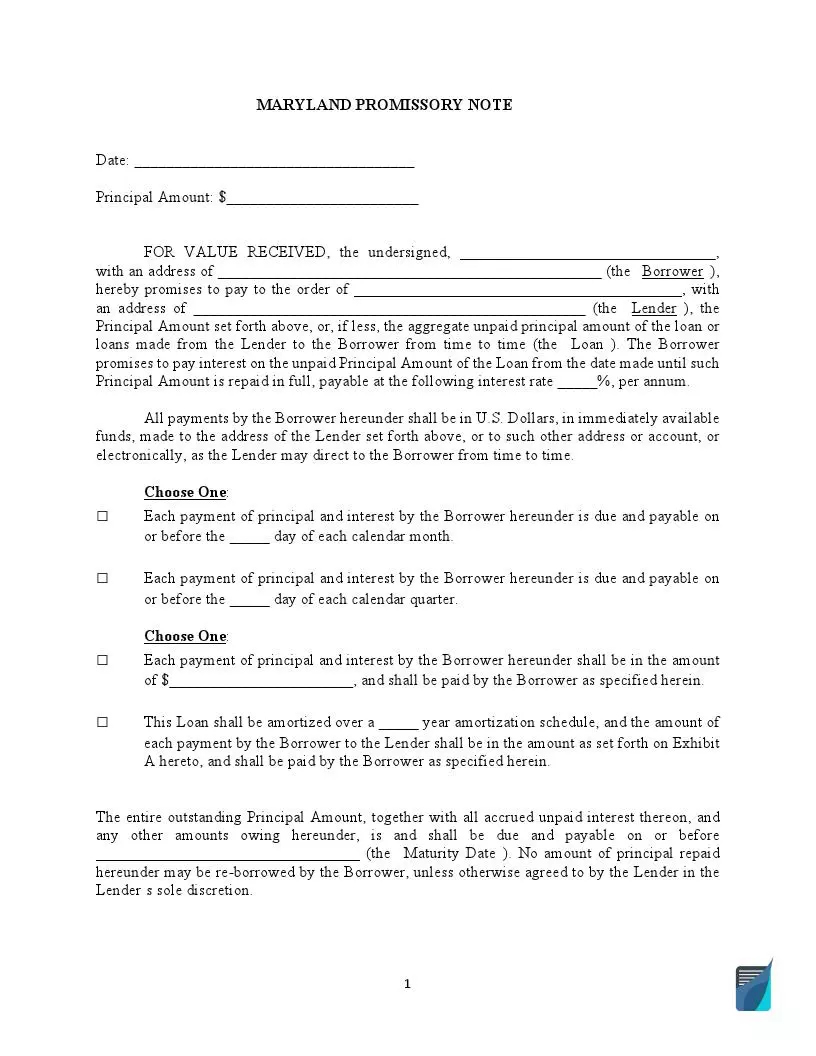
Maryland promissory note form preview

Create a free high quality Maryland Promissory Note online now!

Build Your Document

Answer a few simple questions to make your document in minutes

Save and Print

Save progress and finish on any device, download and print anytime

Sign and Use

Your valid, lawyer-approved document is ready

... or download your Maryland Promissory Note Template as a  PDF file

Maryland Usury Laws

Maryland usury law limits the interest a lender may charge on a loan. Under Section 12-103 of the Md. Code, Com. Law, a lender may charge simple interest of up to 8 percent per year on the unpaid principal balance. This applies when a written agreement signed by the borrower states the rate.[1]

A lender may charge interest at an effective rate of simple interest not in excess of 8 percent per year on the unpaid principal balance of a loan if there is a written agreement signed by the borrower which sets forth the stated rate of interest charged by the lender.

Md. Code, Com. Law § 12-103

In practice, the interest rate belongs on the note itself, in writing, above the borrower's signature. The FormsPal template has a line for it on page 1.

Tip: You may also see this document called an MD promissory note, a Maryland promissory note example or a Maryland promissory note sample. If you need the general version, start from our basic promissory note.

Section 12-102 of the Commercial Law Article of the Maryland Code sets the general ceiling. Except as otherwise provided by law, a person may not charge interest above an effective rate of simple interest of 6 percent per year on the unpaid principal balance of a loan.[2]

Maryland Promissory Note Form Details

Document Name Maryland Promissory Note Form
Other Name MD Promissory Note
Max. Rate 8% per year with a written agreement signed by the borrower, higher for some loans[1]
Relevant Laws Md. Code, Com. Law § 12-103
Avg. Time to Fill Out 10 minutes
# of Fillable Fields 28
Available Formats Adobe PDF
Template Preview
Create a free high quality Maryland Promissory Note online now!

Popular Local Promissory Note Forms

A promissory note (sometimes called loan agreement) is a handy money instrument used by many individuals and companies through all states as a funds source and a substitute for banking institutions. Discover more about the most popular US states requested by our users when it comes to promissory notes.


Maryland Interest Rate Limits by Type of Loan

The 8 percent rule is the first of several rules in Section 12-103. The statute sets other limits for particular kinds of loans, and it lets a lender charge any rate on some loans. The list below shows each limit in plain words.[1]

  • Subject to further conditions in the statute, a lender may charge simple interest at an effective rate of up to 18 percent per year on the unpaid principal balance of the loan.[1]
  • If the loan is unsecured, or is secured by collateral other than a savings account, the lender may charge a rate of interest of up to 18 percent.[1]
  • If the loan is secured by a certificate of deposit that the borrower holds, the lender may charge interest at a rate that does not exceed 2 percent more than the rate payable on the certificate of deposit.[1]
  • On a loan made on or after July 1, 1982, a lender may charge simple interest of up to 24 percent per year on the unpaid principal balance, provided the statute's conditions are met. If the loan renews or refinances a loan made before July 1, 1982, the lender must also comply with Section 12-116 of the same subtitle.[1]
  • A lender may charge any effective rate of simple interest on the unpaid principal balance of a loan that meets the conditions the statute sets out.[1]
  • A broker or dealer registered under the Securities Exchange Act of 1934 and under Title 11 of the Corporations and Associations Article may charge a customer any rate of interest on the debit balance when the broker or dealer extends credit on pledged securities, if the statute's conditions are met.[1]
  • A lender may charge any rate on a loan made to a corporation, on a commercial loan of more than $15,000 that is not secured by residential real property, or on a commercial loan of more than $75,000 that is secured by residential real property.[1]

Before you set a rate above 8 percent, check which of these rules fits your loan. If you are unsure, ask an attorney first.

Conditions for Higher Interest Rates

Section 12-103 attaches conditions to its higher interest rates. Two of them concern how the loan is repaid, which are prepayment and balloon payments. The statute also defines two terms that appear in those conditions, residential real property and refinancing.[1]

  • There is no prepayment penalty in connection with the loan. This is one of the conditions a loan must meet to qualify for a higher interest rate.[1]
  • The loan does not include a balloon payment, unless payment in full is due on demand or in one year or less.[1]
  • Residential real property means owner-occupied property that has a dwelling on it designated principally as a residence, with accommodations for not more than 4 families.[1]
  • Refinancing means increasing or altering the balance due, the term, or the interest rate of an existing loan, or paying off an existing loan, whether or not the lender also made the existing loan.[1]

The FormsPal template says the borrower may prepay the note at any time, in whole or in part, without a penalty or premium. That term appears on page 2 and needs no entry from you.

What Is a Maryland Promissory Note? Secured and Unsecured Types

A Maryland promissory note is either secured or unsecured. A secured note names collateral, which is property the borrower pledges to back the loan. An unsecured note names no collateral and relies on the borrower's promise to repay. The FormsPal template has a box for each choice.

A promissory note usually lists the details below. The FormsPal template has a place for each of them.

  • The names and addresses of the lender and the borrower
  • The principal amount and the interest rate you agreed on
  • How often payments are due, and either a fixed payment amount or an amortization schedule
  • The maturity date, which is the day the full balance is due
  • The collateral, for a secured note
  • The signatures of the borrower and the lender

Each side usually keeps a signed copy, so make at least two copies. For a secured note, many lenders ask for collateral that is worth at least as much as the loan.

How to Fill Out a Maryland Promissory Note

The FormsPal Maryland promissory note has 28 fillable fields across three pages. Page 1 takes the date, the parties, the amount, the interest rate and the payment terms. Page 2 asks you to choose unsecured or secured. Page 3 holds the signatures. Download the PDF above, or build it online with our form builder. You can then fill in and sign the PDF on any device.

The screenshots under each step show the FormsPal Maryland promissory note template filled with sample entries in blue, so you can see where each answer goes. The names, addresses, dates and amounts are examples only.
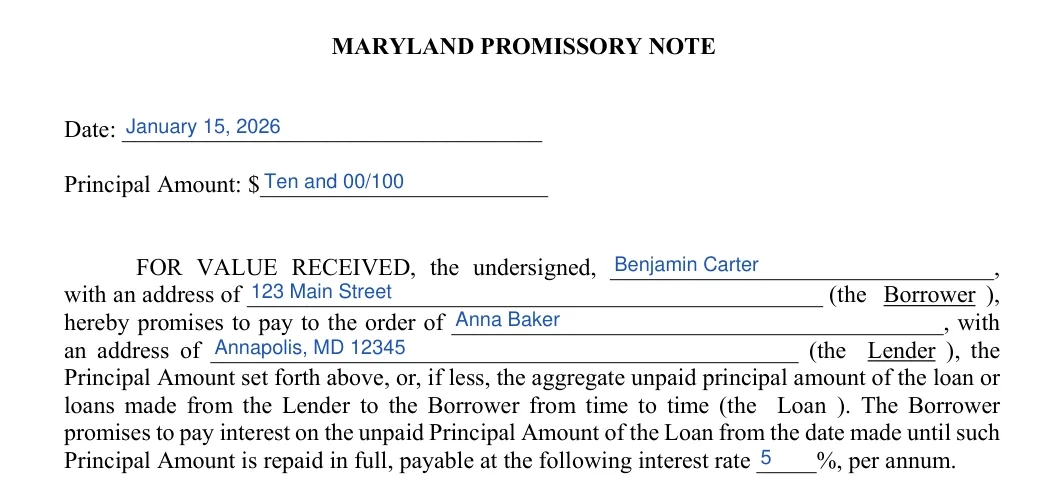
  1. Date, amount, parties and interest rate. At the top of page 1, enter the Date and the Principal Amount. In the paragraph below, write the Borrower's and the Lender's names and addresses, then the interest rate as a percent per year.
    Maryland promissory note: MARYLAND PROMISSORY NOTE, filled with sample entries
    Step 1: sample entries, not a real document.
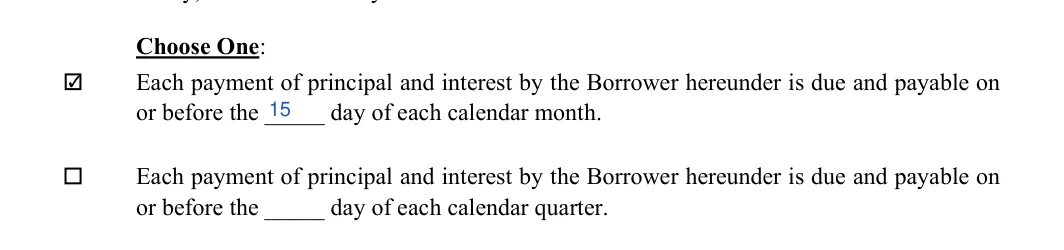
  2. Choose the payment due day. On page 1, mark monthly or quarterly and write the day number on that line. Leave the other option blank.
    Maryland promissory note: Choose One, filled with sample entries
    Step 2: sample entries, not a real document.
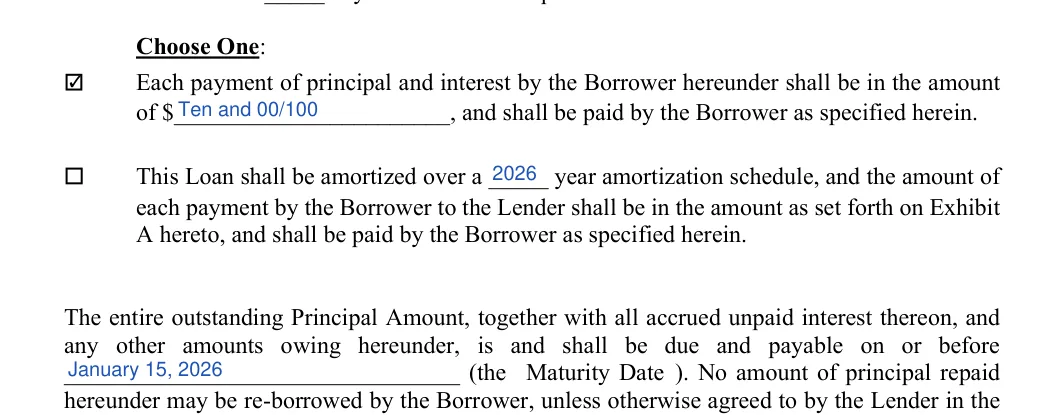
  3. Payment amount and Maturity Date. On page 1, mark either a fixed payment and enter the dollar amount, or the amortization option and enter the number of years. The amortization option points to an Exhibit A for the payments. Then write the Maturity Date, which is the day the full balance is due.
    Maryland promissory note: Choose One, filled with sample entries
    Step 3: sample entries, not a real document.
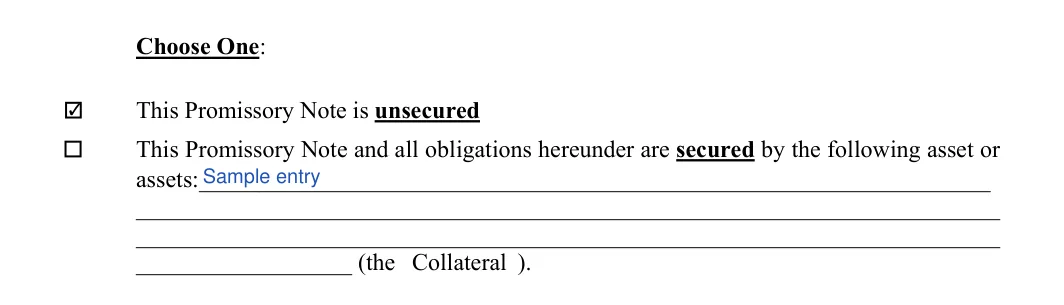
  4. Unsecured or secured, and the Collateral. On page 2, mark unsecured, or mark secured and list the asset or assets on the Collateral lines.
    Maryland promissory note: Choose One, filled with sample entries
    Step 4: sample entries, not a real document.
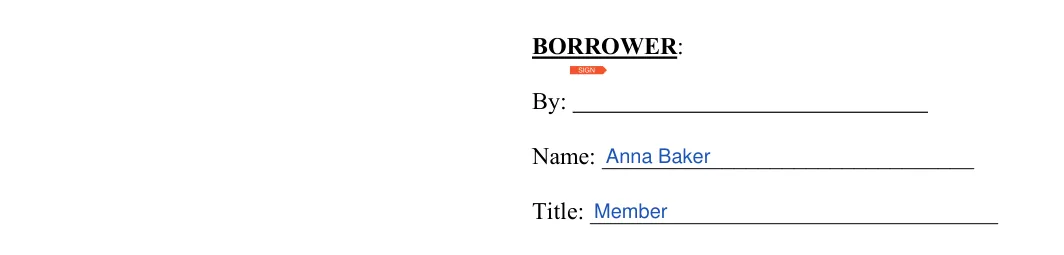
  5. Borrower signature. On page 3, sign on the Borrower's By line, then print the Name and Title beneath it.
    Maryland promissory note: BORROWER, filled with sample entries
    Step 5: sample entries, not a real document.
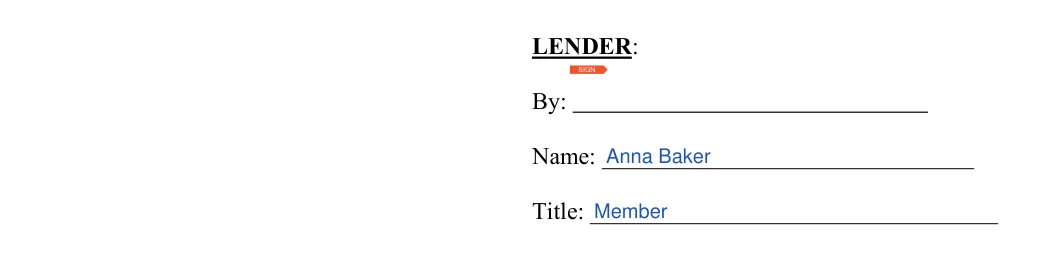
  6. Lender signature. On page 3, sign on the Lender's By line, then print the Name and Title beneath it.
    Maryland promissory note: LENDER, filled with sample entries
    Step 6: sample entries, not a real document.

Page 2 also holds fixed terms with nothing to fill in, such as the late fee, the right to prepay without penalty, Maryland governing law and assignment by the lender. Read them with the other party before you sign.

Frequently Asked Questions

Section 12-103 of the Md. Code, Com. Law sets how much interest a lender may charge on a promissory note. These answers cover the questions people ask most about interest rates and limits in Maryland.[1]

The base rule is up to 8 percent per year on the unpaid principal balance, with a signed written agreement that states the rate. Other loans carry limits of 18 or 24 percent. A rate of 600 percent is above all of those limits, though the statute lets a lender charge any rate on some loans, such as certain commercial loans.[1]

A rate of 30 percent is higher than the 8, 18 and 24 percent limits described on this page. The statute lets a lender charge any rate on some loans, such as a commercial loan of more than $15,000 that is not secured by residential real property.[1]

What is the maximum interest rate allowed by law in Maryland?

The limit depends on the loan.

  • The base rule is 8 percent per year on the unpaid principal balance, with a signed written agreement that states the rate.
  • Some loans can reach 18 percent per year.
  • Loans made on or after July 1, 1982 can reach 24 percent per year, if the statute's conditions are met.
  • For some loans, a lender may charge any rate.[1]
seal of maryland state
Other Maryland Forms
We offer a wide range of key Maryland templates to anyone looking for simplicity when handling various papers.

General information, not legal or tax advice.

Sources

  1. Md. Code, Com. Law § 12-103.
  2. Md. Code, Com. Law § 12-102.
Published: Apr 16, 2022
Jennifer M. Settles
Jennifer M. Settles
Author & Attorney
With over 25 years of experience as a business and transactional attorney, Jennifer has mastered the craft of closing highly successful deals for her clients. Through her wide-ranging expertise in commercial contracts, real estate transactions, M&A and corporate law, Jennifer secures results that are second-to-none.