
An Oregon promissory note is a written promise to repay a borrowed sum on stated terms. It records the amount, the interest rate, the payment schedule, and whether the loan is backed by collateral. Individuals commonly use it for personal loans between friends, relatives, and small businesses. Oregon's usury law limits the interest a lender may charge, so check your rate before you sign.[1.1]
Last Updated: October 2026. This guide is reviewed and updated regularly to reflect current Oregon law. If you notice an error or outdated information, please contact us.
Build Your Document
Answer a few simple questions to make your document in minutes
Save and Print
Save progress and finish on any device, download and print anytime
Sign and Use
Your valid, lawyer-approved document is ready
Oregon's usury law is Section 82.010 of the Oregon Revised Statutes. When the parties have not agreed on a rate of interest, state law sets the rate that applies instead. The law also caps the rate on smaller loans. Read the rules below before you fill in the interest rate on your Oregon promissory note.[1.1]
Here is the general cap in the statute's own words:
Make a loan of $50,000 or less, except a loan made under paragraph (a) of this subsection, at an annual rate of interest exceeding the greater of 12 percent, or five percent in excess of the discount rate on 90-day commercial paper
Before you sign, both sides should settle these terms and write each one into the note so that nothing depends on memory:
The table below summarizes the key figures for Oregon. Use it as a quick check, and read the statute itself for the full text of each rule.
| Document Name | Oregon Promissory Note Form |
| Other Name | OR Promissory Note |
| Max. Rate | Greater of 12% or 5% over the 90-day commercial paper discount rate (loans of $50,000 or less). 9% when no rate is agreed |
| Relevant Laws | Oregon Revised Statutes, Section 82.010 |
| Avg. Time to Fill Out | 10 minutes |
| # of Fillable Fields | 28 |
| Available Formats | Adobe PDF |
Popular Local Promissory Note Forms
A promissory note (sometimes referred to as loan note) is a basic monetary instrument used regularly by both companies and individuals across all states as a funding resource and an alternative to banking institutions. Discover more about the most common US states searched by our visitors with regards to promissory notes.
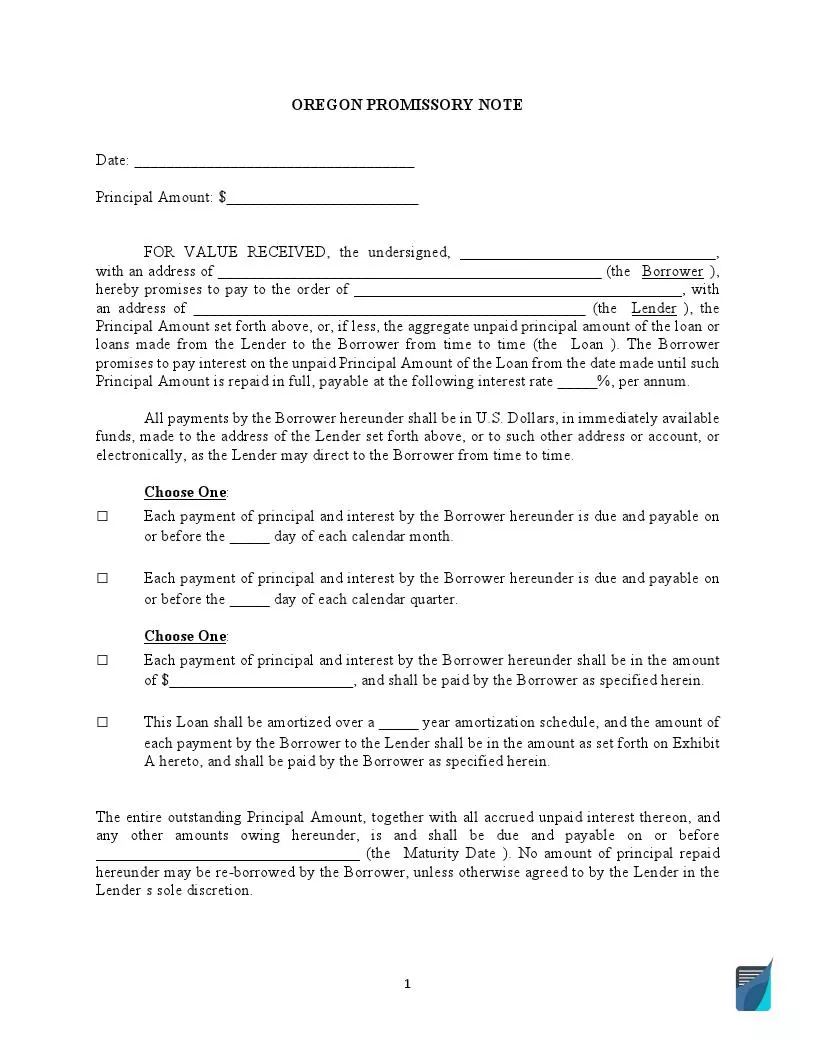
The FormsPal Oregon promissory note template has six parts across three pages, so work through them in order. If you download the PDF instead of using the online builder, you can fill it in with the FormsPal PDF editor.
The screenshots under each step show the FormsPal Oregon promissory note template filled with sample entries in blue, so you can see where each answer goes. The names, addresses, dates and amounts are examples only.
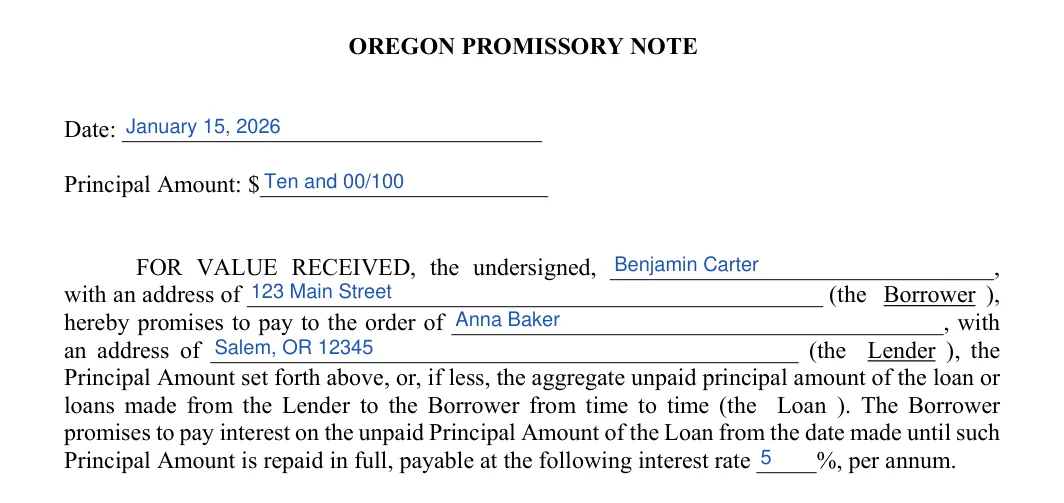
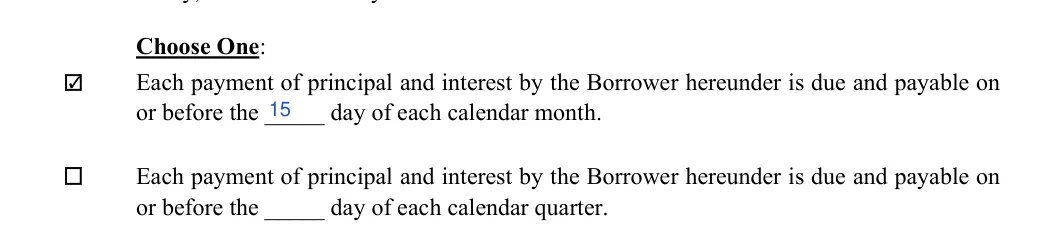
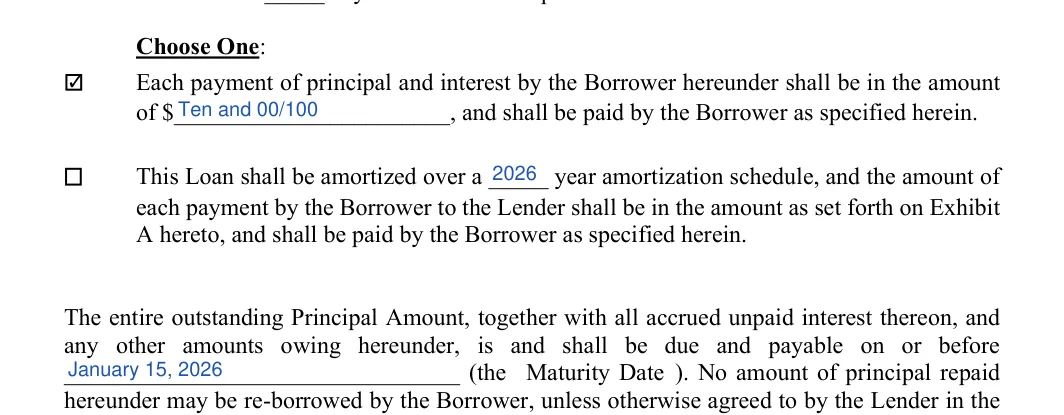
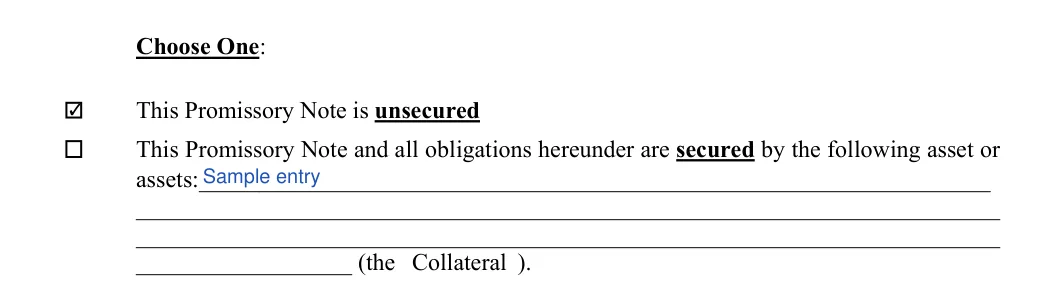


Review the completed note carefully before you sign it. Verify that the borrower's and lender's names, the principal amount, the interest rate, the payment due day, and the maturity date match the terms both sides agreed to. Confirm that you initialed the appropriate box in each group.
After both sides sign, each should keep a copy of the signed note. The borrower can use it to track payments against the schedule, and the lender can use it to confirm the balance. If you change a term later, such as the payment day or the interest rate, record the change in writing and have both sides sign it.
Page 2 of the template prints several terms that need no entries from you. Read them carefully before you sign, because each one is part of the note and affects both the borrower and the lender:
Borrowers and lenders often ask how high an interest rate can go. The two answers below test a 30 percent rate and a 100 percent rate against Oregon's cap for loans of $50,000 or less.
On a loan of $50,000 or less, a rate is illegal when it exceeds the greater of 12 percent, or five percent over the discount rate on 90-day commercial paper.[1.2] Test any proposed rate, including 30 percent, against that formula before you agree to it.
The same cap applies to a loan of $50,000 or less.[1.2] A lender who goes over the limit forfeits the right to collect or receive any interest on that loan, and the borrower repays only the principal amount borrowed.[1.1]
General information, not legal or tax advice.

