
A Connecticut promissory note is a written promise to repay borrowed money. It names the lender, the borrower, the amount, the interest rate and the payment terms. This free Connecticut promissory note template lets you build the note online or download the PDF, unsecured or secured. Connecticut law prohibits charging interest at a rate greater than 12 percent a year, with an exception for pawnbrokers.[1.4]
Last Updated: October 2026. This guide is reviewed and updated regularly to reflect current Connecticut law. If you notice an error or outdated information, please contact us.
Build Your Document
Answer a few simple questions to make your document in minutes
Save and Print
Save progress and finish on any device, download and print anytime
Sign and Use
Your valid, lawyer-approved document is ready
The lender (also called the creditor) gives the money, and the borrower (also called the debtor) receives it and promises to pay it back. A signed note is the written record of what both sides agreed. The FormsPal Connecticut promissory note asks you to enter:
A secured note names collateral, which is property the borrower pledges to back the loan. An unsecured note is made without collateral and relies on the borrower's promise to pay. People often choose an unsecured note when the amount is small or when the lender and borrower know each other well. Promissory notes are common for loans between family members, friends and small businesses.
Usury laws limit the interest a lender may charge. Connecticut's limit is in Section 37-4 of the Connecticut General Statutes, part of Chapter 673. The statute bars loaning money at an interest rate greater than 12 percent a year. It applies to every lender except a pawnbroker as provided in Section 21-44.[1.4]
No person and no firm or corporation or agent thereof, other than a pawnbroker as provided in section 21-44 , shall, as guarantor or otherwise, directly or indirectly, loan money to any person and, directly or indirectly, charge, demand, accept or make any agreement to receive therefor interest at a rate greater than twelve per cent per annum.
The rule also covers demanding interest and agreeing to receive it. Promissory notes that state a rate above 12 percent a year are therefore outside the limit before any payment is made. In short, check the rate before you sign.[1.4]
| Document Name | Connecticut Promissory Note Form |
| Other Name | CT Promissory Note |
| Max. Rate | 12 percent a year[1.4] |
| Relevant Laws | Conn. Gen. Stat. § 37-4 |
| Avg. Time to Fill Out | 10 minutes |
| # of Fillable Fields | 28 |
| Available Formats | Adobe PDF |
Popular Local Promissory Note Forms
A promissory note (often referred to as debt note) is considered a simple lending template used regularly by businesses and individuals around all states as a funding source and an alternative to banks. Learn about the most common US states requested by our visitors with regards to promissory note forms.
Beyond the 12 percent limit, Chapter 673 sets other rules. They cover how interest is counted, what happens after the due date, commercial loans, added charges and interest already paid.
Connecticut backs its interest limits with a criminal penalty. Anyone who violates Section 37-4, 37-5 or 37-6 of the statute may be fined not more than one thousand dollars, imprisoned not more than six months, or both. That covers a person acting individually, as a member of a firm, or as an officer or agent of a corporation.[1.6]
The statute also limits what a lender can do afterward. No action may be brought to recover principal or interest, or any part of it, on a loan that sections 37-4, 37-5 and 37-6 prohibit.[1.7]
Summary: Set the interest rate at or below 12 percent a year. A lender who charges more risks the fine above and the bar on recovering the loan, since the statute allows no action on a prohibited loan.[1.7]
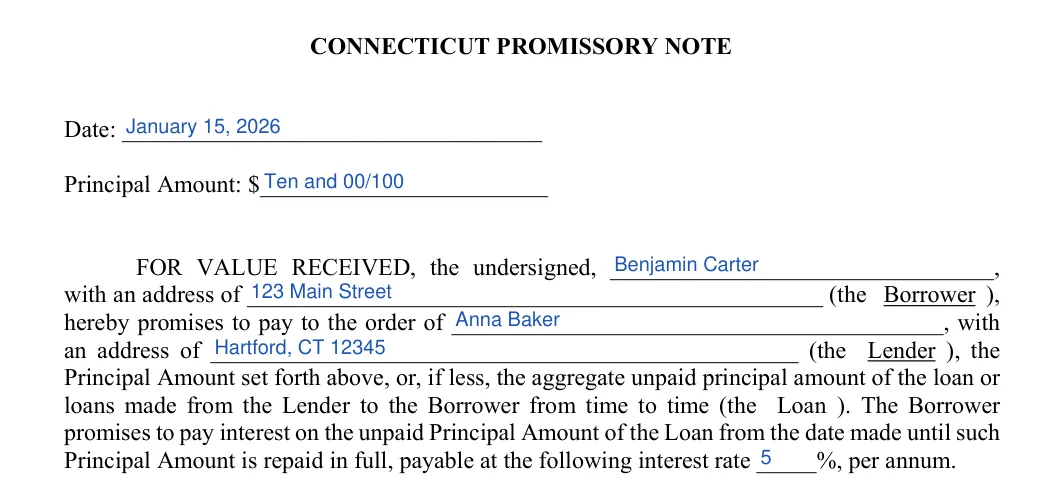
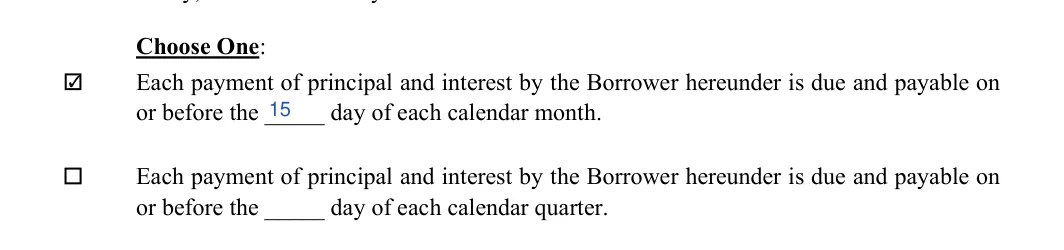
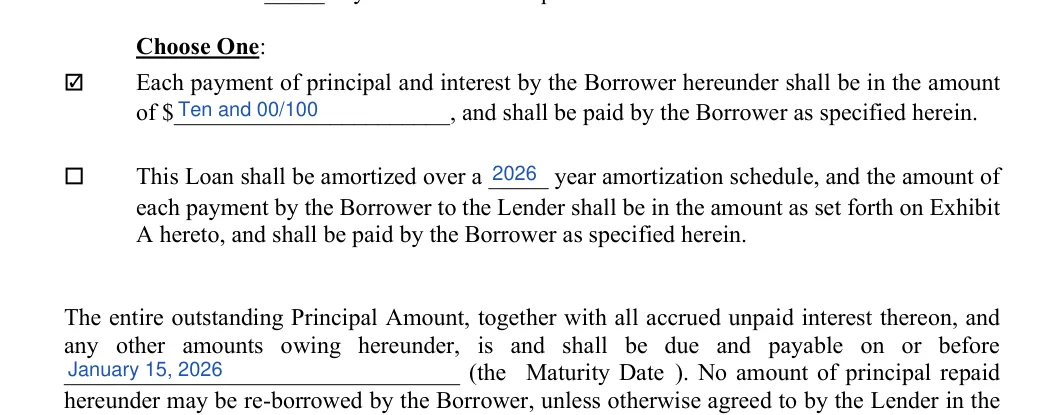
The FormsPal Connecticut promissory note has 28 fillable fields. Enter the date, parties, amount and interest rate on page 1, choose the payment terms, choose unsecured or secured on page 2, and sign on page 3. Complete each field without leaving a line blank. Download the Connecticut promissory note PDF above, then fill in and sign the PDF on any device.
The screenshots under each step show the FormsPal Connecticut promissory note template filled with sample entries in blue, so you can see where each answer goes. The names, addresses, dates and amounts are examples only.
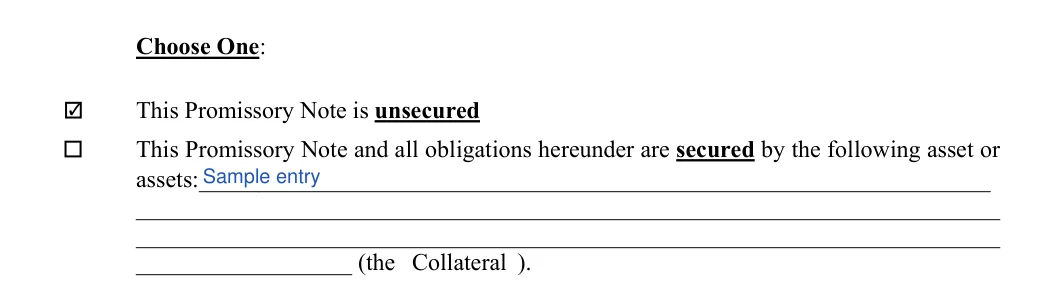


Page 2 also holds fixed terms with nothing to fill in. Read them with the other party before you sign, and do not sign without reading them. Work through the steps in order, then keep the signed promissory notes where both parties can find them.
Connecticut limits interest on a loan of money to 12 percent a year, except for a pawnbroker as provided in Section 21-44. Section 37-4 of the Connecticut General Statutes sets that limit.[1.4]
Connecticut's limit in Section 37-4 is 12 percent a year, so a 30 percent rate is above it. The statute prohibits charging interest at a rate greater than 12 percent a year, other than a pawnbroker as provided in Section 21-44.[1.4]
The statute in Section 37-4 prohibits charging interest at a rate greater than 12 percent a year, except a pawnbroker as provided in Section 21-44. Twelve percent a year is therefore the most a lender may charge under that section.[1.4]

Other Promissory Note Forms by State
General information, not legal or tax advice.
