
Are Electronic Signatures Legally Binding?
Written by FormsPal Editorial Team
- Time to read
- 6 min
Under the ESIGN Act and UETA, electronic signatures have the same legal standing as handwritten signatures in most U.S. transactions. Some documents, including wills, court orders, and certain family law records, follow different rules depending on the state.
Electronic signing is already part of everyday business. We sign online employment contracts, rental agreements, and financial documents, without anyone having to print a copy or arrange an in-person meeting.
In the legal field, e-signatures allow documents to be signed remotely. They're also useful for everyday tasks, such as signing a lease or opening an account without visiting an office.

What's an Electronic Signature?
An electronic signature, or e-signature, is an electronic way to show that someone intends to sign or approve a document.
Under the ESIGN Act, an electronic signature is referred to as:
"An electronic sound, symbol, or process attached to or logically associated with a contract or other record and executed or adopted by a person with the intent to sign the record."
E-signatures can take various forms, such as:
- Typing your name at the end of an email or document.
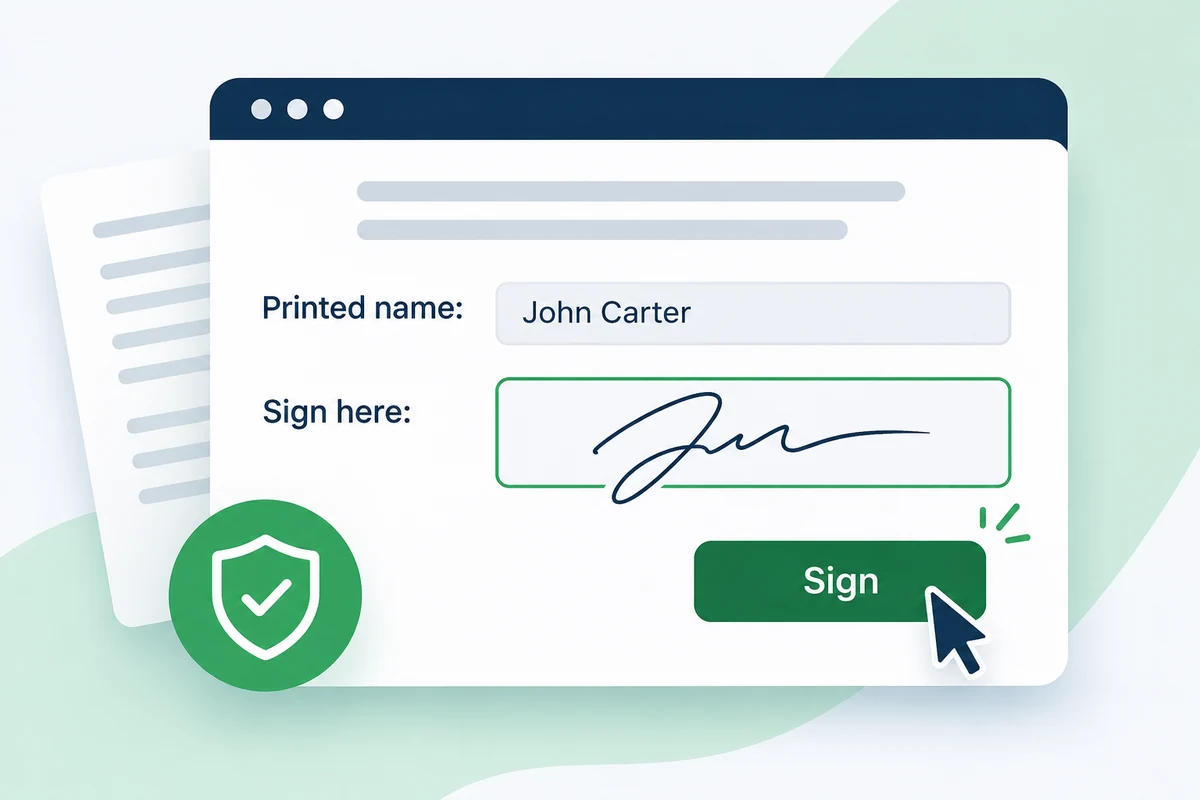
- Drawing a signature using a mouse, stylus, or touchscreen.
- Using an e-signing tool to authenticate a document electronically.
Electronic signatures are widely recognized as a legally binding way to validate agreements and transactions in the U.S. In remote or digital-first environments, the electronic signature process provides the same legitimacy and trust as a traditional signature.
Electronic Signatures vs. Digital Signatures
Electronic and digital signatures aren't quite the same thing, although the terms are sometimes used interchangeably.
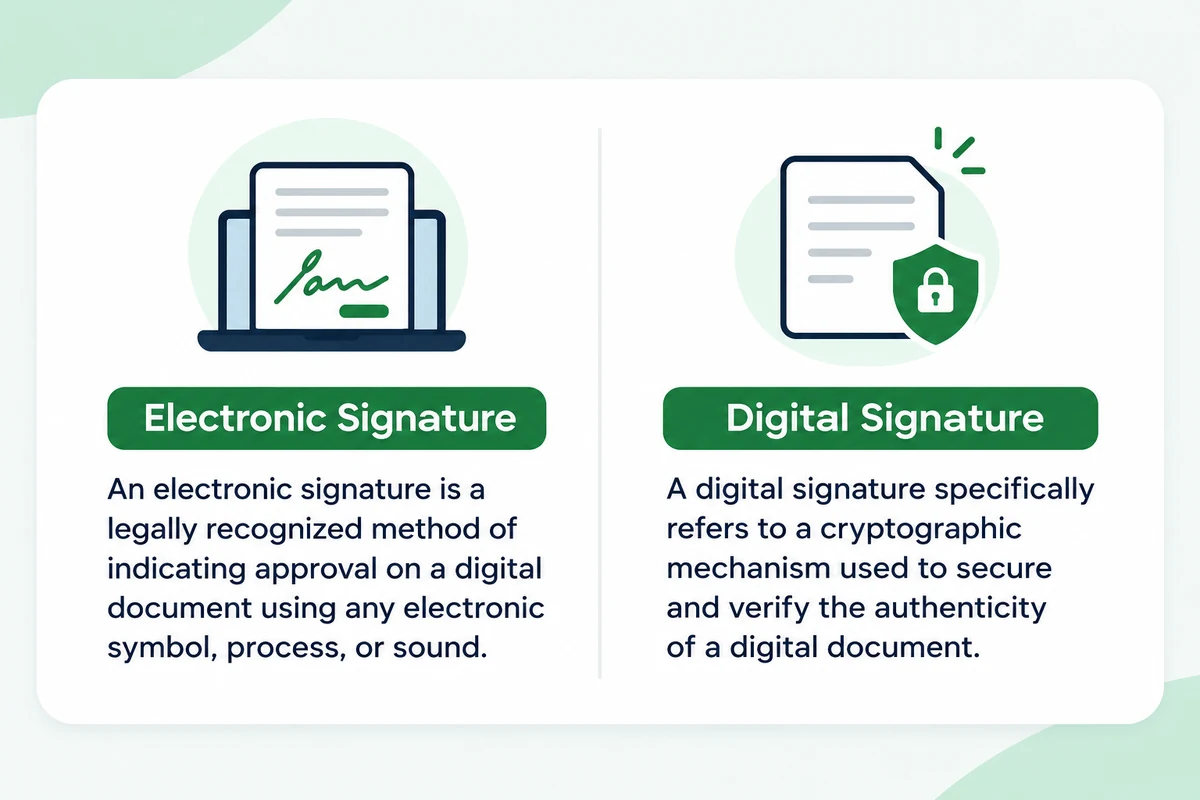
An e-signature is any digital mark or process that indicates agreement, such as typing a name or drawing a signature on a touchscreen. It focuses on convenience and intent and is often used for everyday transactions.
Digital signatures use cryptography to verify the signer's identity and detect any changes made afterward. These security features aren't included with every type of e-signature.
Whether you need an electronic or digital signature depends on the security and compliance requirements of your electronic form.
What Is the Legal Basis for Electronic Signatures?
In the United States, the Electronic Signatures in Global and National Commerce Act (ESIGN Act) and the Uniform Electronic Transactions Act (UETA) established the framework that grants e-signatures the same legal standing as handwritten ones.
Electronic Signatures in Global and National Commerce Act
The ESIGN Act, enacted in 2000, is a federal law that grants electronic signatures and records the same weight as their paper counterparts.
Are electronic signatures legal in all states? Yes, because the ESIGN Act applies to transactions across all 50 states and ensures that no contract or signature can be denied legal effect solely because it is electronic.
Note that this law doesn't apply to certain types of documents, such as:
- Wills and testamentary documents.
- Family law matters (e.g., adoption, divorce).
- Notices of termination of utility services.
- Notices of default, foreclosure, or eviction involving a person's primary residence.
- Notices of cancellation of health or life insurance benefits.
The act requires parties to consent to electronic transactions and mandates that electronic records be accessible and retained.
Uniform Electronic Transactions Act
UETA has been adopted by 49 states, the District of Columbia, Puerto Rico, and the U.S. Virgin Islands. It works alongside the federal ESIGN Act and sets rules for using electronic signatures and records in transactions covered by state law.
UETA confirms the validity of e-signatures provided that all parties have agreed to their use. It also recognizes electronic records as equivalent to their written counterparts.
The act doesn't prescribe specific electronic signature solutions, allowing businesses and individuals to choose the technology that best suits their needs. While UETA covers most electronic records and signatures used in business and government, it excludes certain documents. These are wills and specific family law documents.
What Types of Documents Can Be Electronically Signed?
Electronic signatures are widely accepted in the U.S. and other countries, offering a secure way to complete transactions.
In the United States, the ESIGN Act and UETA recognize electronic signatures for most transactions. However, the rules differ from country to country.
In the European Union, the eIDAS Regulation gives qualified electronic signatures the same legal effect as handwritten ones. The UNCITRAL Model Law on Electronic Commerce also offers guidance for countries developing their own laws on electronic transactions.
Many types of documents can be electronically signed, including:
- Employment agreements. Offer letters, new hire paperwork, and employee policy acknowledgments.
- Business contracts. Non-disclosure agreements, service agreements, and sales contracts.
- Financial documents. Loan agreements, account opening forms, and purchase orders.
- Healthcare forms. Patient intake forms and medical consent documents.
- Real estate transactions. Leases, rental agreements, and property management forms.
- Education documents. Enrollment paperwork and student service agreements.
The ESIGN Act doesn't cover every type of document. Wills, adoption and divorce matters, court orders, and certain legal notices are excluded.
However, some states have their own laws that permit electronic signatures in these cases. Check the requirements for your document before signing it electronically.
Is an Electronic Signature Legally Admissible in Court?
Electronic signatures are recognized under U.S. law and can be used as evidence in court. Still, the person presenting an electronically signed document may need to prove that the signature is authentic and belongs to the claimed signer.
Several factors help establish the validity and authenticity of an electronic signature:
- The signer's intent to sign electronically and agreement to use an electronic signature should be evident.
- The electronic signature must be directly linked to the document intended to authenticate.
- Audit trails, timestamps, and encryption features often provide additional evidence of authenticity.
- Keeping an accessible record of the signed document can help support its authenticity if questioned.
FormsPal lets users sign documents electronically and keeps a record of signing activity, including timestamps and IP addresses.
Once everyone has signed, users can download a PDF certificate showing who participated, their names and email addresses, and when each person opened or signed the document. It also includes document details and a record of the signing process. These details are useful if a signature is questioned later.
FAQ
Are FormsPal e-signatures legally binding?
FormsPal e-signatures are legally binding provided the applicable legal requirements are met. FormsPal records signing activity, including timestamps and IP addresses. If someone disputes a signature later, this history provides evidence of what happened during signing.
Can e-signatures be used internationally?
Many countries recognize electronic signatures, including the U.S., Canada, and EU member states. Each has its own rules, though. A signature accepted for a business contract in one country won't necessarily meet the requirements for every document in another. For international agreements, check the laws of the countries involved.
Does USCIS accept electronic signatures?
USCIS accepts electronic signatures for forms submitted through its approved online filing systems. For paper filings, it generally accepts a reproduced copy of an original handwritten signature, subject to the form's instructions. Signatures created using third-party electronic signing software aren't accepted for ordinary paper filings.
Can an electronic signature be used for business contracts?
Businesses sign employment agreements, vendor contracts, NDAs, and many other documents electronically. These signatures have the same legal standing as handwritten ones when the signer agrees to sign electronically and the contract meets the applicable legal requirements.
Is it possible to tamper with electronic signatures?
No electronic signing method is completely immune to fraud or unauthorized changes. However, FormsPal uses encryption to protect documents and keeps a history of signing activity, including timestamps and IP addresses. This gives users a record to refer to if someone questions a signature or disputes the signing process.