
A North Dakota quitclaim deed is a written document in which the grantor passes whatever interest he or she holds in real estate to the grantee, under Chapters 47-10 and 47-19 of the North Dakota Century Code. To be recorded, a deed signed by an individual must be acknowledged by the signer.[2.1] A recorder cannot receive a deed that describes real estate unless the post-office address of each grantee is shown.[2.2] Recording protects the new owner against later buyers.[2.3]
Last Updated: October 2026. This guide is reviewed and updated regularly to reflect current North Dakota law. If you notice an error or outdated information, please contact us.
Build Your Document
Answer a few simple questions to make your document in minutes
Save and Print
Save progress and finish on any device, download and print anytime
Sign and Use
Your valid, lawyer-approved document is ready
A North Dakota quitclaim deed has four legal points to get right. All four come from Title 47 of the North Dakota Century Code, and the sections below explain each one in plain terms.
To be entitled to record, a deed signed by an individual must be acknowledged by the person signing it.[2.1] An acknowledgment is the signer's formal confirmation that he or she signed the deed.
If executed by an individual, by acknowledgment by the person executing the same.
The FormsPal form has a notary acknowledgment block for each grantor on page 5.
A North Dakota recorder cannot receive a deed that describes real estate unless the deed shows the post-office address of each grantee. The deed must also show any known or existing street address if the address is within the corporate boundaries of a city.[2.2]
Under Section 47-10-19 of the N.D. Cent. Code, using the word "grant" in a conveyance implies certain covenants (promises) from the grantor. This applies to a conveyance that passes an estate of inheritance or fee simple, and the covenants run to the grantee and the grantee's heirs and assigns.
These covenants apply unless the deed restrains them in express terms. In effect, the words "grant and convey" work as a special warranty against the grantor, the grantor's heirs, and all persons claiming under them.[1]
Recording is what protects a North Dakota deed against later claims. An unrecorded conveyance of real estate is void as against any subsequent purchaser in good faith, and for a valuable consideration, of the same real estate or any part of it. The same is true as against an attachment on the property or a judgment against the owner of record, before the recording of the conveyance.[2.3]
The deed is recorded by the recorder of the county where the real property is located (Section 47-19-07 of the N.D. Cent. Code).[2.4]
Record the deed soon after it is signed. Until it is recorded, a later good-faith buyer, an attachment or a judgment against the owner of record can defeat it.[2.3]
The grantee must certify on the face of the deed either the full consideration paid or the exemption that applies, and the recorder will not record a deed without that statement (Section 11-18-02.2 of the N.D. Cent. Code).[3.1] Call the county recorder's office to confirm which forms to bring. FormsPal also offers other deed templates and quitclaim deed forms for other states.
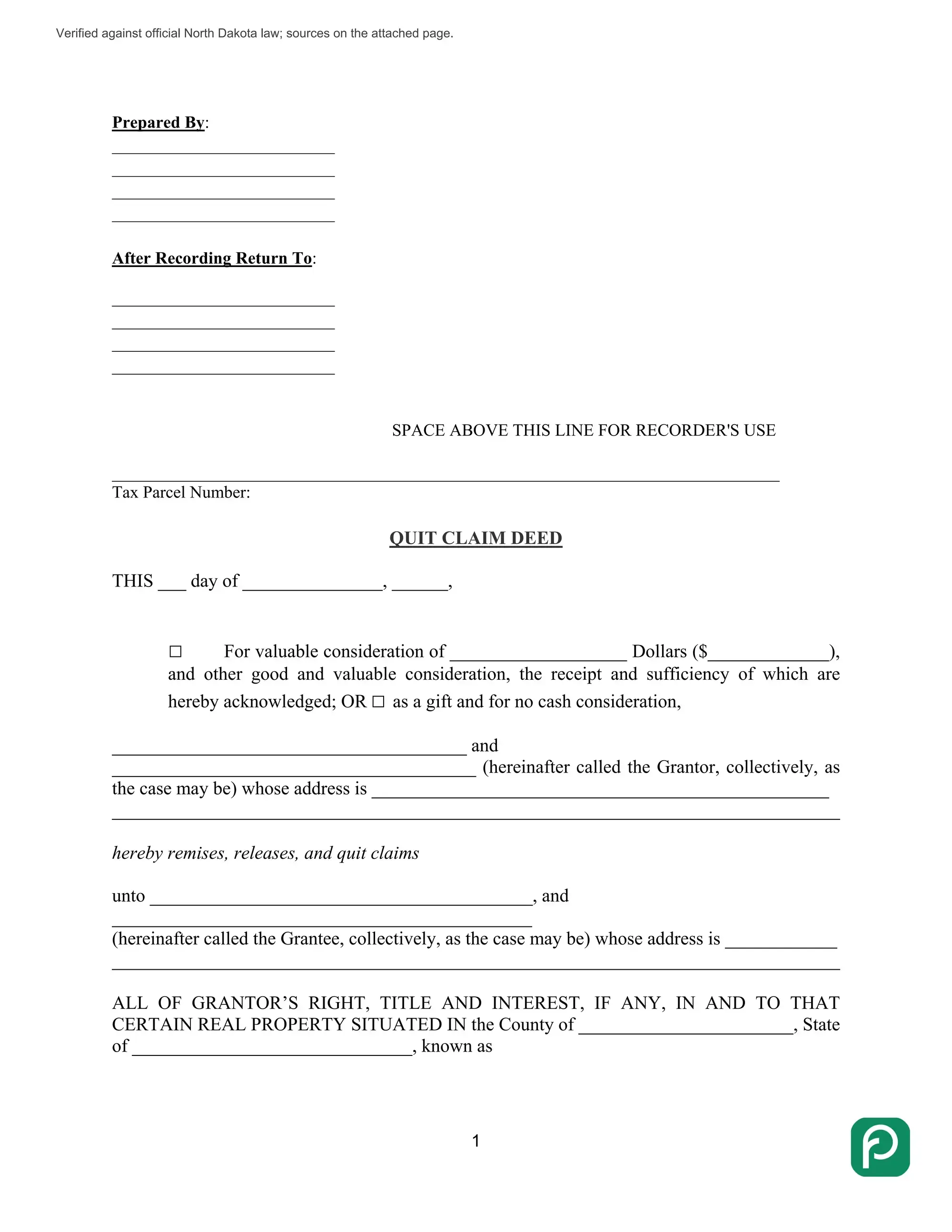
The FormsPal quitclaim deed takes nine steps to complete, in the order the form lists them. Page 1 holds the parties and the consideration, and page 5 holds the notary acknowledgment. Keep your current deed and each person's full name and address at hand.
After signing, record the deed as described under Recording Requirements above. The grantor and grantee should each keep a copy of the notarized and recorded deed.
This section answers a common question about North Dakota quitclaim deeds, using only the statutes listed under Sources. The answer names the sections it relies on, so you can check the wording yourself.
To be recorded, a deed signed by an individual must be acknowledged by the person who signed it.[2.1] A recorder cannot receive a deed that describes real estate unless the post-office address of each grantee is shown.[2.2] An unrecorded conveyance of real estate is void as against a later good-faith purchaser, an attachment or a judgment against the owner of record.[2.3] The word "grant" in the deed also implies covenants from the grantor unless the deed restrains them.[1]

General information, not legal or tax advice.
