Free Oregon Living Will Form

Updated:

An Oregon living will, also called an advance directive, is a written document that lets you set your medical treatment wishes in advance under Oregon Revised Statutes Chapter 127. It tells doctors and your family what care you want, or do not want, if you become unable to speak for yourself.
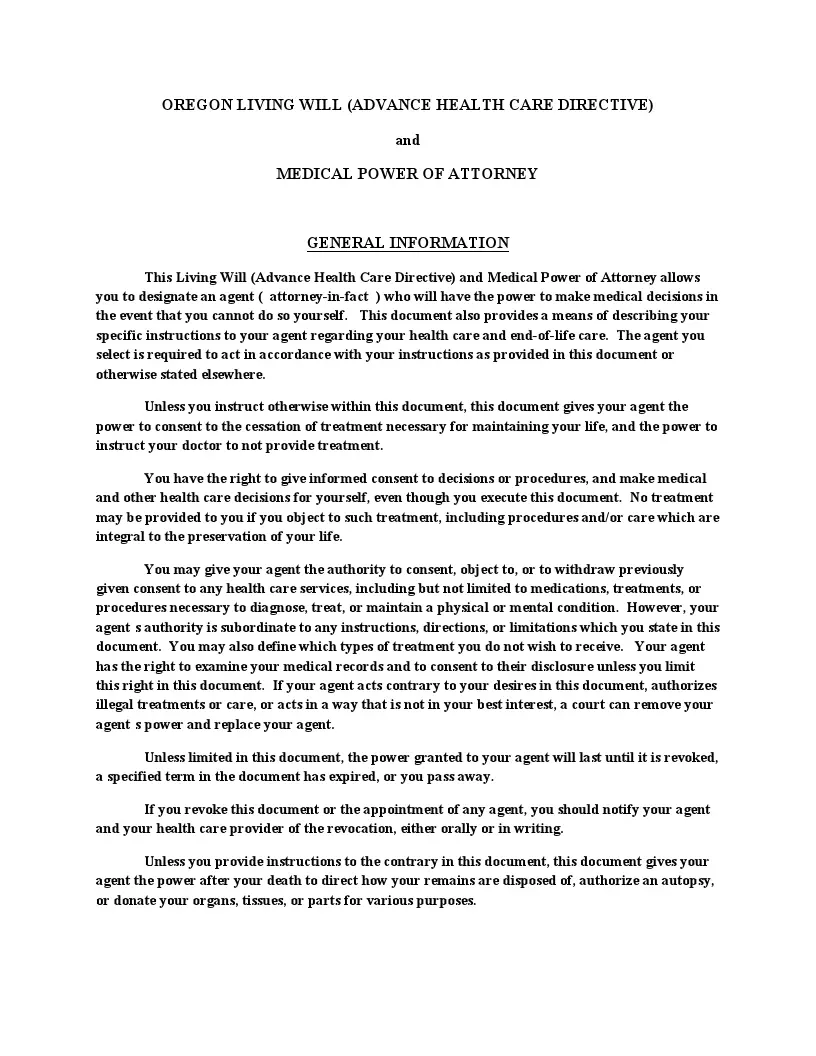
Oregon living will form preview

Create a high-quality Oregon Living Will Form online now!

Build Your Document

Answer a few simple questions to make your document in minutes

Save and Print

Save progress and finish on any device, download and print anytime

Sign and Use

Your valid, lawyer-approved document is ready

Download the Oregon Living Will: PDF or Word (.docx) or OpenDocument (.odt)

The document lets you address decisions such as life-sustaining treatment, resuscitation, and tube feeding. Stating your wishes in writing removes the guesswork for your family and your medical team when a hard decision comes up. A properly signed advance directive gives your choices legal weight.

What Your Oregon Living Will Can Cover

An Oregon living will lets you set specific instructions for the medical care you want, or want to avoid, if you cannot speak for yourself. The state’s form asks you to initial your choice for each scenario it covers.

  • Cardiopulmonary resuscitation (CPR)
  • Artificial nutrition, such as tube feeding
  • Mechanical ventilation and other life support
  • Dialysis
  • Blood transfusions
  • Organ or tissue transplants
  • Care in an end-stage or terminal condition

You also name a health care agent, and a substitute agent, to carry out these choices. They work with your attending physician if you become unable to decide for yourself.

Living Will vs. Last Will and Testament

A living will and a last will and testament serve different purposes. A living will, or advance directive, sets out your health care wishes and takes effect while you are alive but unable to communicate. A last will and testament distributes your property and names an executor after you die. Many people prepare both documents together as part of an overall plan.

Signing Requirements and Laws

Oregon’s advance directive law, set out in Oregon Revised Statutes Chapter 127, tells you who can create a living will and how it must be signed. The advance directive is effective once the principal signs it and it is either witnessed by two adults or notarized.[1.3]

Oregon law sets specific procedural requirements for a valid advance directive:

  • The document must be signed by the declarant.[1.3]
  • Two adults must witness the signing.[1.4]
  • The document can be notarized instead of witnessed by two people.[1.5]

In practice, witnesses and notaries typically confirm that the person signing appears to understand the document and is acting on their own, free of pressure from others.

Two more rules apply in specific situations. Oregon law says you must be an adult to sign your own advance directive. That means at least 18 years old, an emancipated minor, or a minor who is married.[1.1]

If you are a patient in a long-term care facility when you sign, one of your two witnesses must be a person the facility designates who meets qualifications the Department of Human Services sets by rule.[1.2]

Oregon’s official name for this document is the Advance Directive for Health Care. Many people simply call it a living will.
The form described in subsection (1) of this section must be signed and: witnessed and signed by at least two adults; or notarized by a notary public.
Or. Rev. Stat. § 127.515

Oregon Living Will Form Details

Document Name Oregon Living Will Form
State Form Name Oregon Advance Directive for Health Care
Signing Requirements Two Witnesses or Notary Public
Validity Requirements ORS 127.515
State Laws: Oregon Revised Statutes, Sections 127.505 to 127.529

Template Preview
Create a high-quality Oregon Living Will Form online now!

Steps to Fill Out the Form

The screenshots under each step show the FormsPal Oregon living will template filled with sample entries in blue, so you can see where each answer goes. The names, addresses, dates and amounts are examples only.

The Oregon living will form combines a health care directive with a medical power of attorney. You can fill out the downloaded PDF using FormsPal’s online PDF editor, or print it and complete it by hand. Follow the form’s own order below.

  1. Complete the declaration. Enter the date, your name, and your address.
    Oregon living will: living will declaration, filled with sample entries
    Step 1: sample entries, not a real living will.
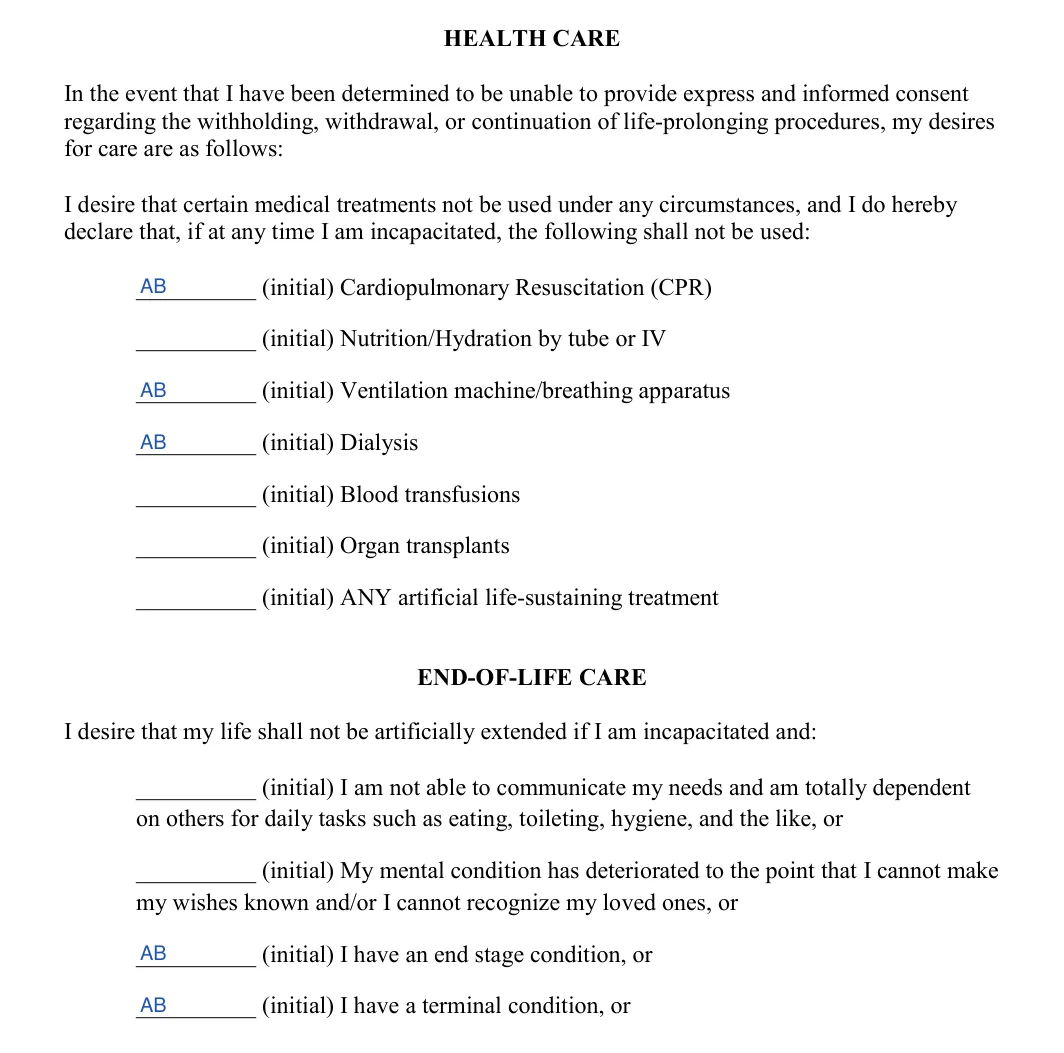
  2. Initial your health care and end-of-life choices. Initial each line for CPR, nutrition, ventilation, dialysis, transfusions, transplants, and end-stage or terminal condition care that reflects your wishes.
    Oregon living will: health care and end of life choices, filled with sample entries
    Step 2: sample entries, not a real living will.
  3. Add Additional Instructions. This section is optional. Write any further wishes on the blank lines if you have them.
    Oregon living will: additional instructions, filled with sample entries
    Step 3: sample entries, not a real living will.
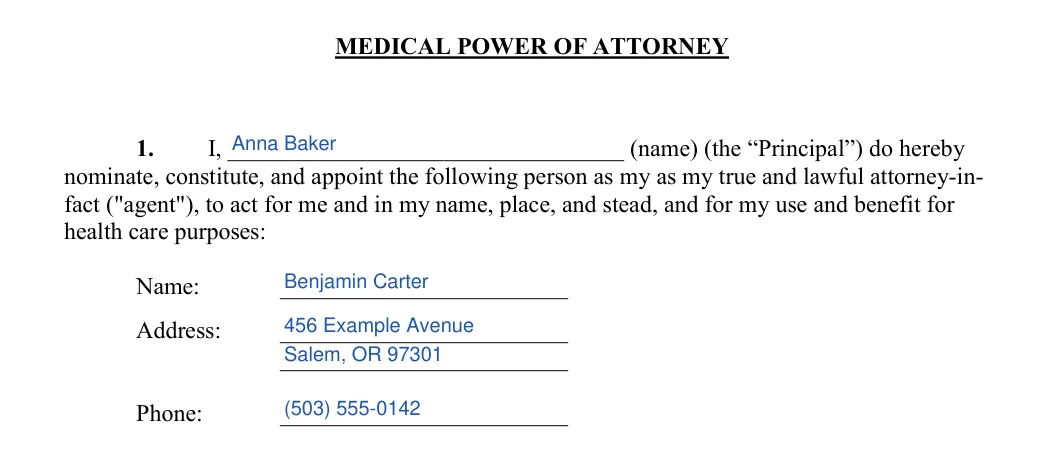
  4. Appoint your health care agent. Enter your agent’s name, address, and phone number.
    Oregon living will: health care agent, filled with sample entries
    Step 4: sample entries, not a real living will.
  5. Name a substitute agent. Enter the substitute agent’s name, address, and phone number in case your first choice cannot serve.
    Oregon living will: substitute agent, filled with sample entries
    Step 5: sample entries, not a real living will.
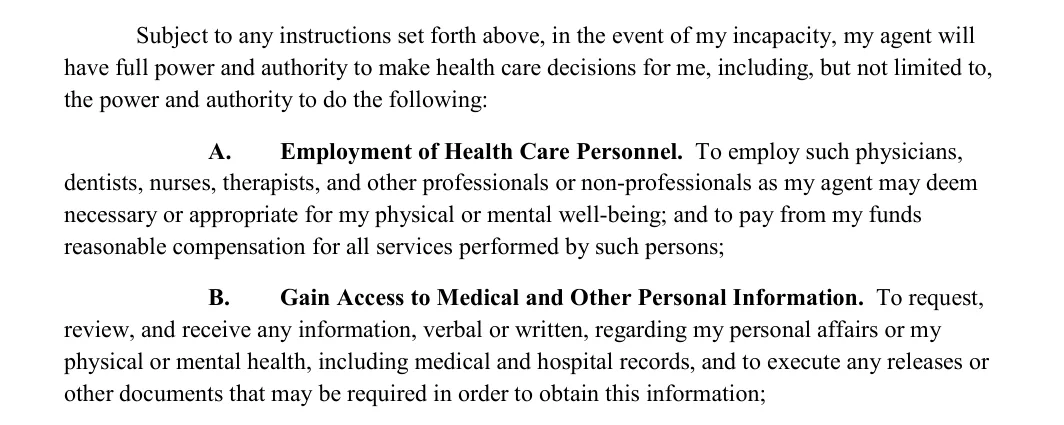
  6. Review the powers you grant your agent. Read items A through J, which describe the authority your agent will have.
    Oregon living will: agent powers
    Step 6: the part of the living will this step covers.
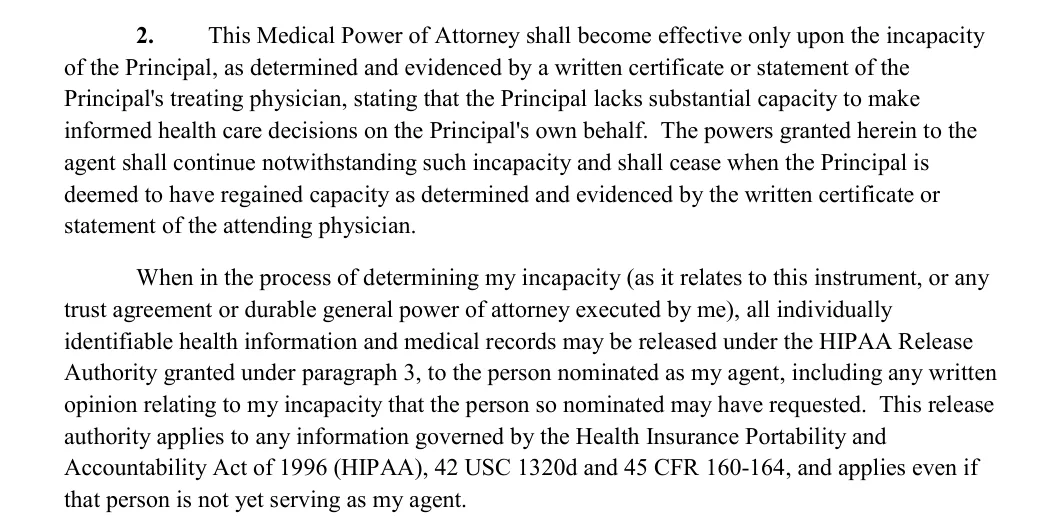
  7. Review when the document takes effect and the HIPAA release. These sections explain how your incapacity triggers the document and authorize your agent to see your medical records.
    Oregon living will: effective date and hipaa release
    Step 7: the part of the living will this step covers.
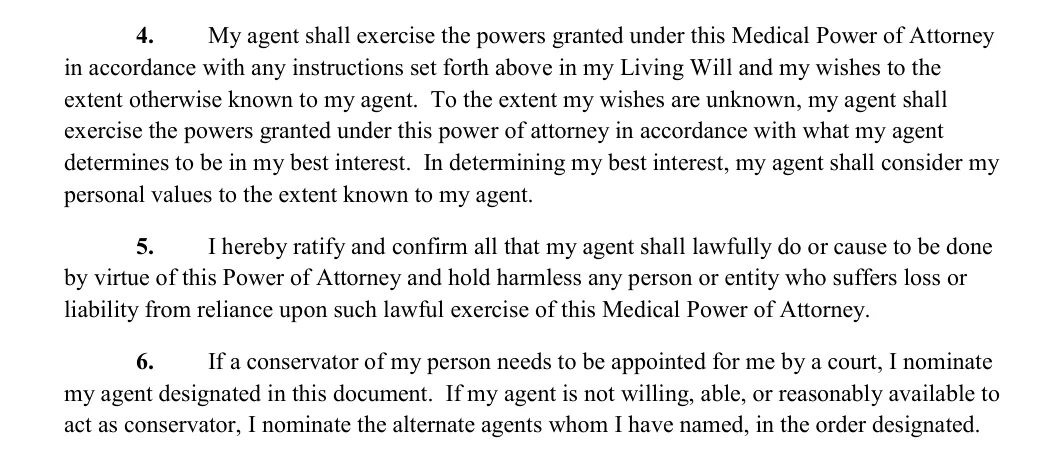
  8. Review the remaining provisions. These pages describe your agent’s standard of care, how a court can ratify their actions, and who to nominate as conservator if one is ever needed. You do not need to fill in anything here, but read it so you understand the authority you are granting.
    Oregon living will: agent duties and conservator nomination
    Step 8: the part of the living will this step covers.
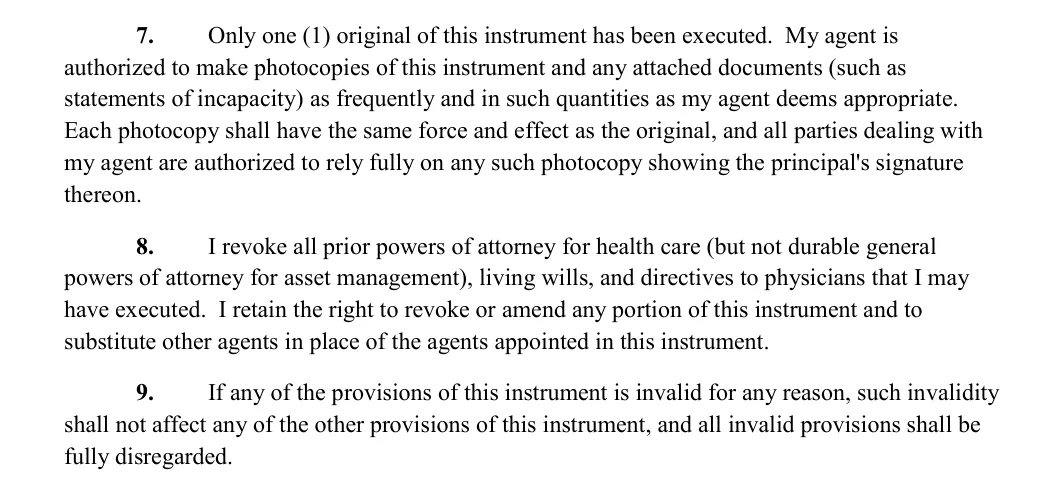
  9. Review photocopies, prior revocations, and severability. These provisions explain that photocopies work like the original, how signing this document affects any earlier advance directive, and what happens if a court finds one part invalid. No entries are required here either.
    Oregon living will: photocopies revocation and severability
    Step 9: the part of the living will this step covers.
  10. Review governing law and revocation. These closing provisions explain that Oregon law governs the document and how you can revoke it.
    Oregon living will: governing law and revocation
    Step 10: the part of the living will this step covers.
  11. Sign and date before two witnesses. Sign, print your name, and date the form in front of your witnesses.
    Oregon living will: sign and date, filled with sample entries
    Step 11: sample entries, not a real living will.
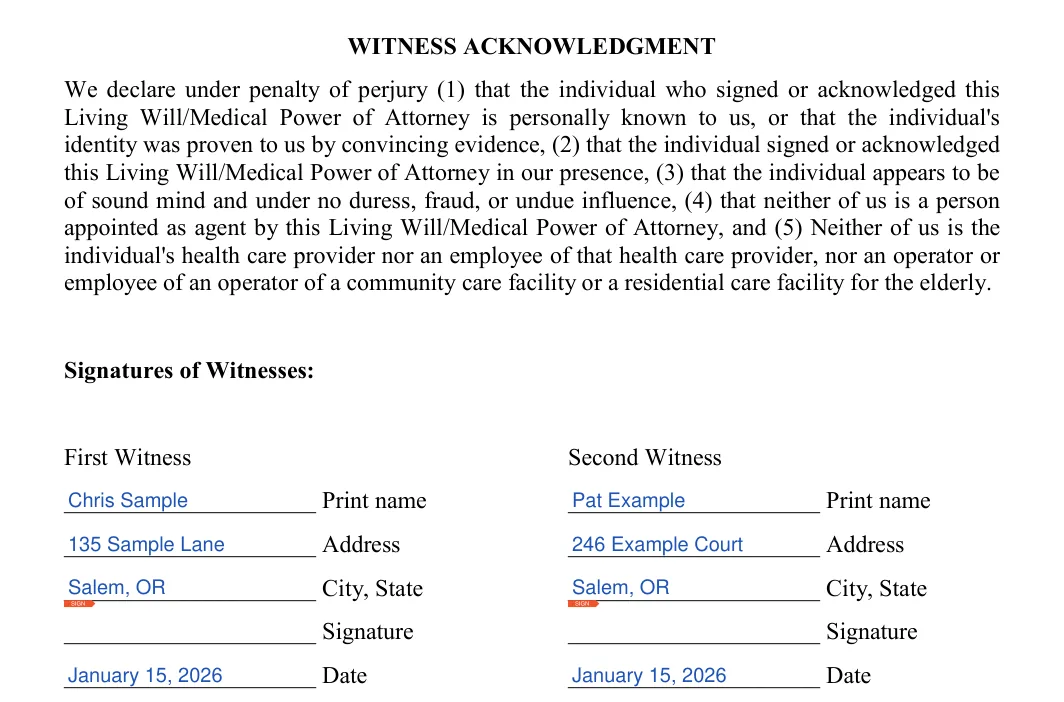
  12. Complete the Witness Acknowledgment. Each witness prints their name and address, then signs and dates the form.
    Oregon living will: witness acknowledgment, filled with sample entries
    Step 12: sample entries, not a real living will.

After You Sign Your Living Will

Once your Oregon living will is signed and witnessed or notarized, keep the original somewhere your family can find it. Give copies to the people who will need to act on it.

  • Keep the signed original in a safe, accessible place, not a locked box only you can open.
  • Give a copy to your health care agent and your substitute agent.
  • Give a copy to your primary care physician for your medical file.
  • Bring a copy with you if you are admitted to a hospital or care facility.
  • Review your advance directive from time to time, and sign a new one if your wishes change.

Frequently Asked Questions

Who Should Consider a Living Will?

Adults of any age can benefit from having a living will on file, not only older adults. You may want to sign one before a scheduled surgery, after a serious diagnosis, or simply to have your wishes on record before a medical emergency happens.

Anyone who wants a say in their own health care, rather than leaving the decision entirely to family members or a court, is a good candidate for this document.

How to Make a Living Will in Oregon?

To make a living will in Oregon, you sign the advance directive yourself, in front of your witnesses or a notary. You then have it witnessed by two adults, or notarized instead, to make it legally effective.[1.3]

If you live in a long-term care facility when you sign, one of your two witnesses must be a person the facility designates who meets qualifications the Department of Human Services sets by rule.[1.2] Once signed and witnessed or notarized, the document is legally effective.


General information, not legal or tax advice.

Sources

  1. Or. Rev. Stat. 127.505(1) §§ Or. Rev. Stat. 127.505(1) to 127.529.
    • 1.1 Or. Rev. Stat. 127.505(1)
    • 1.2 ORS 127.515(5) (directive validated by witnesses under ORS 127.515(2)(a); principal a patient in a long term care facility)
    • 1.3 § 127.510
    • 1.4 § 127.515
    • 1.5 § 127.529
Mara Erlach
Mara Erlach
Writer & Attorney
Mara has been practicing estate planning and trust law in California since 2003, taking pride in helping clients of all backgrounds and asset profiles form a complete and customized estate plan. Her specialties are: estate planning, wills and trusts, trust and probate administration.