
A California promissory note is a written promise to repay borrowed money. It names the borrower and the lender, the amount, the interest rate, and when payments are due. Article XV of the California Constitution limits the interest a loan can carry.[1] Fill out our free California promissory note template online or download it as a PDF.
Last Updated: October 2026. This guide is reviewed and updated regularly to reflect current California law. If you notice an error or outdated information, please contact us.
Build Your Document
Answer a few simple questions to make your document in minutes
Save and Print
Save progress and finish on any device, download and print anytime
Sign and Use
Your valid, lawyer-approved document is ready
Our template covers a loan between two people or businesses. The note records:
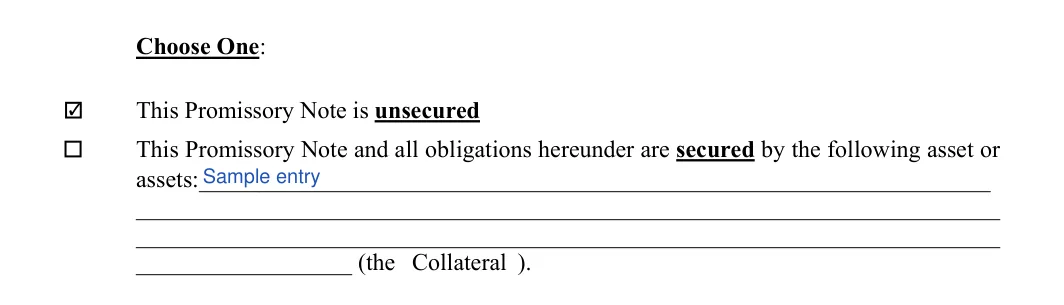
An unsecured promissory note rests on the borrower's promise alone. A secured promissory note lists collateral, which is an asset the borrower pledges to back the loan. Many people choose an unsecured promissory note when they lend to a friend or family member they trust, and a secured promissory note when they want collateral. If you need more terms than a note holds, a loan agreement template may fit better.
Usury means charging more interest than the law allows. In California, the usury rate limit comes from Article XV, Section 1 of the state Constitution, and it depends on what the loan is for. A loan used mainly for personal, family, or household purposes may not exceed 10 percent per annum, which means per year.[1] Certain other loans follow a different usury rate cap, shown below.
The Constitution sets two limits, depending on how the borrowed money will be used.[1]
For the second limit, the Federal Reserve Bank rate is the one prevailing on the 25th day of the month before the earlier of two dates. These are the date the contract to make the loan is signed and the date the loan is made. The rate is set on advances to member banks under Sections 13 and 13a of the Federal Reserve Act.[1]
Check what the money is for before you choose a rate. The 10 percent cap covers loans used mainly for personal, family, or household purposes.[1]
If the parties have not agreed on a rate of interest, the Constitution sets the rate of interest on a loan at 7 percent per annum. The parties may also contract in writing for a different rate of interest.[1] Our form has a blank for the rate, so write in the rate you agreed on.
A lender cannot use fees to get around the limits. The Constitution says so directly.
No person, association, copartnership or corporation shall by charging any fee, bonus, commission, discount or other compensation receive from a borrower more than the interest authorized by this section upon any loan or forbearance of any money, goods or things in action.
In plain words, a fee, bonus, commission, discount, or other charge cannot be used to collect more than the interest the section allows.[1]
| Document Name | California Promissory Note Form |
| Other Name | CA Promissory Note |
| Max. Rate | 10 percent per annum for personal, family, or household purposes For any other loan: the higher of 10 percent per annum or 5 percent per annum plus the Federal Reserve Bank of San Francisco rate on advances to member banks[1] |
| Relevant Laws | California Constitution, Article XV |
| Avg. Time to Fill Out | 10 minutes |
| # of Fillable Fields | 28 |
| Available Formats | Adobe PDF |
Popular Local Promissory Note Forms
Businesses and individuals usually require promissory notes to borrow money from other individuals and businesses and keep away from lending institutions. Below are some of the most common local promissory notes looked up by our users.
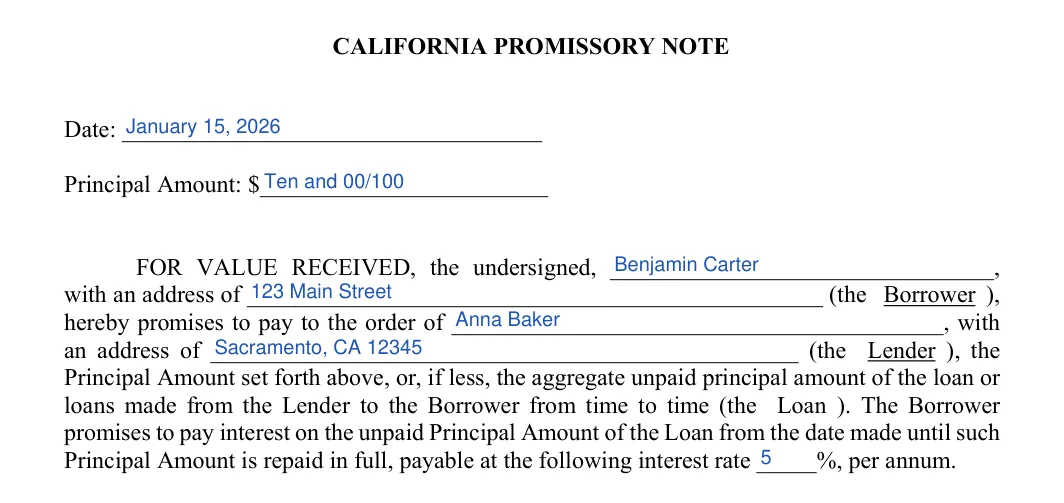
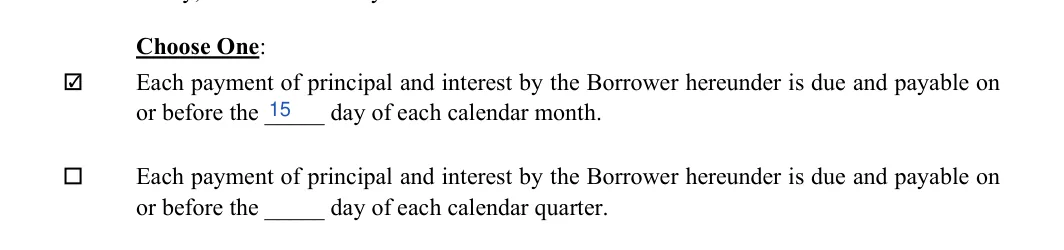
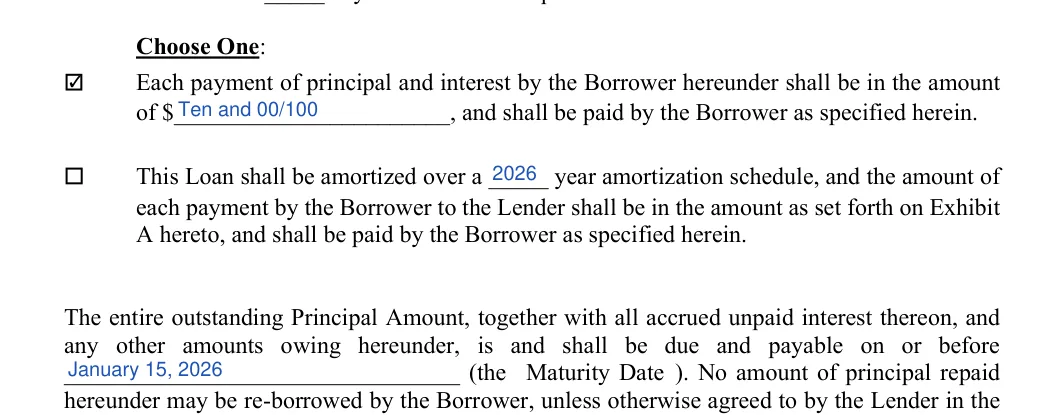
The California promissory note form has six parts to complete. Use the online builder above, or download the PDF and fill it in by hand. Complete the blanks in order and sign on the last page.
The screenshots under each step show the FormsPal California promissory note template filled with sample entries in blue, so you can see where each answer goes. The names, addresses, dates and amounts are examples only.


After both parties sign, make a copy for each of them. To fill in the PDF on screen, try our PDF editor. Lending in another state? See our promissory note templates by state.
These answers come from Article XV, Section 1 of the California Constitution and cite it. They describe what the Constitution provides, not what your own loan must do. For advice about your loan, ask a California attorney.
For a loan used mainly for personal, family, or household purposes, the rate may not exceed 10 percent per annum.[1] Loans for any other use follow the higher cap described in the usury section above.
If the parties have not agreed on a rate of interest, the Constitution sets it at 7 percent per annum. The parties may contract in writing for a different rate of interest.[1]
The short answer is one word: no. A lender cannot use a fee, bonus, commission, discount, or other compensation to receive more than the interest the Constitution allows.[1]

General information, not legal or tax advice.
