
An Idaho lease agreement is a legally binding contract between a landlord and a tenant that sets the terms for renting a residential property. It states the length of the tenancy, the monthly rent, and each party's responsibilities. A lease may be written or oral, though a written lease gives both sides clearer proof of what they agreed to if a dispute comes up later.
Last Updated: September 2026. This guide is reviewed and updated regularly to reflect current Idaho law. If you notice an error or outdated information, please contact us.
Build Your Document
Answer a few simple questions to make your document in minutes
Save and Print
Save progress and finish on any device, download and print anytime
Sign and Use
Your valid, lawyer-approved document is ready
A rental lease should state the rent due date, the security deposit amount, and the conditions for returning it. These rental lease agreement forms also address maintenance responsibilities and the conditions under which the landlord may enter the rented premises.
In Idaho, the laws and regulations governing leases protect landlords and tenants. They keep the rental relationship clearly defined for both sides. The Idaho Attorney General publishes a Landlord and Tenant Manual that explains the legal rights and duties of Idaho landlords and tenants.
Idaho landlords and tenants use a few common lease formats, depending on the rental. A standard lease sets a fixed term, often twelve months, and does not renew automatically. A month-to-month lease renews every month until either side ends it with proper notice. A room rental agreement covers a single room in a shared home, with its own rules for shared spaces and common areas.
The landlord and tenant agree on the security deposit amount together and write the figure into the lease. In practice, landlords often base the amount on the property's rental value and the tenant's credit history.
Under Idaho Code § 6-321, a landlord must refund the deposit within twenty-one days if the lease sets no other deadline. In every case, the refund is due within thirty days after the tenant surrenders the property. The landlord may not keep any part of the deposit to cover normal wear and tear.[1]
If the landlord keeps part of the deposit, Idaho law requires a signed statement that includes:[1]
When a security deposit is handled by a third-party property manager, Idaho law requires the manager to hold it in a separate account at a federally insured financial institution. If the rental property is sold during the tenancy, the new owner becomes responsible for refunding the tenant's deposit.[1]
A written lease protects both sides better than an oral one. If a dispute over the deposit comes up later, a written lease and a dated move-in checklist give the landlord and the tenant clear proof of what they agreed to.
Rent is due on the date the lease specifies. Idaho gives landlords and tenants some flexibility in handling issues like late fees and repair requests. A few practical points about rent for Idaho landlords and tenants:
Idaho treats a lease with no fixed end date, including a month-to-month lease, as a tenancy at will. Either the landlord or the tenant can end it by giving the other side written notice. Idaho Code § 55-208 requires that notice to be at least one month from the date it is given, whichever side sends it. Landlords and tenants should keep a copy of that written notice, since a dated notice makes it clear when the one-month countdown to move-out begins.[2]
For example, if Ben Carter rents a house from Anna Baker in Boise under a month-to-month lease and decides to move, he must give Anna written notice at least one month before he leaves. The same one-month notice applies if Anna is the one ending the tenancy.
Idaho leases typically include a clause on landlord entry, commonly requiring 24 to 48 hours notice before the landlord enters the rented property. This notice period respects the tenant's privacy while still letting the landlord access the property for things like emergency repairs, maintenance, inspections, or showings.
For any rental property built before 1978, federal law requires the landlord to disclose the presence of lead-based paint. This means giving the tenant an EPA-approved pamphlet on the health risks of lead exposure and any information the landlord already has about lead hazards in the property.[3]
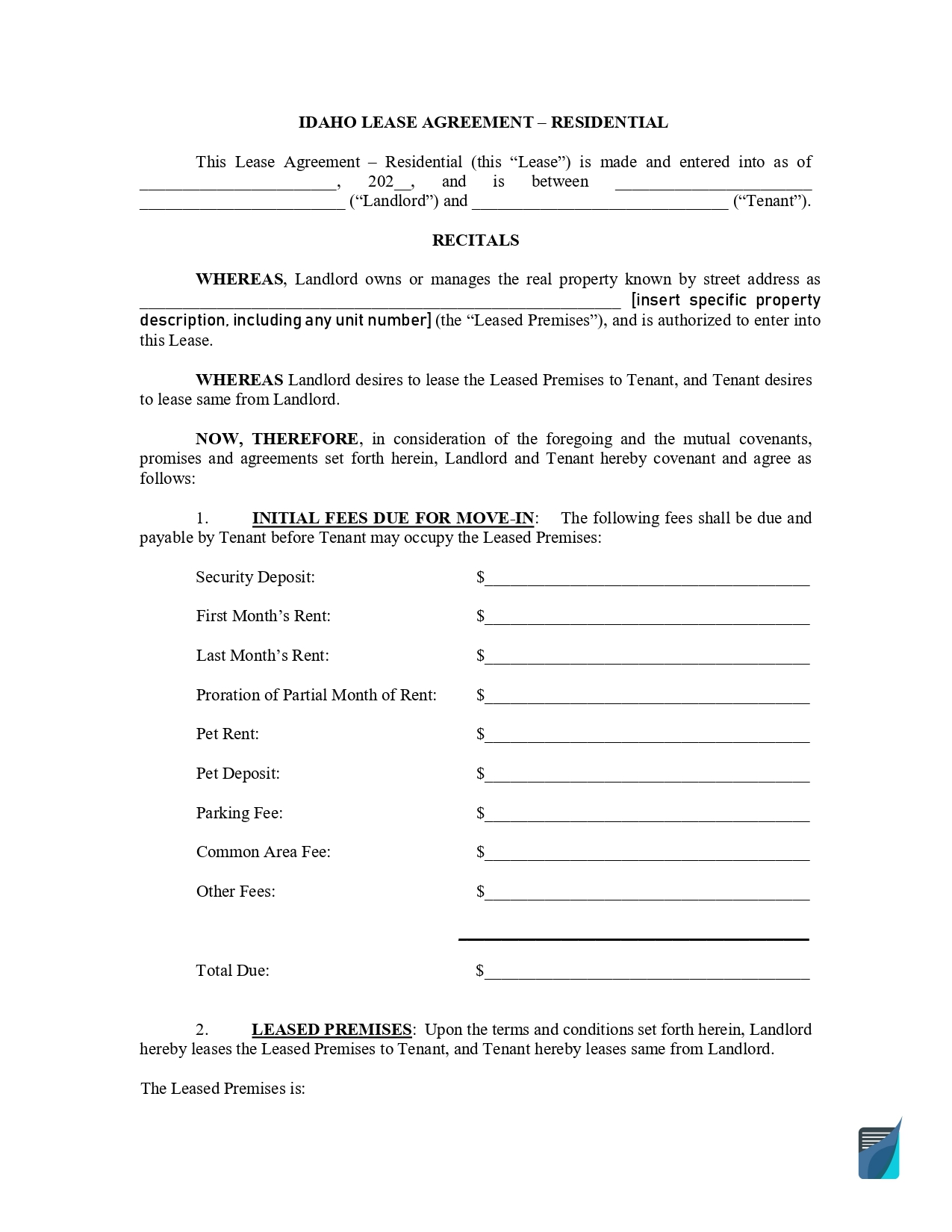
The table below summarizes the Idaho Rental Lease Agreement Form. It covers the Idaho Code sections, the security deposit rules, and how long the form takes landlords and tenants to fill out.
| Document Name | Idaho Rental Lease Agreement Form |
| Other Names | ID Rental Lease, Idaho Residential Lease Agreement |
| Relevant Laws | Idaho Code § 6-321 and Idaho Code § 55-208 |
| Security Deposit Amount | Negotiated between landlord and tenant |
| Security Deposit Return | Twenty-one (21) days to thirty (30) days |
| Avg. Time to Fill Out | 18 minutes |
| # of Fillable Fields | 119 |
| Available Formats | Adobe PDF |
Under Idaho Code § 6-321, a landlord has twenty-one days to return the deposit if the lease sets no other deadline. In every case, the deadline is never more than thirty days after the tenant vacates the property.[1]
Idaho law does not let a landlord use the security deposit to pay for normal wear and tear, the everyday wear that comes from ordinary use of the property. A landlord can only deduct for damage that goes beyond that normal use.[1]

General information, not legal or tax advice.
