
Prenuptial Agreements: Pros and Cons Explained
Written by FormsPal Editorial Team
- Time to read
- 6 min
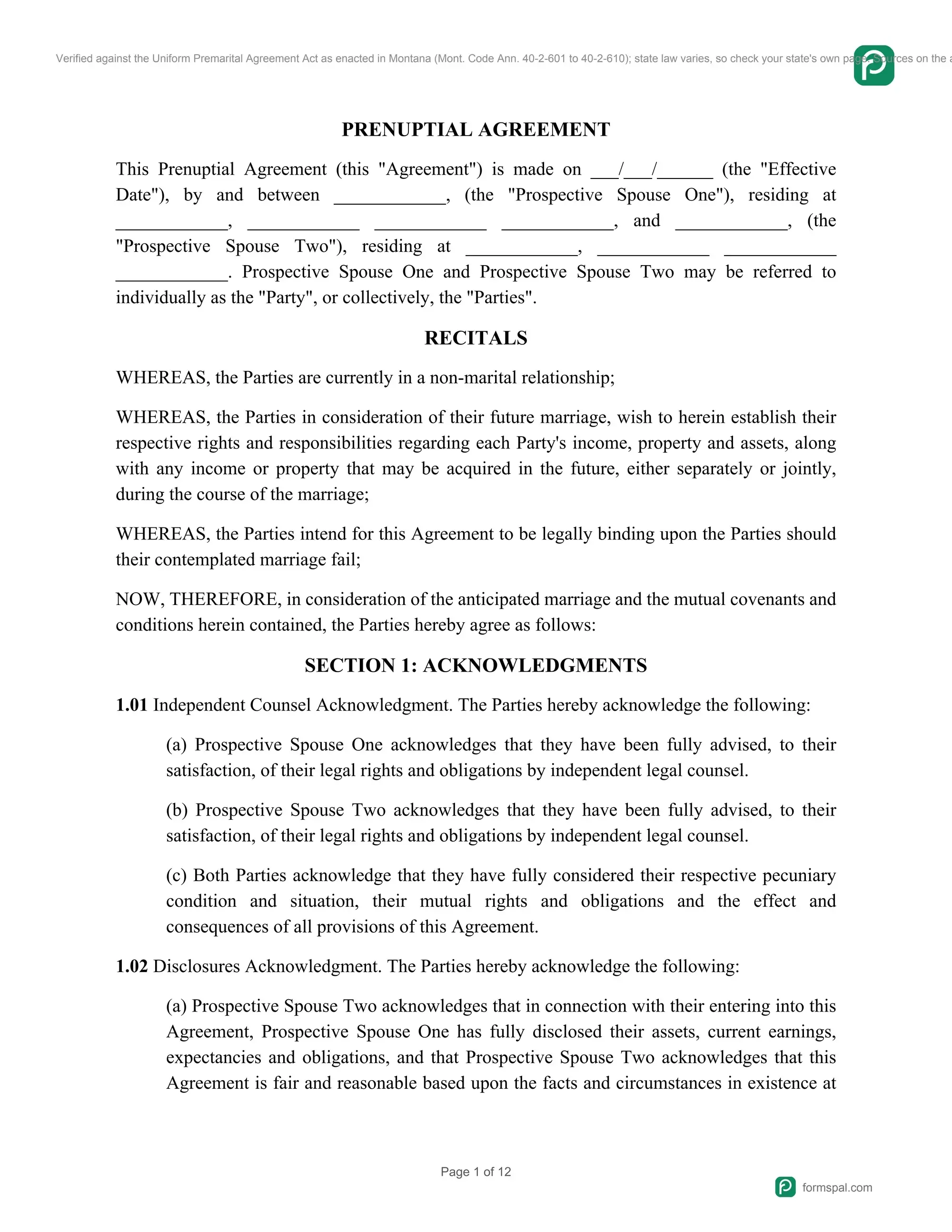
Marriage affects how couples plan their lives, manage their finances, and think about the future. Beyond the ceremony and honeymoon, it creates lasting legal and financial commitments. For this reason, some couples discuss a prenuptial agreement before marriage.
A prenuptial agreement may seem uncomfortable initially. However, for many couples, this practical financial plan sets expectations, reduces future disputes, and protects individual assets. And knowing the pros and cons of a prenup will help you determine if it aligns with your needs and long-term goals.
Who Benefits Most from a Prenuptial Agreement?
A prenuptial agreement can work for almost any couple, yet some situations make it especially practical. It often makes sense for one or both partners to set financial rules early rather than leave those decisions to state law later.
Those who want predictability choose this kind of agreement. Business owners, professionals with growing income, or anyone bringing property into a marriage may prefer clear written terms instead of making assumptions when things get complicated.
So, prenups make the most sense for:
- People who own a business or plan to start one. With a prenup, you will separate business assets from marital property.
- Partners with large savings, investments, or real estate. The agreement confirms what remains separate property and how future appreciation may be treated.
- Those entering a second marriage. This protects assets intended for children from a prior relationship and prevents inheritance disputes.
- Couples where one person carries significant debt. A prenup can outline who remains responsible for loans, credit cards, or other financial obligations.
- Partners with children from a previous relationship. The agreement supports estate planning goals and protects financial support intended for those children.
- Individuals expecting inheritance or family assets. A prenup can help protect inherited property and establish how those assets will be treated during marriage.
- Couples with very different income levels. You can set expectations about expenses, savings, and financial contributions during the marriage.
A couple's age matters too. Someone who spent years building savings, buying property, or growing investments often wants to keep those efforts protected. At the same time, younger couples sometimes use prenups as a planning step.
Note: a prenup doesn't automatically guarantee that inherited property will remain separate. State laws, the agreement's terms, and how the assets are handled during marriage all affect the outcome. For example, depositing inherited money into a joint bank account could make it harder to protect during a divorce. Couples should review these provisions with an attorney before signing.
What Are the Pros of Prenuptial Agreements?
A prenuptial agreement may sound too formal or unnecessary at first. But for a lot of couples, it simply works as a practical way to talk about money before marriage instead of trying to figure everything out later when emotions may run higher.
You Know Where You Both Stand Financially
A prenup pushes both partners to be honest about money from the start. It means sharing information about savings, debts, property, income, and even financial habits. For example, one partner may have retirement accounts while the other runs a freelance business with uneven income, and putting everything on the table prevents surprises later.
These talks may feel awkward at first. Still, couples often say they gain a better sense of each other’s priorities after these discussions, whether that involves spending styles, long-term savings plans, or how they plan to handle joint expenses like housing or travel.
Protection for Property You Owned Before Marriage
A prenup clarifies who owns what before the marriage. This is important if one partner already owns a home, has investments, or has saved a lot while building a career. Without a written agreement, state laws could divide these assets later.
For example, one partner might have bought a condo years before the relationship or built up a stock account through investing. A prenup confirms that this property stays separate and explains how you and your partner will handle any future growth.
Separation From a Partner’s Existing Debt
Financial risk isn’t just about assets; it also comes from debts. A prenup can say that certain debts stay with the person who took them on. This eases stress if one partner brings student loans, medical bills, or business debts into the marriage.
Imagine one person spent years paying off law school loans while the other has no debt. Having a written agreement lets you know who is responsible if there are financial problems later on.
Fewer Disputes if the Marriage Ends
Nobody plans a wedding while thinking about divorce. But written agreements can reduce conflict if the unexpected happens. When couples agree on how to divide property or manage financial accounts, they often avoid drawn-out arguments over who gets what.
For instance, a prenup may state how to handle a shared home, joint savings, or even pets purchased during the marriage.
Business Stability for Owners
Having a business means you have more financial risks. A prenup is a contract that explains who owns the business and how its income will be handled during the marriage.
This is important for anyone who started a consulting firm, opened an online store, or built a family business. Without a prenup, a divorce could affect who owns the business or future profits.
Freedom to Set Your Own Financial Terms
State law normally decides how property gets divided when there is no agreement. A prenup lets couples write their own rules instead. Some decide to keep everything separate. Others create partial sharing rules. Some even set terms for how joint purchases will work.
Cons of Prenuptial Agreements
A prenuptial agreement can address financial questions, but it doesn't work for everyone.
Uncomfortable Financial Discussions
Money talks may feel awkward, especially before a wedding. One partner may see the prenup as simple planning, while the other may read it as a lack of trust. Different views about spending, saving, or future plans turn a practical talk into a tense one.
Legal Fees and Preparation Costs
Making a good agreement usually means paying for legal advice. If both partners hire lawyers, costs can go up depending on how much negotiation is needed. A basic template might be cheaper, but having a lawyer review it still adds to the cost.
Risk of One-Sided Terms
Not all couples start this process equally. One partner might know more about finances or have a better lawyer, which could lead to terms that favor them. This situation can leave the other person feeling pressured or unsure about what they agreed to.
Limited Coverage
A prenup mostly deals with financial topics. It sets rules for property, assets, and debts, but family law places child custody and child support outside its reach. Personal expectations about the relationship don't belong in this document either, even though some couples assume everything can go into a single contract.
Time and Timing Challenges
It's not a good idea to prepare a prenup at the last minute. Couples need time to share financial information, talk through the terms, and review the document with a lawyer. And if the discussion starts too close to the wedding date, it will feel rushed and forced.
Related Forms:
So Should You Sign a Prenuptial Agreement?
Whether you sign a prenuptial agreement depends on your finances, how comfortable you are planning, and how openly you and your partner talk about money. Some couples see a prenup as a backup plan they hope never to use. Others see it as a practical way to avoid future arguments about money and property.
Not every couple needs a prenup, and that’s perfectly fine. If you or your partner own property, run a business, have debts, or simply want to sort out financial matters before getting married, a prenup might be worth considering. But if your finances are fairly simple, you might decide you're comfortable with the rules already set by state law.
Even if you're not sure about getting a prenup, it's worth discussing it with your partner. You can talk about what you'd want the agreement to cover, how you'd handle shared property, and what would happen to your assets and debts if you ever divorced. You might not agree on everything right away, but it's better to work through those questions together before getting married.
Working together on a prenuptial agreement is best. When the document balances both sides' interests instead of favoring one party, it tends to feel fairer and easier to accept.