
Lease vs. Rent: What’s the Difference?
Written by FormsPal Editorial Team
- Time to read
- 8 min
When you start looking for a place to live, one of the first questions is whether to sign a lease or rent on a month-to-month basis. People often use these terms interchangeably, but they actually mean different things. Choosing the wrong one will impact your costs, your flexibility, and how easy it is to move out.
At first, both types of agreements seem very similar. They both require signatures, rent payments, and follow the same house rules. However, the timing, how you end the agreement, and how stable the price is can be quite different, especially if your plans change. This guide explains the difference between leasing and renting, when each one is a good choice, and what to look for before you sign.
What Is a Lease Agreement?
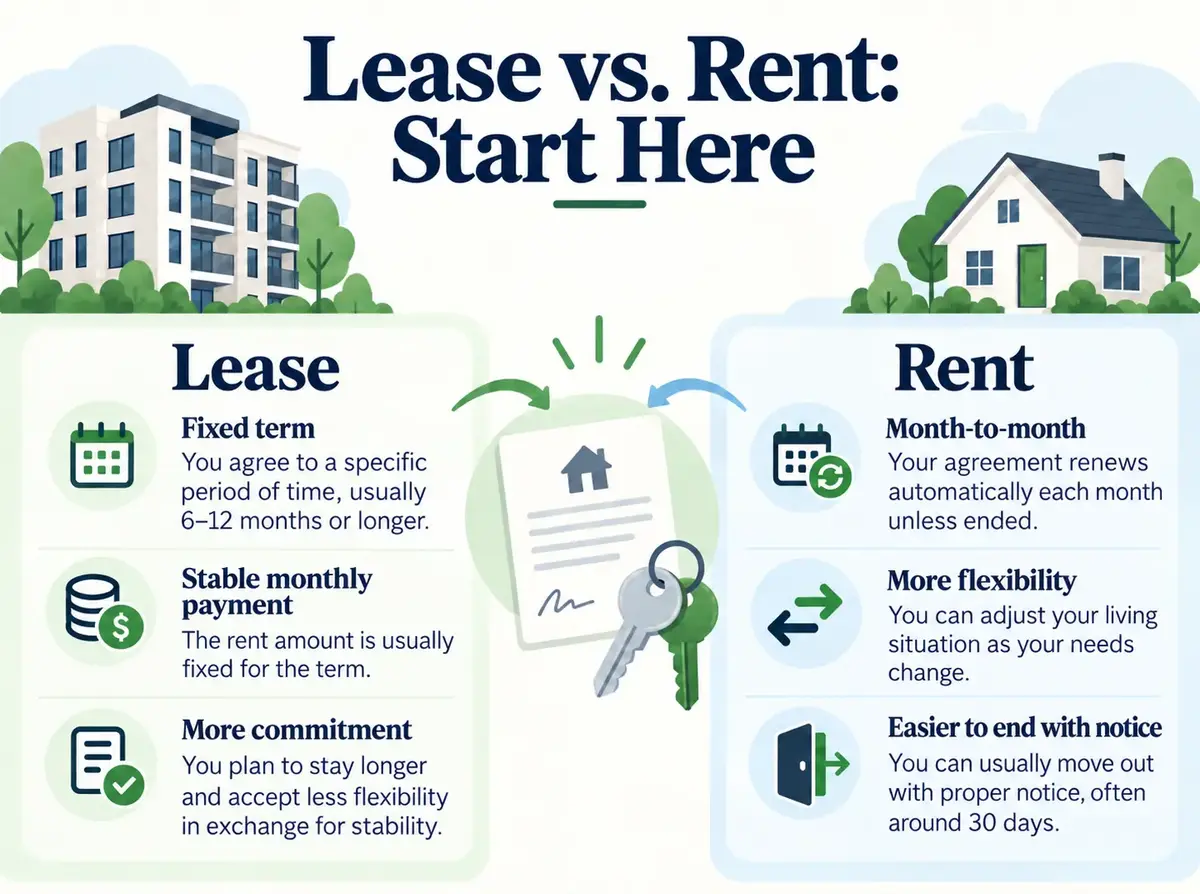
A lease agreement is a contract between a landlord and a tenant for a set period, usually six, twelve, or twenty-four months. After both sides sign, they agree to follow the same rules until the lease ends. A lease agreement is typically more stable. Rent stays the same for the whole term, making it easier to budget and protecting tenants from sudden increases. Property owners also benefit from steady occupancy and predictable income.
Most leases tend to share a few key features:
- A set monthly payment that usually does not change until the lease ends
- A clear start and end date
- Fees or penalties if you move out early
- Rules for renewing or extending the lease
- Written responsibilities for both the landlord and the tenant
A typical lease agreement usually spells out the basic facts about the rental. Expect to see the full names of the parties, the exact property address, the lease dates, and the agreed monthly payment. It also explains the security deposit, who handles repairs, and what happens if either side wants to end the agreement.
Ending a lease early can be costly. Some agreements make tenants pay several months of rent or lose their deposit unless they qualify for a legal exception. For example, the Servicemembers Civil Relief Act allows eligible servicemembers to end a residential lease early after certain military orders. These details are easy to miss if you do not read carefully.
This setup works best for people who plan to stay in one place for a while. Leases offer predictability instead of flexibility, which is a good trade-off if you value stability over moving around.
Pros and Cons of Leasing an Apartment
Pros:
- You can count on predictable housing costs.
- You’re protected from sudden rent increases with a fixed monthly payment.
- Tenants have stronger rights during the lease term.
- There’s less risk of being asked to move out unexpectedly.
- Both landlord and tenant have clear expectations.
Cons:
- You may have to pay early termination fees.
- You might be responsible for the rent until a new tenant is found.
- There’s less flexibility if your plans change.
- Possible fees for breaking the agreement early.
What Is a Rental Agreement?
A rental agreement is typically a month-to-month contract between a landlord and tenant. It remains in effect until either party provides proper notice to terminate, rather than requiring a long-term lease commitment.
This contract is defined by its flexibility. Rental agreements often automatically renew on a monthly basis. That feature allows tenants to remain without signing a new contract, while landlords retain the ability to adjust terms if market conditions or property needs change.
This setup also changes how rent works. Unlike a lease, the rent amount is not locked in for a long time. A landlord may raise the rent with proper written notice, subject to state and local tenant laws. Depending on the timing, this can feel either manageable or frustrating.
Termination tends to be simpler, too. Most rental agreements require about 30 days' notice from either side, which makes moving out far easier compared to breaking a fixed lease, especially if your plans change suddenly or a better housing option appears out of nowhere.
Even though rental agreements are more flexible, they are still legal contracts. They usually list the monthly rent, payment due dates, how much notice is needed to move out, and how rent increases are shared. A rental agreement also covers the main rules tenants need to follow while living there.
So, if you are trying out a new city, working a short-term job, or waiting to buy a home, you might like this option because it lets you adjust your plans more easily.
Pros and Cons of Renting an Apartment
Pros:
- You get more flexibility if your plans change.
- It’s usually easier to move out with proper notice.
- You don’t have to commit to a long contract.
- This option works well for temporary housing situations.
- You may be able to switch places without major penalties.
Cons:
- Rent can increase with proper notice.
- A landlord may decide not to renew the agreement.
- There’s less long-term stability compared to a lease.
- Housing costs may change more often.
- You may need to move on short notice.
Related Forms:
5 Key Differences Between Leasing and Renting
When trying to determine difference between leasing and renting, it helps to start with one simple idea. Both are legal agreements that set rules for living in a property. But the way they handle time, rental cost, and flexibility feels very different once you actually sign one.
1. Lease Length vs. Short-Term Rental Agreements
At the core, each option is a housing contract between landlords and tenants. The first major difference comes down to time commitment. A lease usually means a longer lease period, often twelve months, sometimes even two years. Short-term rental agreements, by contrast, usually run month to month and renew automatically.
Another detail worth noting is what happens at the end of the rental term. A lease may require you to renew, move out, or switch to a month-to-month structure. Rental agreements usually just continue unless either side decides to end them.
2. Rental Cost Predictability vs. Flexibility
Money is often the deciding factor. With a lease, rental cost usually stays the same for the full contract term, which makes it easier to plan expenses and avoid surprises.
With rental agreements, the price may change with proper notice. Landlords may adjust rates based on market conditions, property expenses, or demand, as long as they follow local laws. This doesn’t always mean dramatic increases. But it does mean your housing payment may change with proper notice, making long-term budgeting less predictable than with a fixed lease.
3. Early Exit Risks
Breaking a lease early, you could face serious financial consequences depending on the agreement terms. This might include early termination fees, loss of your security deposit, or paying rent until another tenant takes over.
Rental agreements usually reduce this pressure. Since they operate month to month, tenants can often leave with advance notice without large penalties.
4. Property Rules and Everyday Restrictions
Leases often contain more detailed rules about daily living. These may include policies on roommates, pets, parking, visitors, noise limits, property alterations, and subleasing restrictions.
Rental agreements usually cover similar topics, but sometimes with simpler terms. In some cases, landlords may update property rules if they provide advance notice and follow local regulations.
It’s also smart to review how shared costs work. Some agreements clarify whether tenants must cover things like cell phone utilities, rent packages, parking fees, or bundled services. All these details quietly increase the true monthly expense.
5. Flexibility At the End
What happens at the end of the rental term depends on the contract type. A lease may require renewal, renegotiation, or a move-out decision by a specific date, while rental agreements usually continue automatically until someone gives notice.
Should You Choose a Rental or Lease Agreement?
Deciding between leasing and renting is often a toss-up between stability and flexibility. Both lease and rental agreements spell out the rules of living in a property, but the contract structure shapes how predictable your costs are and how easily you can change plans.
A lease often makes sense if you expect to stay for a while. If you know where you're going to be - whether that's at work, at school or with your family - it often makes sense to lock in a long-term lease instead of going month-to-month. Plus, knowing that you'll pay the same amount every month each time can be a big plus. And let's be honest, not having to worry about your rent going up the following month is a comforting thought for many tenants.
Rental agreements are similar to leases, as both describe the rental arrangement and spell out the legal responsibilities involved. But one key difference is that rental agreements usually remain in effect until either the landlord or the tenant decides to end it, typically with advance notice.
Both types of contracts will also specify all the extra costs on top of the basic rent that tenants are expected to pay. These could be things like utilities, insurance and the various deposits and service fees that can sneak up on you and end up making the true cost of the rent a lot higher than anyone expects.
Below is a quick guide that should give you an idea of what to look out for.
| Lease | Rent | |
|---|---|---|
| Duration | Fixed term, usually 6–12 months or longer | Month-to-month, renews automatically unless ended |
| Flexibility | Low, since you commit to a set period | High, easier to adjust plans or move |
| Rent changes | Usually fixed for the full lease term | Can change with proper notice from the landlord |
| Termination | Harder to end early, may involve penalties | Easier to end with the required notice, often 30 days |
| Stability | High, with predictable terms and costs | Medium, terms may change over time |
| Legal structure | Formal contract with detailed terms | Also a legal contract, but typically more flexible |
| Best for | Tenants planning long-term stays | Tenants needing short-term or flexible housing |
| Financial risk | Possible fees if the lease is broken early | Lower risk due to shorter commitment |
Before you even think about signing a contract, make sure you take the time to read it from cover to cover. Specifically, look at how the agreement explains the rent amount, what happens when it comes to ending the agreement, renewal terms, and who's responsible for what.
Believe it or not, taking a few minutes to read it carefully now can save you a whole lot of bother and expense.
Once you know which option works better for you, FormsPal helps with the next step. Choose a lease agreement, rental form, notice, or another landlord-tenant template, then fill it out, edit the details, and save the finished document online.